Source mill · Since 2007 · 100+ countries

A Tool Steel Factory That Melts, Forges and Certifies on One Site

Eight production stages inside one fence, under one heat number, run by the same 280 people. Four signatures decide whether a batch leaves, and the last one does not belong to production.

  1. Metallurgical engineer
    Issues the regime before the order reaches production
  2. Dimensional inspector
    Signs the finished sizes against the order
  3. Certified UT operator
    Signs the ultrasonic result for each individual bar
  4. Quality department
    Signs the EN 10204 3.1 MTC and releases the heat
Book a Works Visit or Video Audit

Vendor questionnaires answered item by item · T+24 h on a working day

Scale

Tool Steel Factory in Figures

Nineteen years on one site, and every one of the fourteen grades electroslag remelted.

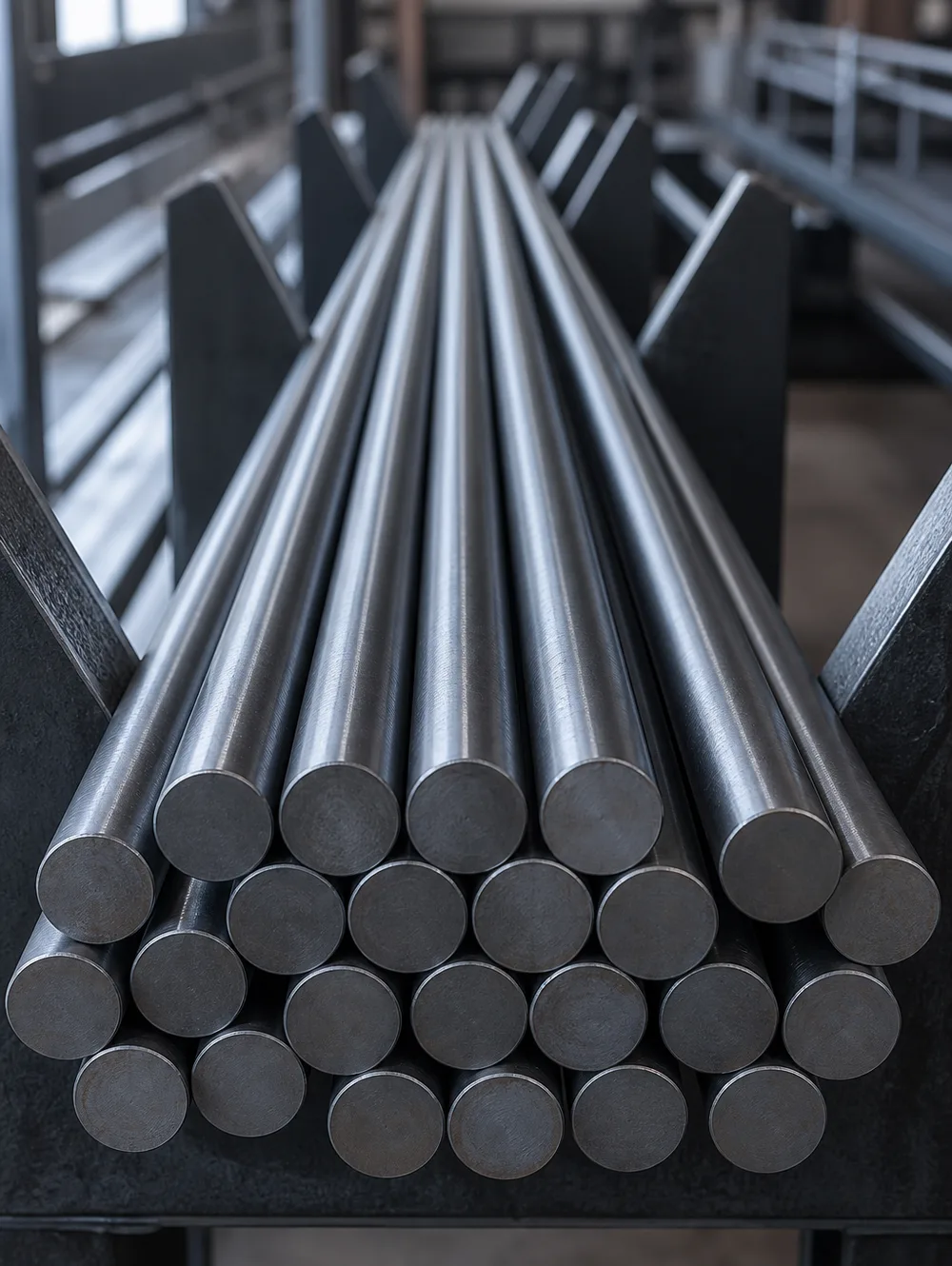
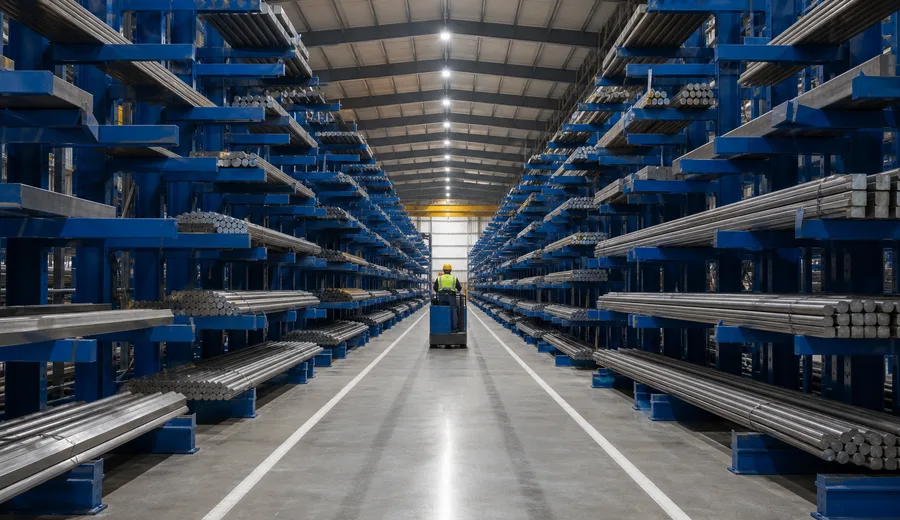
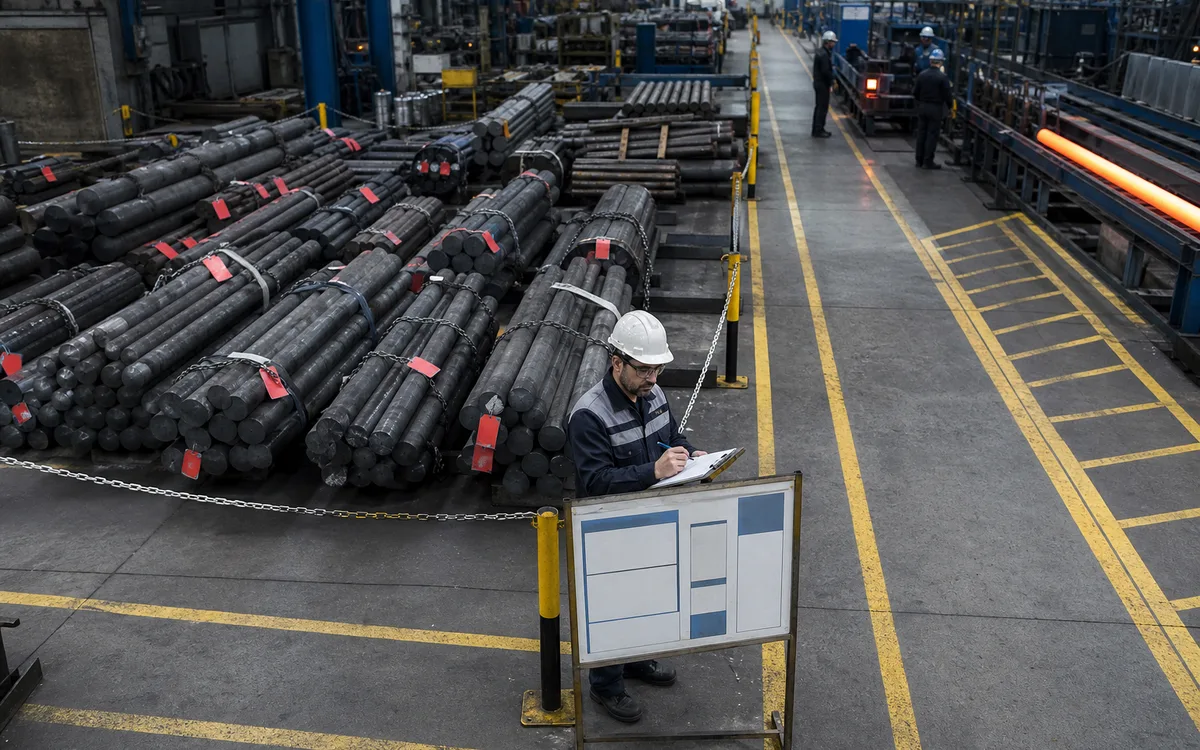
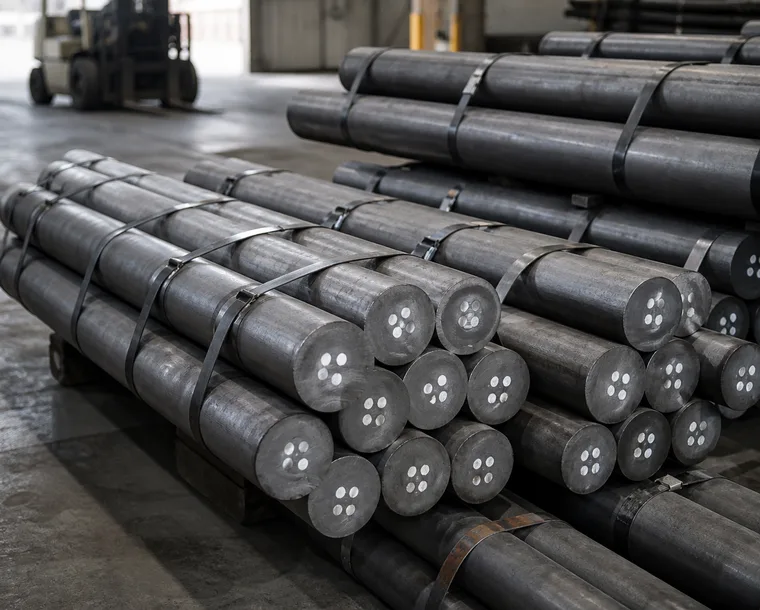
  • Banded stacks of annealed tool steel round bar in the finished goods store

    The whole works, on one plot, since 2007.

  • 280People on site
  • 24,000 tOutput a year
  • 8,000 tHeld in stock
  • 14 of 14Grades remelted
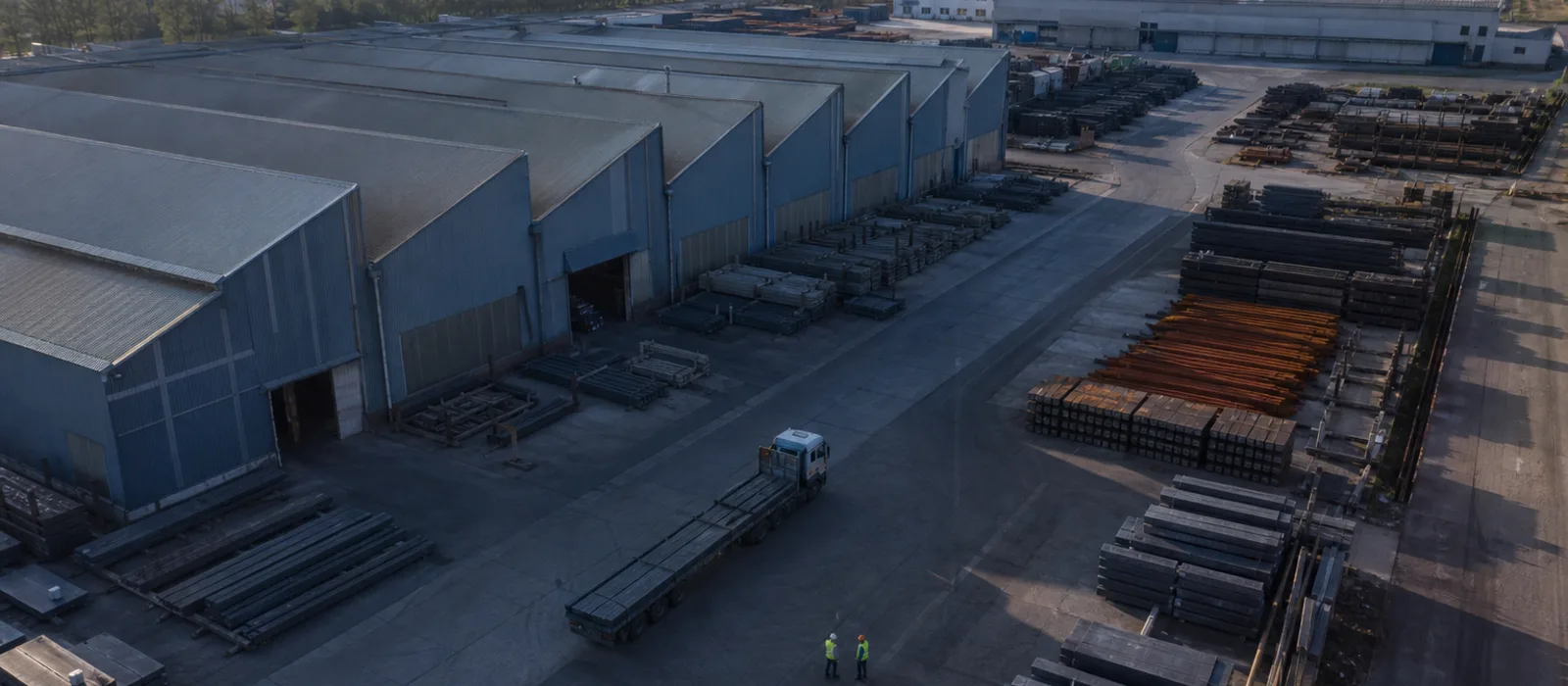
Aerial view of the tool steel factory site, production halls and the outdoor billet yard
19Years as a source mill
95,000 m² site · 56,000 m² under roof
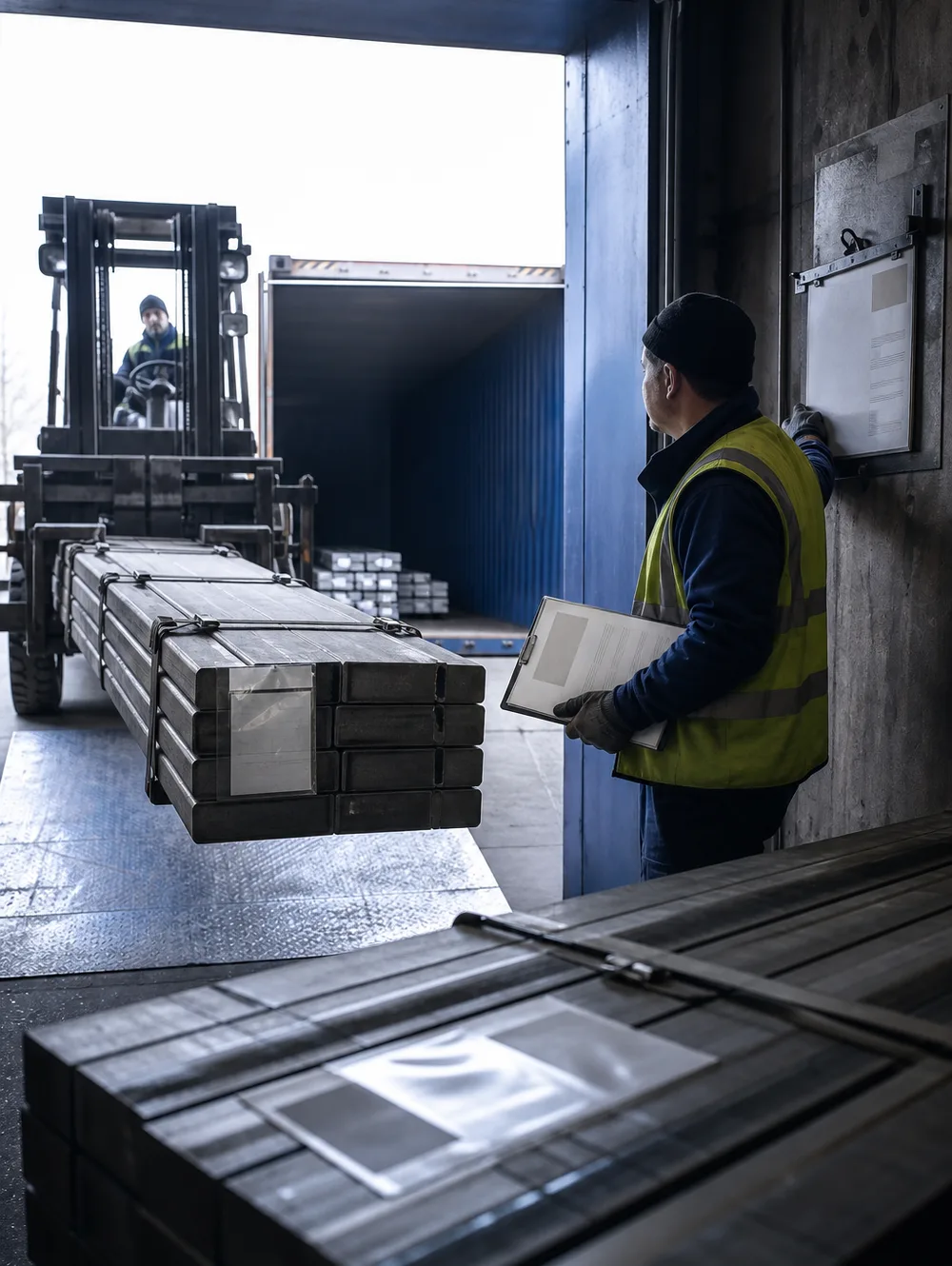
Crated tool steel flat bar being loaded into a container for export

Who this is

Company Profile and Trade Position

Fucheng Tool Steel has run as a tool steel factory since 2007, on one site of 95,000 m² with 56,000 m² under roof. The works produces 24,000 tonnes a year and holds around 8,000 tonnes of finished stock.

Trade position

Sells to
Distributors, stockholders, wholesalers and large-scale procurement buyers.
Ships to
Europe, Southeast and South Asia, the Middle East, South America and Africa, and North America.
Stays yours
The tool rooms, die shops and moulders downstream of you. That layer is not sold into from here.

That position fixes what the company is built to do. A distributor is judged by the certificate they forward and the consistency of what arrives, so the plant is arranged around producing both, rather than around selling small quantities to whoever asks.

100Melting, electroslag refining, forging and heat treatment
64Finishing: sawing, grinding, milling, turning and machining
34Quality and inspection, independent of production
Headcount 280 Sixteen metallurgical and process engineers, 22 in warehousing and logistics, 18 in export sales and technical support.
Who buys here

The Distribution Layer We Serve

Three buying patterns, three different things asked of the mill. The tool rooms and die shops downstream of you stay yours.

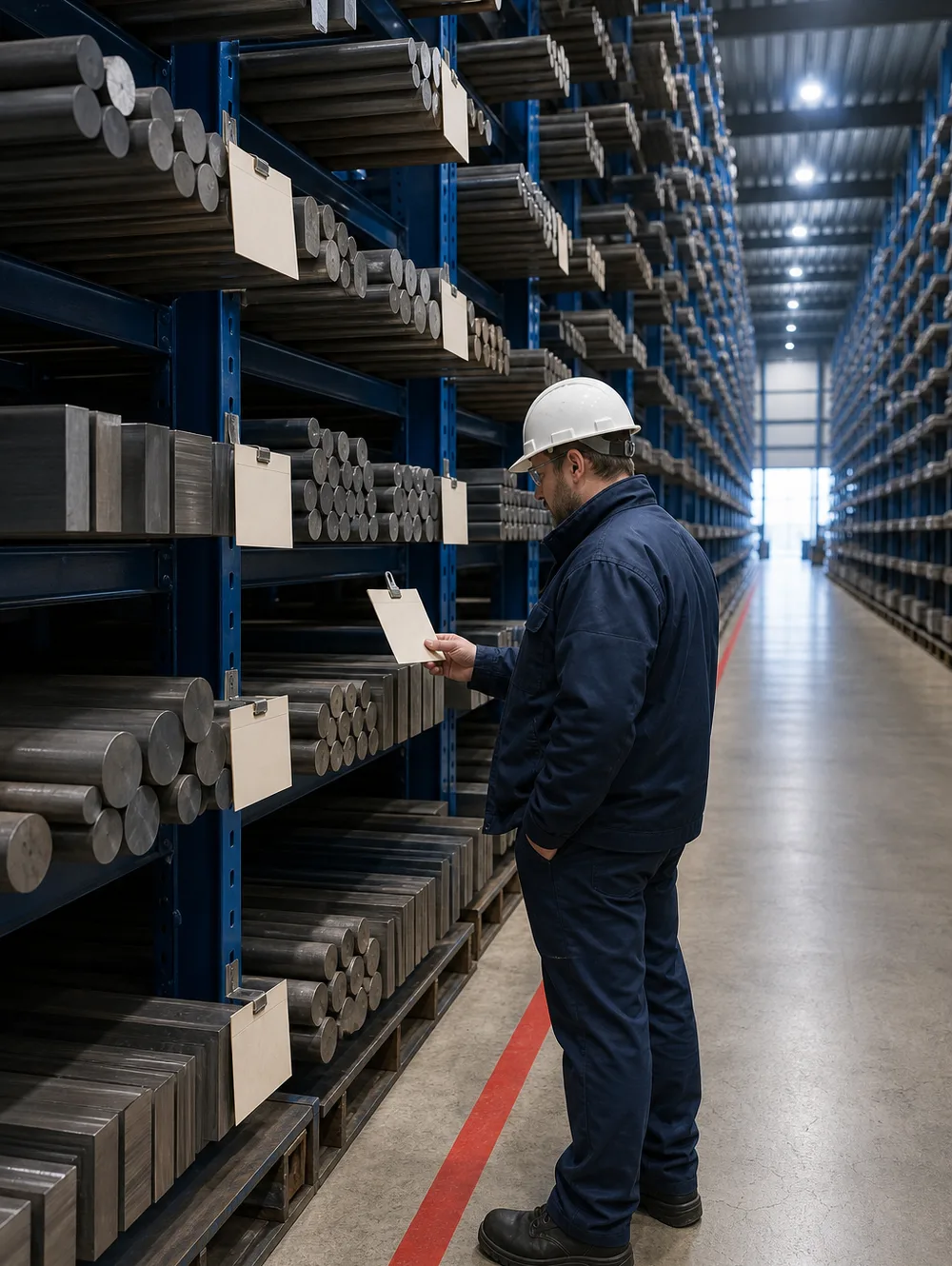
Warehouse operator checking tagged tool steel bar against a picking list

Distributors

Buy across the range against enquiries passed up from tool rooms, often under a grade name that arrived from somewhere else in the chain.

Needs
a written equivalence for that grade name, and a certificate that survives being forwarded to somebody who will test the steel again.
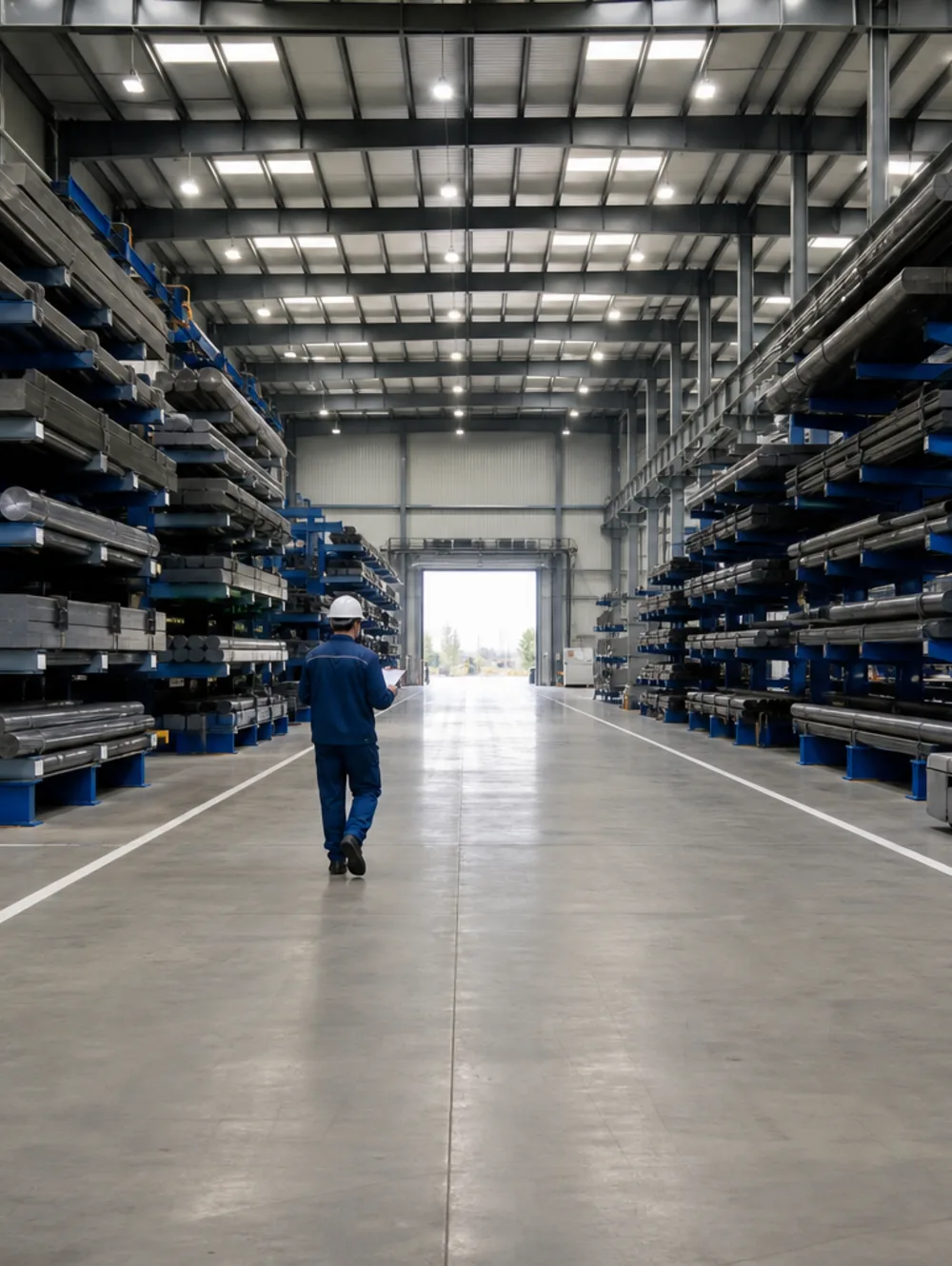
Cantilever racking aisle in the finished goods warehouse holding tool steel bar and plate

Stockholders

Buy the five stock grades on a replenishment rhythm set by their own turnover, and plan the next quarter against the last one.

Needs
next quarter’s stock position and lead time to look like this quarter’s.
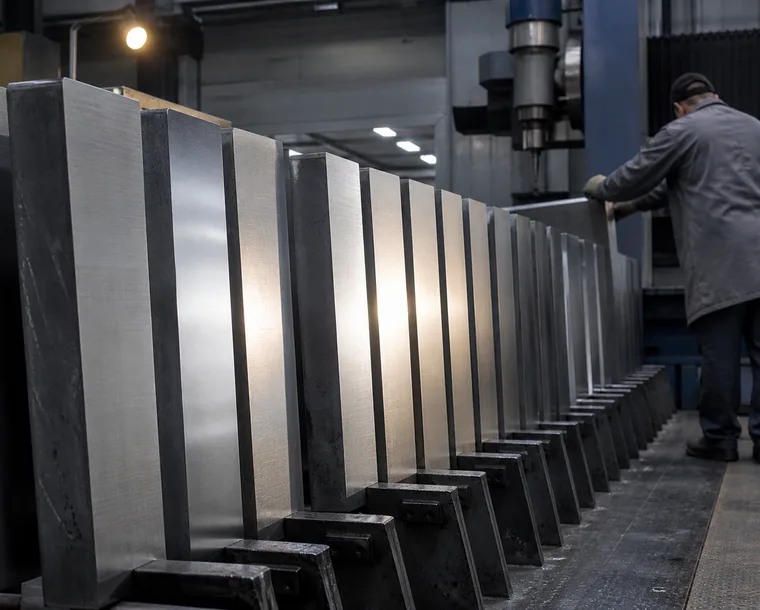
Ground tool steel plate stacked on edge beside a gantry machine

Wholesalers and bulk buyers

Arrive with project orders on the other nine grades and the heavy sections, where the answer turns on the press and the ingot size.

Needs
confirmation that the line and the ingot for that section exist before a date is quoted.

A first order does not have to be a leap. New customers commonly place one trial order, test what arrives against their own laboratory, and move to regular replenishment once it holds up.

  • Same heat route
  • Same eight-step inspection
  • Same certificate
  • What you verify is what you keep receiving

What leaves here

Grades and Section Range

Fourteen grades in five families. Cross-references are confirmed in writing before an order is accepted, so the confirmation can be forwarded.

FamilyGradesDelivery condition
Hot workH13 · 1.2367 · H11 · H10 · 1.2714Annealed
Cold workD2 · DC53 · D3 · D6 · O1Annealed
Plastic mould1.2316 · 1.2085 · 420Annealed; 1.2085 and 420 also pre-hardened
High speedM2Annealed
Cross-referenceAISI · DIN and W-Nr · JIS · GB · ASSAB · BÖHLERConfirmed in writing before acceptance

Section range

Ø 16 – 600 mmRound bar, forged across three lines
20 – 500 mm × 200 – 1,200 mmFlat bar and plate, thickness by width

The full range, stock position and lead times sit on the tool steel manufacturer home page. The two highest-volume grades have their own pages: H13 tool steel and D2 tool steel.

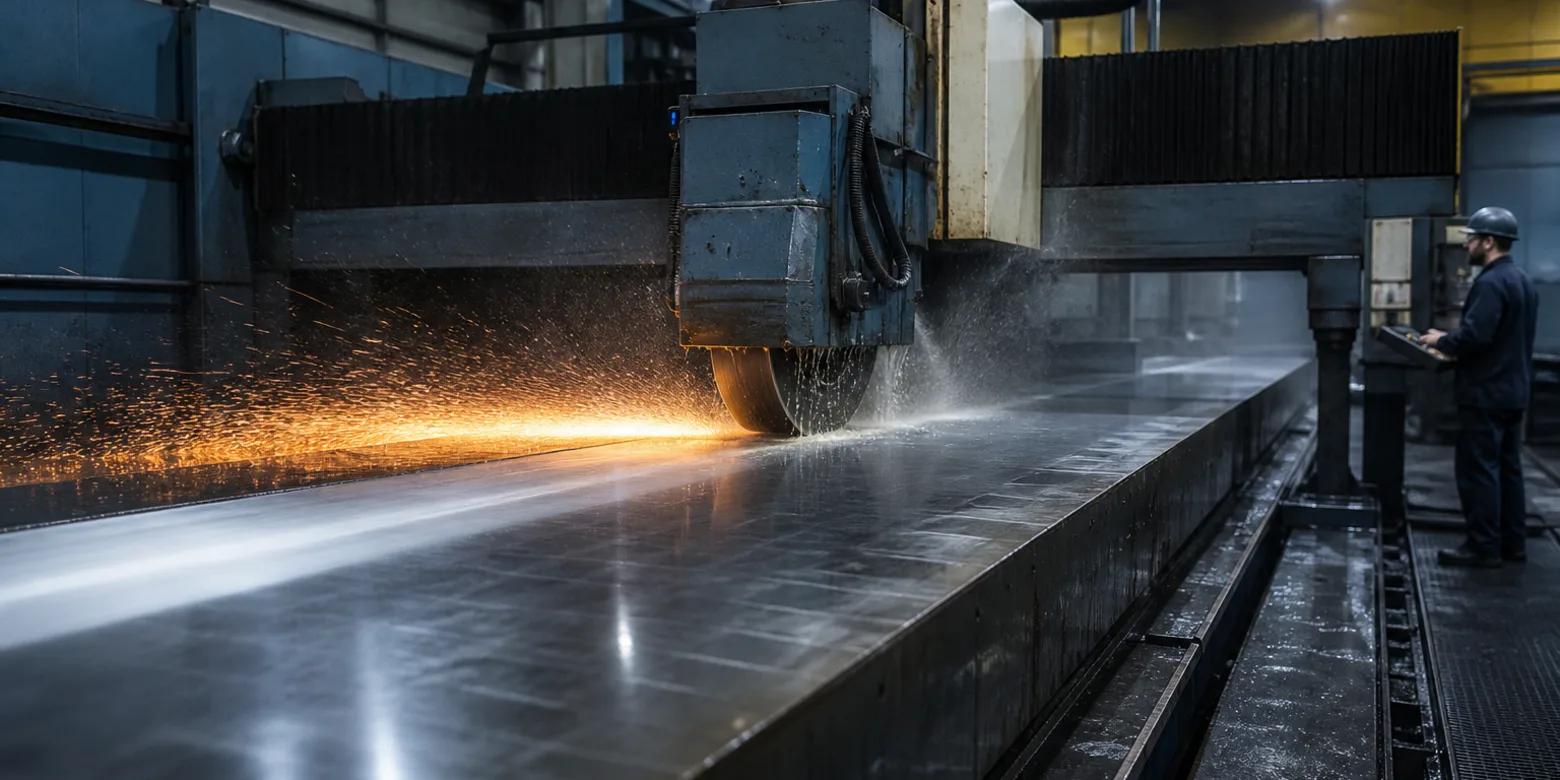
Bright peeled tool steel round bar bundled by diameter Gantry grinder finishing a wide tool steel plate to thickness

Inside the fence

Tool Steel Factory Layout

Eight production stages stand between an order and a shipment, and all eight are on this site.

  1. 01

    Melting

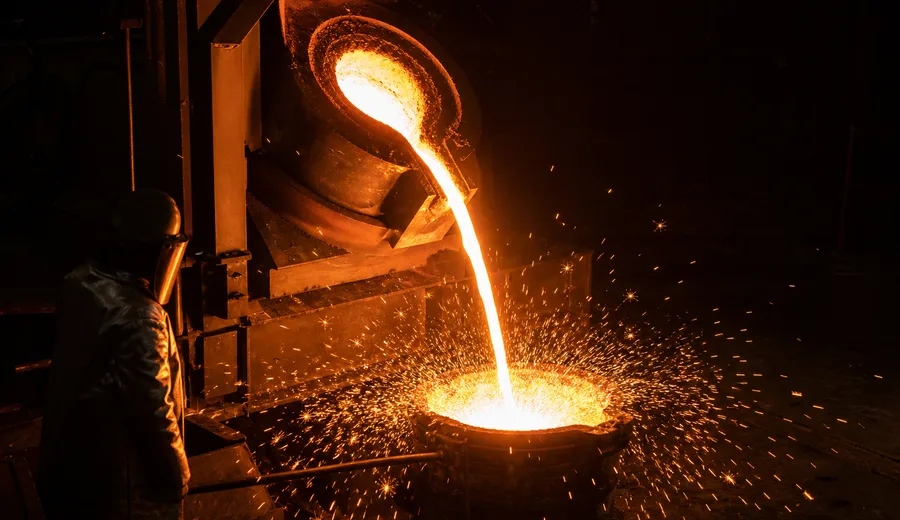
    One shop, two 15-tonne medium-frequency induction furnaces, three shifts.

  2. 02

    Electroslag remelting

    A second shop of ten furnaces in continuous operation.

  3. 03

    EFS grain refining

    No building of its own — carried on the forging lines and in the annealing furnaces.

  4. 04

    Forging

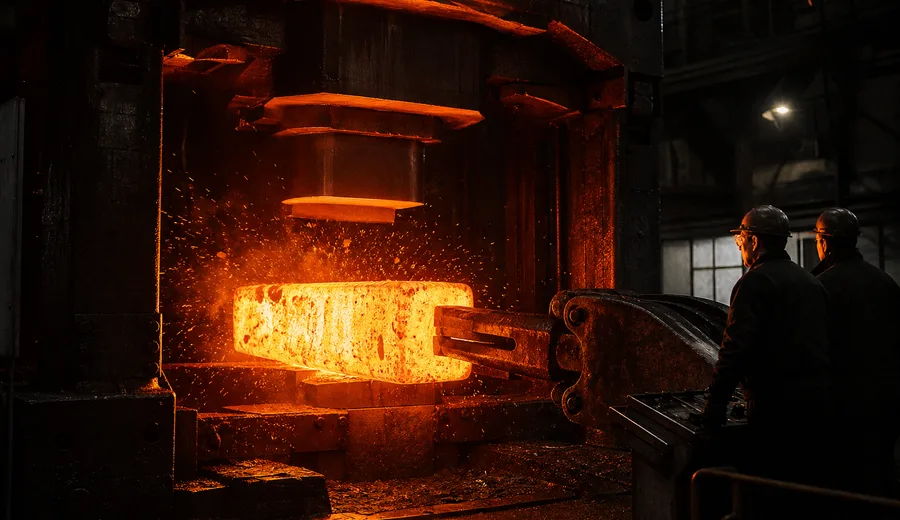
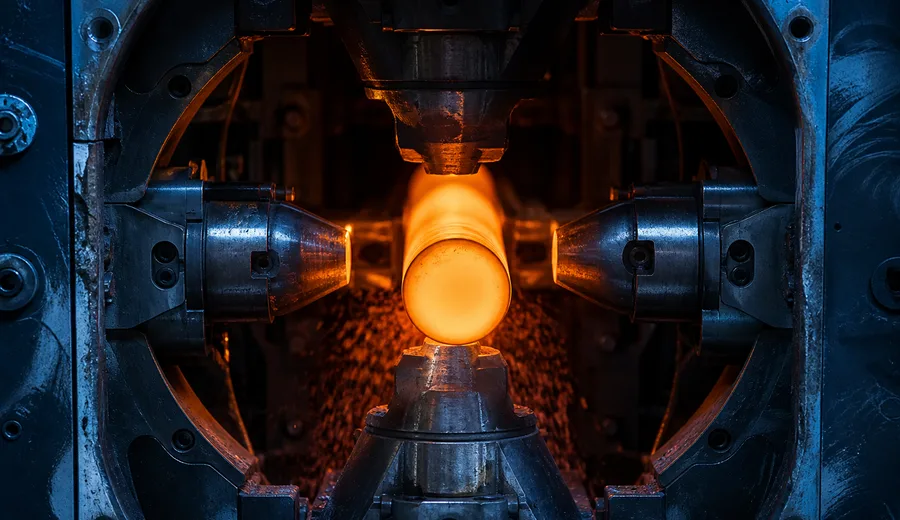
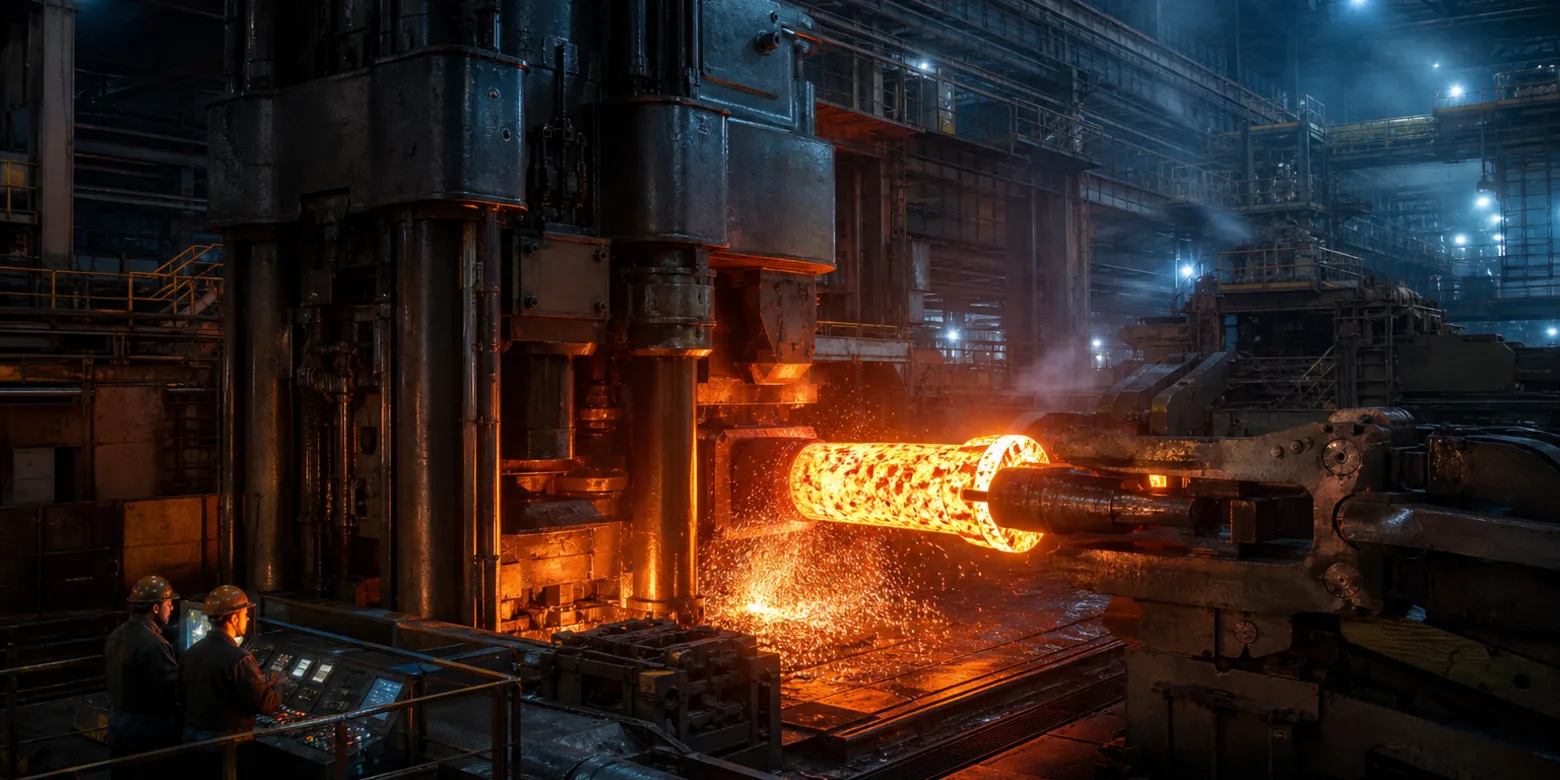
    Three lines on two shifts: 2,500 t and 1,600 t fast forging, plus radial precision forging.

  5. 05

    Heat treatment

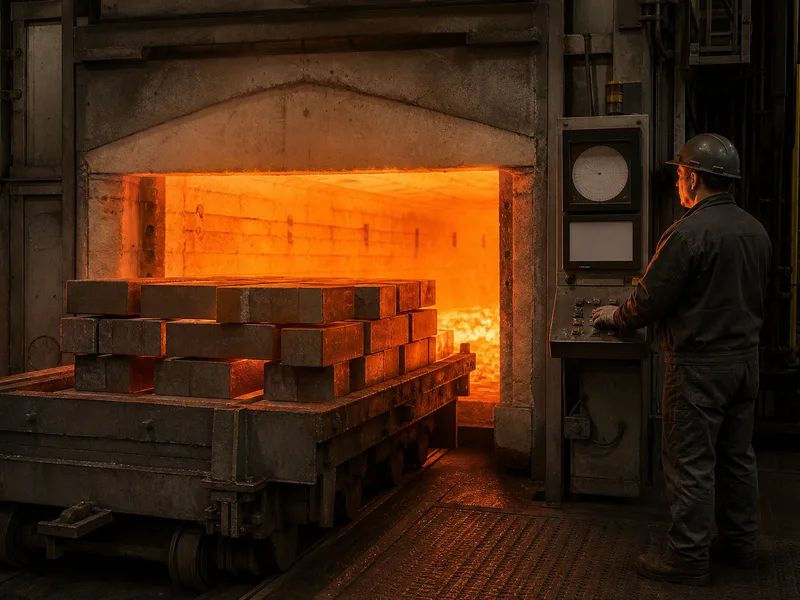
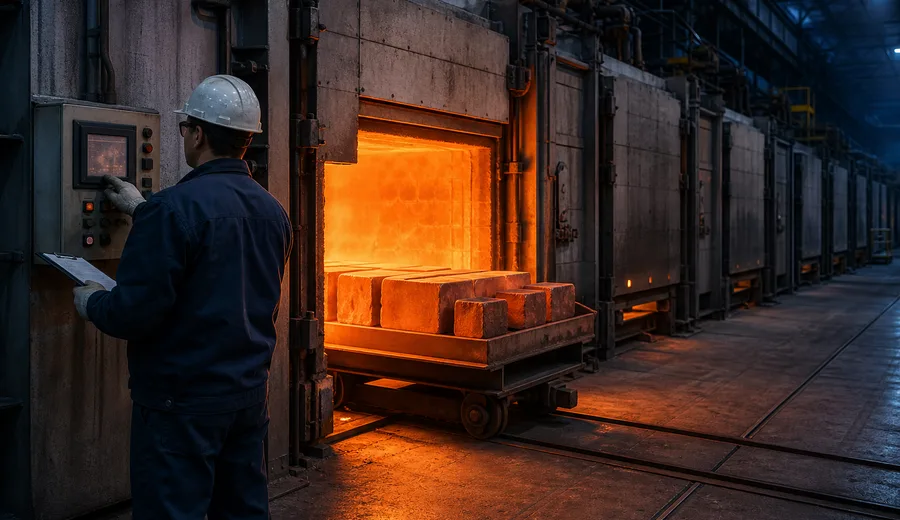
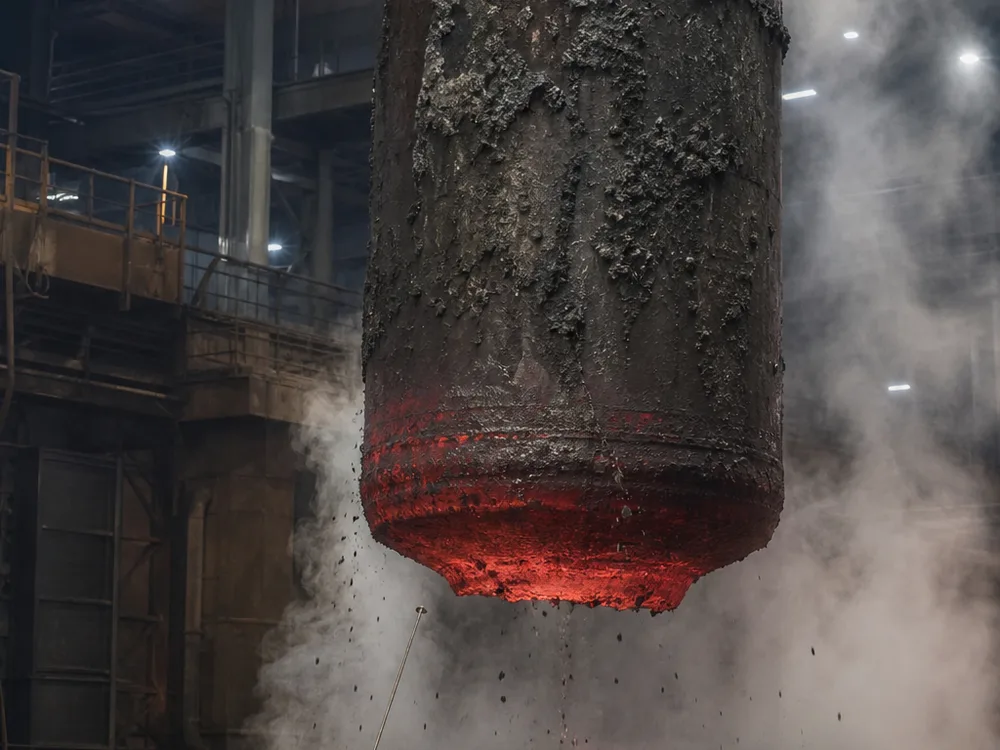
    Eight bogie hearth annealing furnaces plus a quench-and-temper line for pre-hardened grades.

  6. 06

    Finishing

    Four areas: sawing, grinding, milling, and turning and machining.

  7. 07

    Inspection centre

    Laboratory, non-destructive testing and metallography in one building, not spread among the shops.

  8. 08

    Certification

    The quality department signing release on the EN 10204 3.1 MTC.

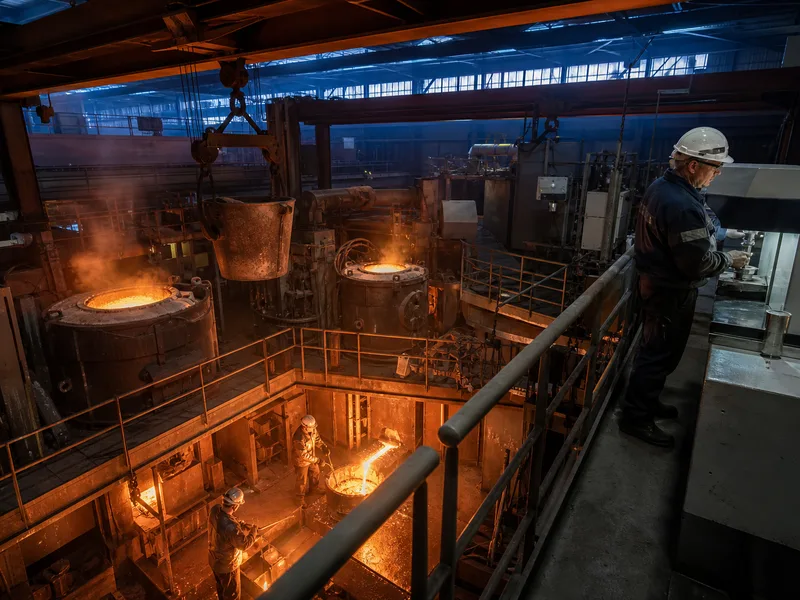
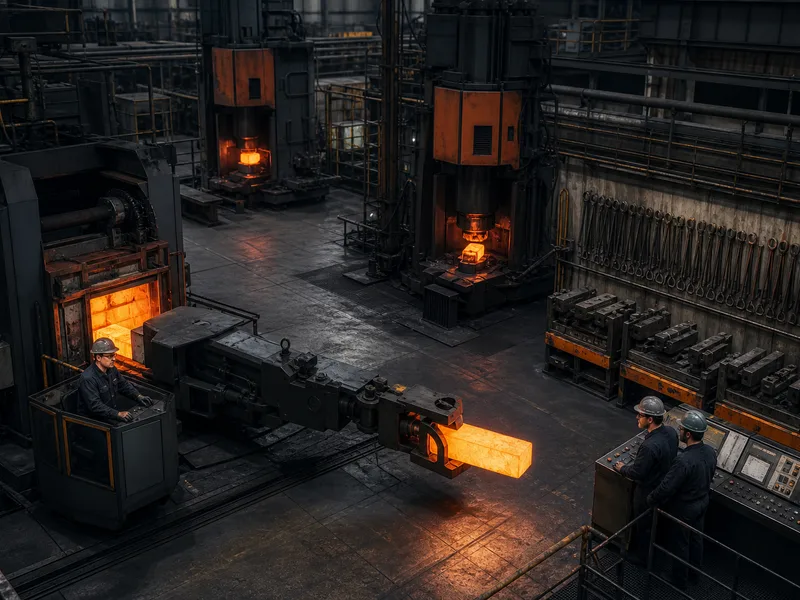
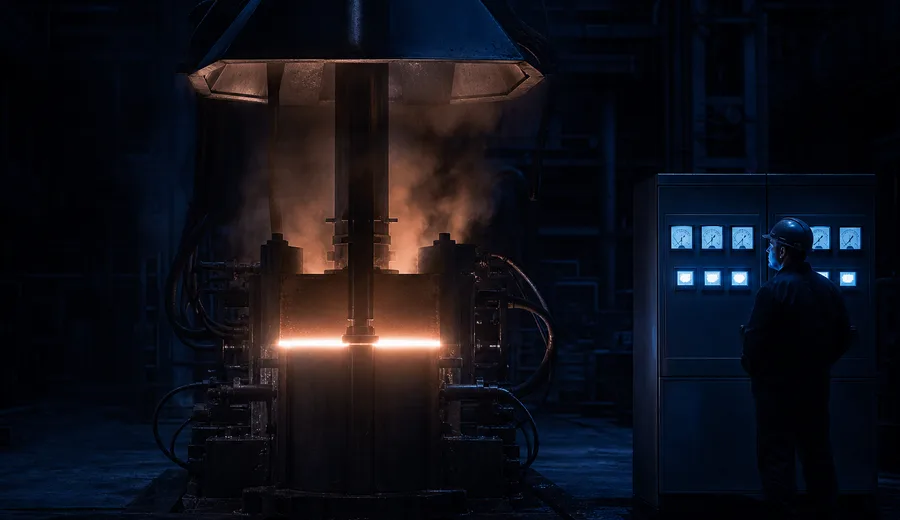
Melt shop of the tool steel factory with induction furnaces and a ladle of molten steel Forging bay seen from above with a glowing billet under the fast forging press Bogie hearth annealing furnace charged with tool steel blocks Inspection centre bench holding ultrasonic equipment and metallographic samples

The seventh stage holds the physical and chemical laboratory, the non-destructive testing area and the metallography room in one building rather than distributed among the production shops. The eighth is certification, which is the quality department signing release.

  • Inspection sits between finishing and dispatch as a stage in its own right — its own building, its own staff, its own reporting line.
  • Not a desk inside the production office — the arrangement a 3.1 certificate may not come out of.

Coverage

All fourteen grades are electroslag remelted. Not the premium four.

Nineteen years

Growth of This Tool Steel Factory

Each step is here because it let the works do something it could not do the year before.

  1. Started as a forge shop

    One 1,600 t fast forging press and two annealing furnaces, buying ingot from outside. Grades could be delivered, but composition and cleanliness were decided in somebody else’s furnace.

    2007
    Fast forging press working a glowing tool steel billet in the original forge shop
  2. First overseas distributors

    Shipping moved from domestic supply to export, and orders started being written to EN, AISI and JIS designations in parallel rather than one national standard.

    2010
    Crated tool steel bundles staged at the despatch bay for an export shipment
  3. Melt shop built

    Two 15-tonne medium-frequency induction furnaces on three shifts. From that point the analysis printed on a certificate was measured on steel made here.

    2012
    Molten tool steel being poured from a ladle into an ingot mould
  4. Electroslag shop and the 2,500 t press

    The first four electroslag furnaces opened alongside a 2,500 t press, which brought Ø 300 to 600 mm and 500 mm thick sections into range with the core soundness to support them.

    2014
    Electroslag remelting furnace running an electrode under a glowing slag pool
  5. Ten electroslag furnaces, EFS written down

    Annealing reached eight bogie hearth furnaces and the EFS regime was written per grade, which turned grain refining from shop-floor experience into a repeatable instruction.

    2016
    Row of bogie hearth annealing furnaces with a charged bogie at the mouth
  6. ISO 9001 and the inspection centre

    Certification was granted and inspection was brought together in one building, making 100% ultrasonic testing to SEP 1921 Class D/d or E/e the gate every bar passes rather than a sample check.

    2018
    Ultrasonic flaw detector trace beside a tool steel bar on the inspection bench
  7. Radial forging, gantry grinding and milling

    The radial precision forging machine, two gantry grinders and four gantry mills arrived, so small sections are forged rather than cut down and 1,200 mm wide plate leaves at finished size.

    2020
    Radial precision forging machine closing on a glowing tool steel bar
  8. The 12,000 m² finished goods warehouse

    Stock rose to around 8,000 tonnes, which is what makes 7 to 10 day despatch possible on the five stock grades and lets buyers order to a replenishment rhythm.

    2022
    Racked aisle of the finished goods warehouse stocked with tool steel bar
  9. TÜV carbon footprint and CBAM data

    Carbon footprint certification and EU CBAM data preparation were added, so declaration figures for European buyers come from the mill that made the steel.

    2024
    Energy and process data being read off a plant monitoring screen beside the melt shop

The step that mattered

The Electroslag Shop Turning Point

Of those steps, the one that changed most about what could be sold was the move from four electroslag furnaces to ten in 2016.

With four, remelting was rationed to the grades that most needed it. A grade either qualified or it did not, and the answer changed with the order book.

The arithmetic is public

One furnace
Around 2,400 tonnes a year, calculated at roughly 80% utilisation rather than at full load.
Ten furnaces
24,000 tonnes a year.
Output of the works
24,000 tonnes a year — the same figure, which is what “all fourteen grades” has to mean.

A tool steel factory that remelts only its premium grades has furnace numbers that cannot reach its tonnage, and the gap shows the moment the two figures are put side by side.

Four furnacesRationed

Remelting reserved for the grades that most needed it; the answer to “is my grade remelted” moved with the order book.

Ten furnaces14 of 14

Every grade remelted, every heat, with capacity that adds up to the whole annual tonnage rather than a premium slice of it.

Remelted tool steel ingot withdrawn hot from the electroslag mould Electroslag remelting shop with two furnaces running under a dark bay roof
Ingot 3 – 12 t Ingot sizes, the melting rate behind that figure and what remelting changes inside the bar are set out on the ESR tool steel page.
2,500 tonne fast forging press drawing down a glowing tool steel ingot Forging line with heated tool steel blocks under successive press stations

Who writes the rules

Process Regime Authorship

The instructions that decide structure are not written on the shop floor. Sixteen metallurgical and process engineers issue the regime for each grade and section before the order reaches production.

That regime fixes the forging ratio, held to a minimum of 4:1, and the annealing curve, including the soak and the controlled cooling rate.

Two ways to reach a heavy section

On a heavy sectionA works without its own melt shopThis works
Ingot sizeWhatever size is available to buy inCast to suit, 3 to 12 tonnes
Forging ratioRelaxed to make the section fit the ingotHeld at a minimum of 4:1
Composition on the certificateMeasured on somebody else’s heatMeasured on steel melted here
Shortfall on a rejected heatBought in again to cover the gapRemade from our own melting

Where a section is heavy, the ratio is not relaxed. The ingot is made larger instead, which is what the 3 to 12 tonne range exists for. The reduction, the annealing curve and the hardness windows that come out of them are set out on the fine grain tool steel page.

Not handed out

Process regime documents themselves stay inside the works. What is available is watching them being executed, and asking the engineer who issued them.
Stock lanes laid out by grade and section inside the finished goods warehouse

Where stock sits

The Finished Goods Warehouse

Twelve thousand square metres holding around 8,000 tonnes, laid out by grade and then by section so that a replenishment list is picked rather than searched for.

7 – 10 days Despatch on the five stock grades in their common sizes
Stock grades
H13, D2, 1.2316, 1.2085 and 420 occupy most of the floor in their common sizes.
Layout rule
By grade, then by section — so a picking list runs down an aisle instead of across the building.
Warehousing and logistics
Twenty-two people handle marking, packing, loading and the paperwork that travels with a shipment.
Heat number
Every item carries its heat number through to the pack, so the certificate can be matched to the bar after it arrives.
Marked end face and hanging tag carrying a heat number on a bundle of tool steel bar

Traceability

Every stage from the first heat to the signed certificate happens inside this fence.

Where release is decided

Quality Department Authority

Independent of production, reporting directly to the general manager, holding the authority to stop a line and to refuse release.

Output and delivery targets are not part of the quality department’s appraisal. That is the mechanism which lets it hold a batch on a day when the shipping schedule would prefer otherwise.

The independence is not a courtesy. EN 10204 defines a 3.1 certificate as one validated by an inspection representative independent of the manufacturing departments.

Read the standard A tool steel mill that issues 3.1 certificates from a production office is issuing something other than what the standard describes.

Deviations escalate along a fixed route

  1. OperatorRaises the deviation at the station where it appears.
  2. Station inspectorConfirms the reading and records it against the heat.
  3. Quality duty engineerJudges it against the acceptance criteria for that grade.
  4. Quality managerHolds the authority to stop a line and to refuse release.
  5. General managerThe only route onward from a refusal — disagreement travels upward, not sideways into the shop.

Production cannot overturn a refusal to release. Until the disagreement is resolved, the material does not move.

Engineering owns the regime

Forging ratio and annealing curve for a grade are written by the metallurgical engineers.

Quality owns the rules

Acceptance criteria and release rules are set by the quality department, not by the shop that made the steel.

Signing is licensed

Ultrasonic results may only be signed by operators trained and examined to ISO 9712 Level II, recertified every three years. An uncertified operator may run the equipment but may not sign the result.

The system is audited

Internally once a year, and by third-party surveillance on the ISO 9001 certificate cycle.

Material test certificates laid out and checked line by line against the heat records

What release leaves behind

Retention
Production and inspection records, and copies of every 3.1 certificate, kept for ten years.
Traceability
A bar sold three years ago is still traced back to its heat and its readings.
Failed inspection
Held back rather than shipped against a concession; the heat is re-inspected and the shortfall remade from our own melting. Disputed results are settled by the procedure on the tool steel manufacturer home page.
Archived heat file opened at the ultrasonic and metallography records for a single batch
There is a cheap way to test any mill on this, including this one.

Ask in writing who signed the most recent refusal to release, and whether production has a route of appeal against it. A works where quality is a department will name the position and answer that there is no appeal.

Here That signature is the quality manager’s, and the only route from it leads to the general manager.

Four signatures

Positions and Signing Responsibility

Of the 280 people here, 34 work in quality and inspection — 10 certified ultrasonic operators, 8 in physical, chemical and metallographic testing, 8 on dimensions and visual inspection, 8 on the management system and certificate issue.

Process regime sheet for a grade being issued at the engineering desk before production Signature 01

Metallurgical engineer

Issues the process regime for the grade and section before production starts.

Signs
forging ratio and annealing curve for this order
Finished tool steel bar being measured against the ordered section on the inspection bench Signature 02

Dimensional inspector

Checks the finished sizes and the machining allowance against what was ordered.

Signs
the finished sizes
Ultrasonic probe passing along a tool steel bar with the trace shown on the instrument Signature 03

Certified UT operator

Runs 100% ultrasonic testing to SEP 1921 Class D/d or E/e and signs the result for each individual bar, not for the batch.

Signs
one result per bar · ISO 9712 Level II
Material test certificate being signed and stamped for release at the quality department desk Signature 04

Quality department

Reads the eight-step file for the heat and decides whether it leaves.

Signs
the EN 10204 3.1 MTC that releases the heat

Not in the chain

Sales and scheduling appear nowhere in it. They can ask when a batch will clear, and that is the extent of their part.
Document set

Send Your Quality Department’s Document List

It comes back item by item, matched to your numbering, within 24 hours on a working day — not as a general information pack for you to search through.

Vendor questionnaire, item by item
T+24 h
Sample EN 10204 3.1 MTC
On request
Written grade equivalence
Before acceptance
Works visit or live video audit
Book 5 working days ahead

Before anything is quoted

Technical Desk Order Screening

A first enquiry does not go to a salesperson. It goes to the technical desk — six technical support engineers working alongside twelve export sales staff — and it is read before anything is priced.

Four things checked on every enquiry

The point of the check is to catch, at the desk, the four things that most often turn into a rejected delivery three months later.

Enquiry drawing and grade list being read at the technical desk before quoting
  • Grade mappingThe grade name is mapped to one of the fourteen grades made here, and the equivalence is confirmed back to you in writing so you can forward it to whoever sent it up to you.
  • SectionChecked against the forging lines, including whether it sits at the extreme end of the range where the schedule matters.
  • Delivery conditionAnnealed and pre-hardened are two different products. An enquiry that does not say which one gets a question rather than an assumption.
  • Downstream operationsHardening, EDM work and grinding decide how much stock allowance has to be left on, so the desk asks what happens after delivery.

Three things stop an enquiry

Stopping an enquiry costs a day. Not stopping it costs a tool, and the tool belongs to your customer.

Written grade comparison being drafted against a cross-reference table at the technical desk
  • A grade not on the listGets a written comparison naming the closest grade made here, where the two differ and what that difference means for the tool in question. No quiet substitution.
  • A tolerance that will not surviveA machining tolerance that will not survive the heat treatment you or your customer will run is raised before anything is cut, not after.
  • Grade, section and application disagreeingAn enquiry where the three do not fit together gets a question rather than a confirmation. In practice it is usually a transcription error somewhere up the chain.

Two things flagged early

Both exist so that what you send downward does not have to be corrected later.

Radial precision forging machine working a small section tool steel bar
  • Sections at the top of the rangeConfirmed against the production schedule before any date is given, rather than quoted first and rescheduled afterwards.
  • Enquiries that reached you from a tool roomAnswered in a form you can forward downward without rewriting them.
Same clock Technical enquiries are answered within 24 hours on a working day, before an order and after it, on the same standard.
Order file being handed from the technical desk to production scheduling

After the order is placed

Order Handling Inside the Works

Six functions touch an order, and only one of them can release it.

Sales desk
Holds the commercial thread and follows your account rather than one order.
Technical desk
Stays involved from the enquiry onward, not only until the order is booked.
Metallurgical engineers
Issue the regime for the grade and section before scheduling.
Production scheduling
Owns the delivery date.
Quality department
Owns release, and is the only signatory on the certificate.
Warehousing and logistics
Handle marking, packing and despatch, with the heat number carried through to the pack.

Anything about the material

Goes to the quality department.

Anything about a date or a document

Goes to the sales desk.

Anything carrying a heat number

Goes straight to the person holding the records for that heat, rather than being relayed through the chain.

When they pull against each other

Quality First in a Conflict

Cost, delivery and quality do pull against each other. Quality is held and the date moves.

  1. Hardness being re-measured on an annealed tool steel block after a second anneal

    A reading outside its window

    A heat reading outside its annealed hardness window is annealed again and re-measured before release, rather than released against the first reading.

  2. Bundles of tool steel bar held behind a marked barrier pending re-inspection

    Material judged non-conforming

    Held back rather than shipped against a concession. There is no version of this where the batch leaves with a note attached.

  3. Replacement heat being cast in the melt shop to make up a held-back shortfall

    The shortfall

    Remade from our own melting to the same specification, which is only possible because the melt shop is on this site.

Both procedures The full handling of a non-conforming batch and of a disputed result is set out on the tool steel manufacturer home page.

Retention

Records and certificate copies are kept for ten years.

What each document covers

Certifications and Document Coverage

Three documents, three different jobs. Each is sent on request, matched against whatever list your quality department works from.

  • ISO 9001
  • EN 10204 3.1 MTC
  • TÜV carbon footprint
  • EU CBAM data preparation
  • SEP 1921 Class D/d or E/e
  • ISO 9712 Level II

ISO 9001

Certifies the management system: how procedures are written, how records are kept and how deviations escalate across the whole works. It says nothing about any individual batch.

EN 10204 3.1 MTC

Carries the measured composition, hardness, ultrasonic result and structure ratings for your heat, signed by the quality department.

TÜV carbon footprint

Covers the reporting side, together with EU CBAM data preparation for European buyers.

System vs batch

A management system certificate and a material test certificate answer different questions. Sent the first when you asked for the second, you have not been answered.

Carbon declaration

The declaration figures come from the mill that made the steel, rather than being reconstructed later by a consultant working from an invoice.

Tapping the induction furnace, the point where the carbon data for a heat begins Heat-level energy and process data being compiled for a carbon declaration
On request Send the list your quality department works from and each item comes back matched to your numbering.

Come and look

Tool Steel Factory Visits

Visits are welcome and are best booked five working days ahead. Six areas are open.

Melt shop and electroslag shop Forging lines Heat treatment area Finishing areas Inspection centre Finished goods warehouse
Main gate and production halls of the tool steel factory on a visit morning

Not handed out

Process regime documents for a grade — the forging ratios and annealing curves — stay inside the works. What is open is watching them being executed, and asking the engineer who issued them.

Four operations can be watched rather than described

  • A spectrometer sample being taken and read on a heat that is running.
  • Ultrasonic testing being run bar by bar, one result recorded per bar.
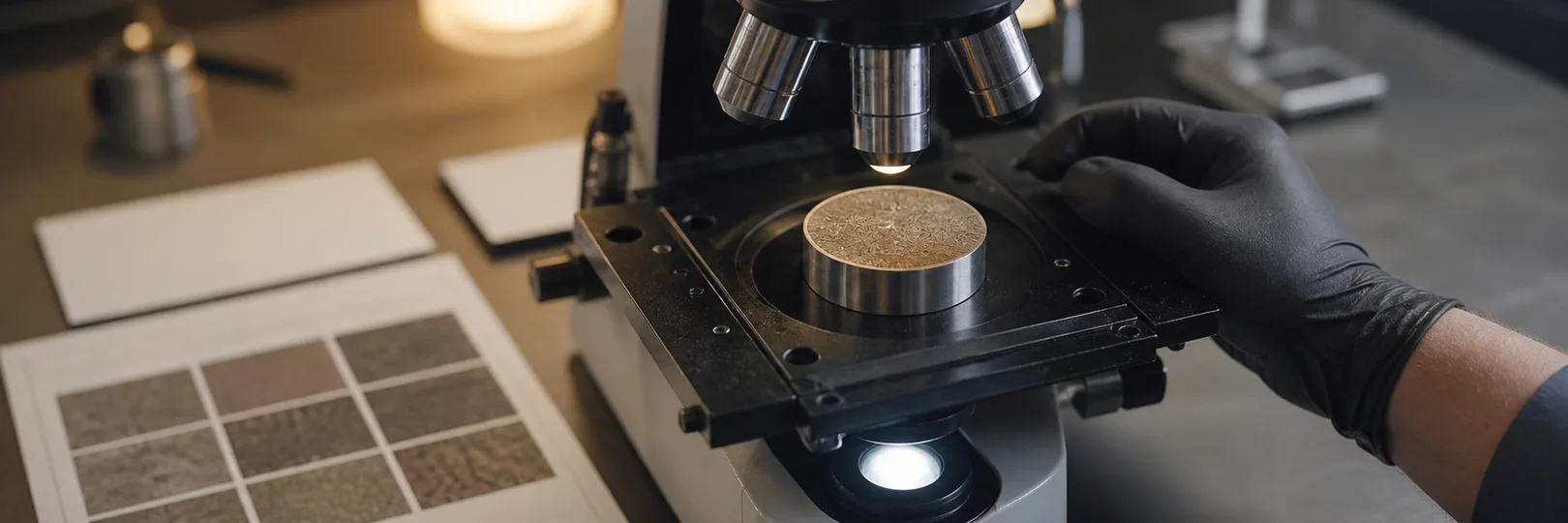
  • A metallographic sample being prepared and rated for grain size and carbide distribution.
  • A 3.1 certificate being retrieved from the archive against a heat number you choose on the day.
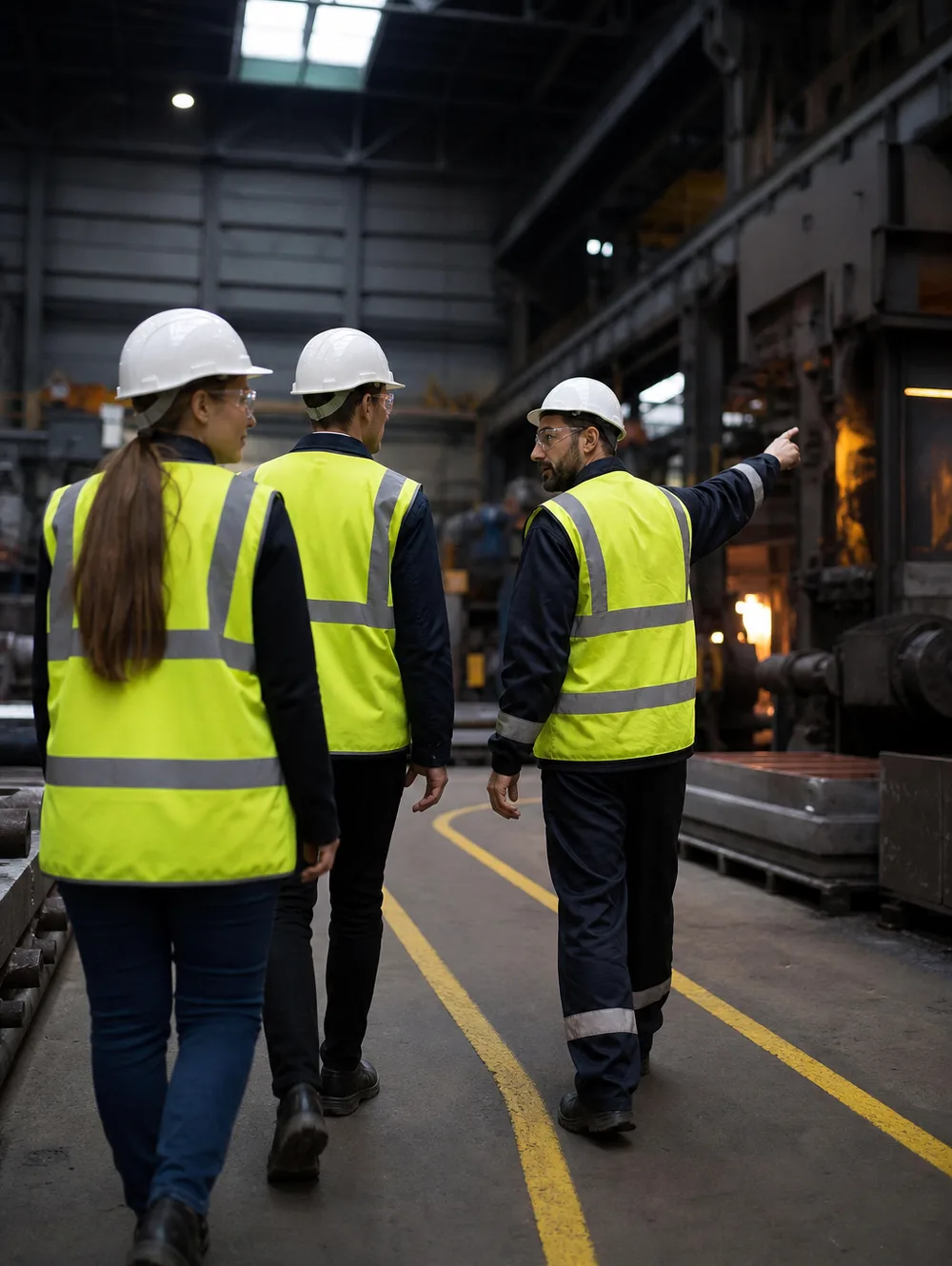
Metallographic sample under the microscope beside a rating chart in the metallography room Visitors walking the marked route through the forging bay during a works audit
Third party · remote An inspection company sent in your place is received on the same terms as your own staff. Where travel is not practical, the same route runs as a live video audit, and you can hold it at any station for as long as you want.

Three years later

Supply Consistency Over Years

The real question behind a supplier audit is whether the steel bought three years ago can be bought again. Three things hold it steady.

  1. The regime is written, not remembered

    Regimes are written per grade and issued by the engineering group, so the result does not depend on which forging crew is on shift.
  2. The records outlast the complaint

    Records and certificate copies are kept for ten years, so a complaint arriving long after delivery is answered with the readings from that heat rather than a general assurance.
  3. Stock is replaced from our own melting

    When a stock grade is drawn down it is replaced from our own furnaces, rather than topped up with bought-in material to cover a gap.

That is the practical difference a tool steel factory with its own melt shop makes to a buyer who never sees it. The fifth order matches the first because it came out of the same furnaces, under the same regime, through the same inspection.

Marked stock lanes of tool steel bar being checked against the replenishment list Grade regime file showing the forging and annealing instruction issued for repeat orders
Same furnaces Replacement stock comes from the same melt shop and the same eight-step inspection as the order before it.

How the book is shaped

Customer Mix and Repeat Orders

Distributors, stockholders, wholesalers and large-scale procurement buyers. Most of the business is repeat business rather than one-off purchases.

Replenishment rhythm

The five stock grades move on a rhythm set by the customer’s own turnover, drawn from the 8,000 tonnes held here and despatched in 7 to 10 days on common sizes.

Project orders

The remaining nine grades and the heavy sections come as project orders when a specific job calls for them, scheduled against the press and the ingot size for that section.

Repeat replenishment order being picked from the stock grades in the warehouse Heavy section project order staged at the forging line against the production schedule
No customer’s account is large enough to set the queue that every other customer waits in.
Two rhythms Both run side by side through the same eight stages, the same inspection and the same certificate.

Reply T+24 h

Send the Grade, the Section and the Quantity

You get feasibility, stock or production, and a lead time within 24 hours on a working day. Send a vendor questionnaire or a document list and it comes back completed on the same clock.

  1. Engineer
    Regime issued
  2. Dimensions
    Sizes signed
  3. Ultrasonic
    One result per bar
  4. Quality
    3.1 MTC signed, heat released

Or write to wonderful@fcstoolsteel.com · +86-18972782802 on WhatsApp. Mon–Fri 09:00–18:00 (GMT+8). Contact us to arrange a works visit or a video audit.