Tool Steel Distributor Program for Stockholders and Wholesale Buyers
A tool steel distributor program is judged on the second order, not the first. Anyone can fill one list. What decides whether a rack can be built on a source is whether the same list, sent again three months later, comes back with the same dates attached to the same lines, whether an enquiry passed up from a tool room comes back in a form that can go straight back down, and whether the crate arrives with the marking and the documents that destination needs.
Fucheng supplies tool steel and mould steel to the distribution layer from a works that melts, electroslag refines, forges, heat treats, finishes and inspects everything it sells.
- Quotations are issued to distributors.
- Enquiries that reach us from tool rooms are pointed back to the distributor in that market. Technical answers are written so you can forward them to the customer who asked.
Stockholders and wholesale buyers run this account two ways at once.
- Stock
- 7 to 10 daysFive grades sit finished in the warehouse for replenishment: H13, D2, 1.2316, 1.2085 and 420, in the sections that move.
- Production
- 25 to 35 daysThe other nine grades and the heavy sections are poured to order.
- Nineteen years
- More than 100 countries
- Fourteen grades across cold work, hot work, plastic mould, high speed and stainless tool steel
Send your replenishment list with the quantity per size and read the reply line by line. If you would rather start smaller, ask for a sample EN 10204 3.1 MTC on any grade you already carry.
Send your replenishment list Contact the technical desk- Around 8,000 tonnes held across five grades
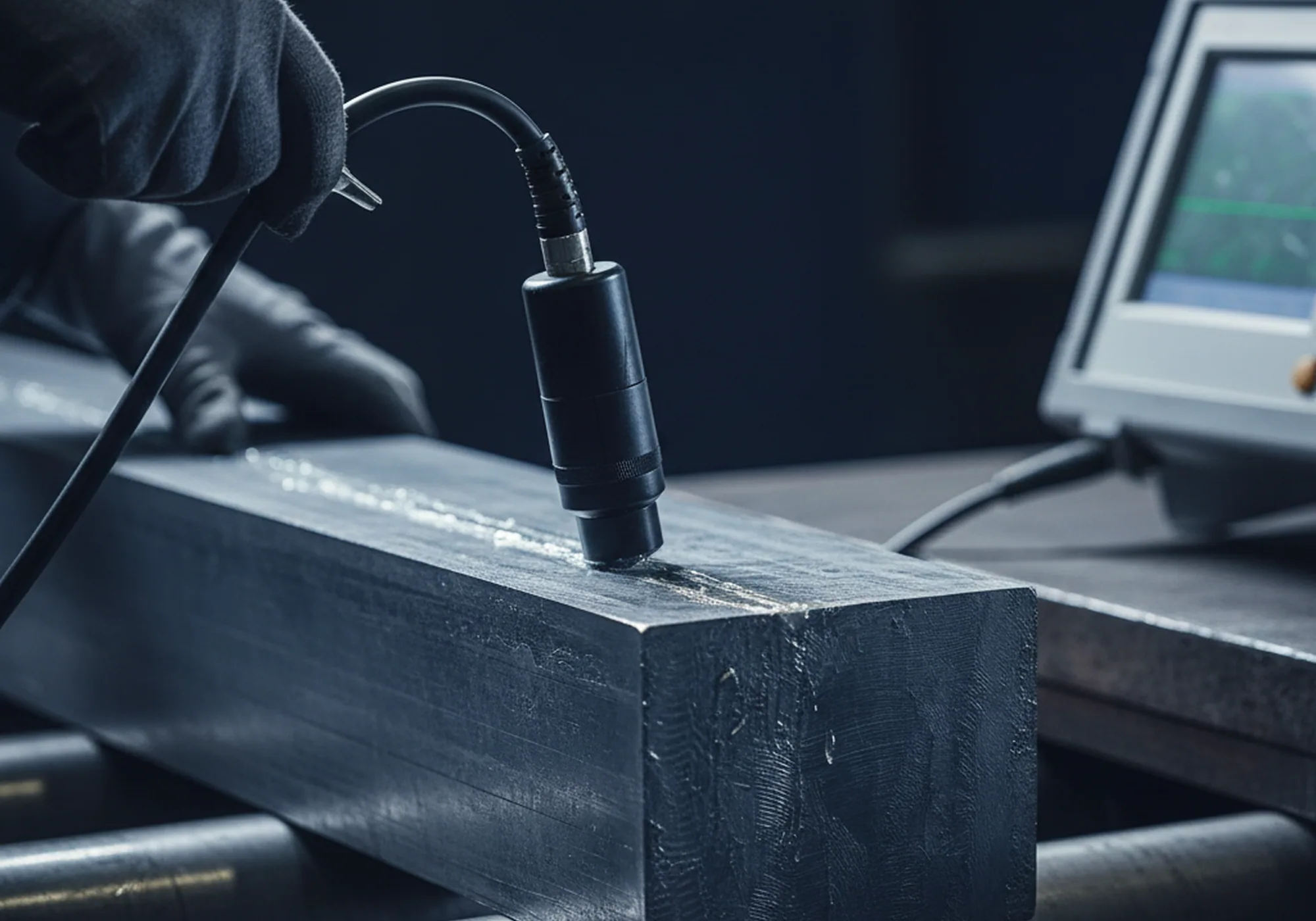
- 100% ultrasonic testing to SEP 1921 Class D/d or E/e
- EN 10204 3.1 MTC with every heat
- ISO 9001, EU CBAM compliance and TÜV carbon footprint certification
- Marking and packing executed to your specification
Tool Steel Distributor Program Accounts
Your account sits with the commercial desk, and it follows the account rather than the order, so the person answering your fourth list is the person who answered your first. Technical work on the same account sits with a technical desk of six, inside a commercial and technical group of eighteen, and it comes in at the enquiry stage rather than after the order is placed.
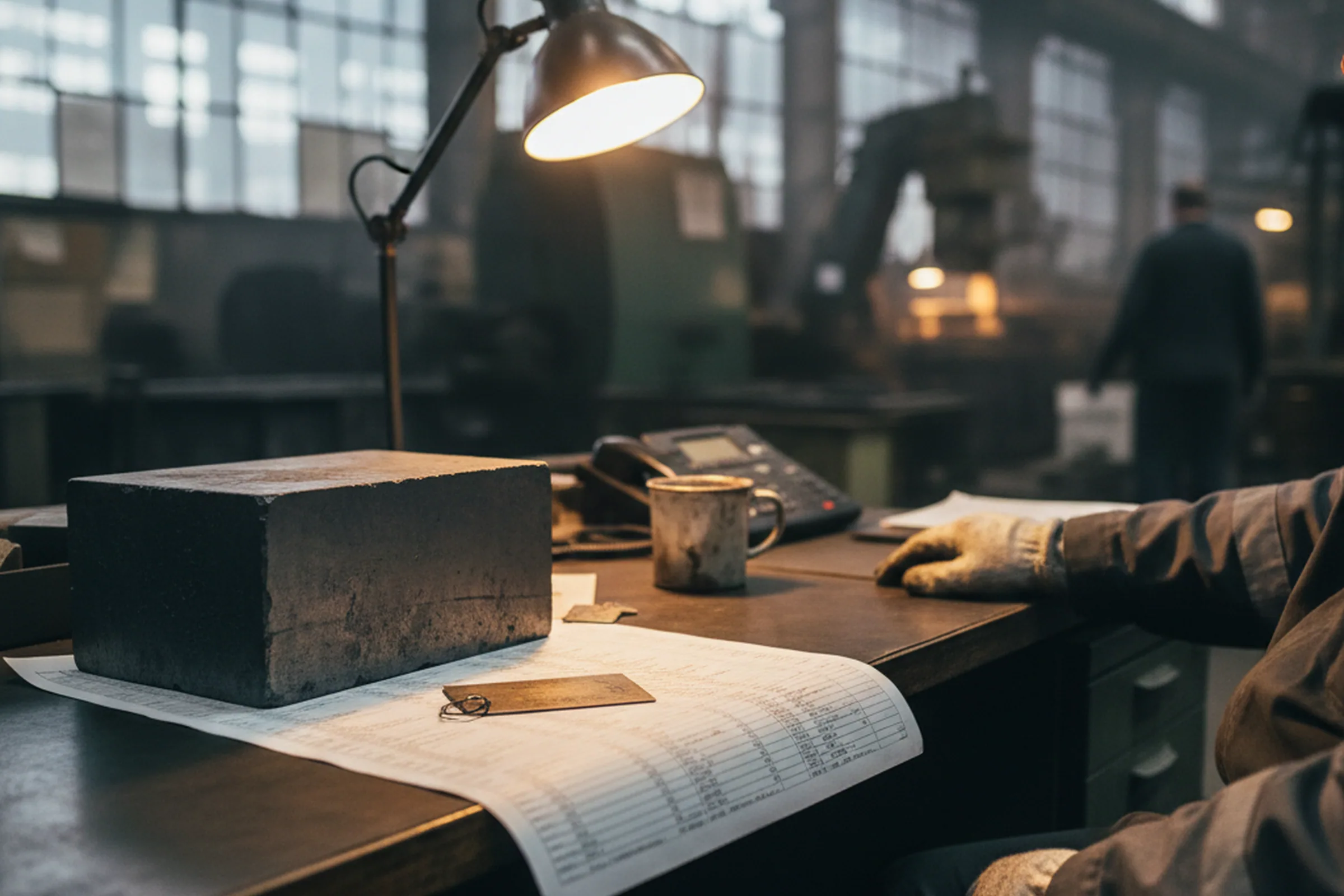
The part of a tool steel distributor program that costs the most to get wrong is what happens to the customer standing behind your enquiry. Here is what happens.
- An enquiry arriving from a tool room in its own name
- is pointed back to the distributor in that market, or told that the material is bought through its distributor.
- Any quotation that follows from it
- is issued to that distributor.
- When you forward a tool room's question yourself
- the answer comes back to you, and the tool room stays yours to serve with it.
Checkable in one afternoon
That claim is checkable in one afternoon, before you commit anything. Have one of the tool rooms you supply send us an enquiry directly, under its own name, with a real grade and a real section on it. Read what comes back.
There should be- 01No price on it
- 02No request for the volume or the project behind it
- 03No name asked for beyond the one that wrote in
- 04A week later, no follow up
A supplier that intends to reach past you has to ask for one of those three things to do it, and asking is visible.
Quotations, stock positions and dates go to distributors, stockholders and wholesale buyers. Nineteen years of this account structure across more than 100 countries is what the rest of this page describes in working detail.
Five Stock Grades for Stockholders
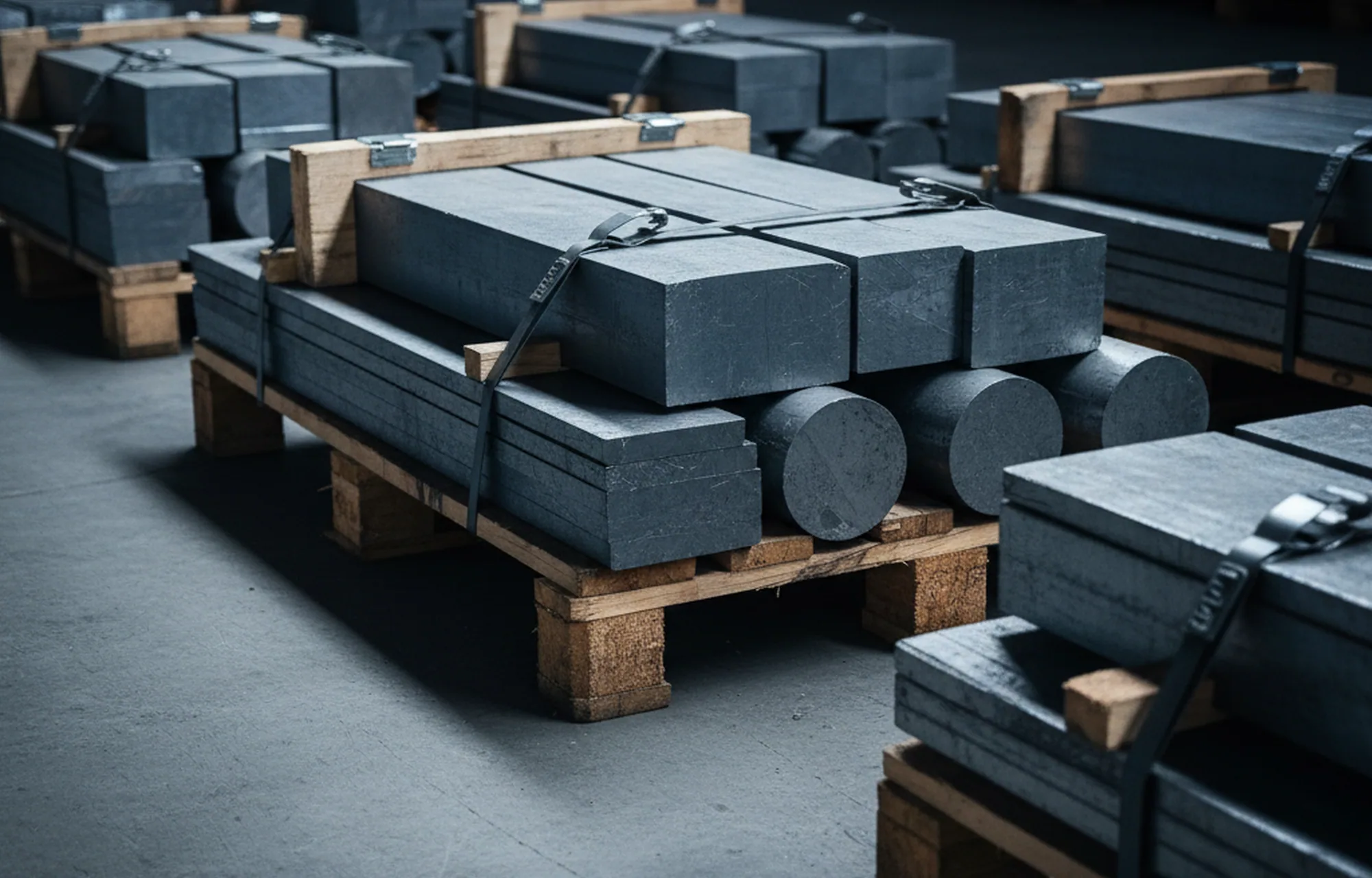
Around 8,000 tonnes sit finished in a 12,000 square metre warehouse, covering the sections that move in five grades.
-
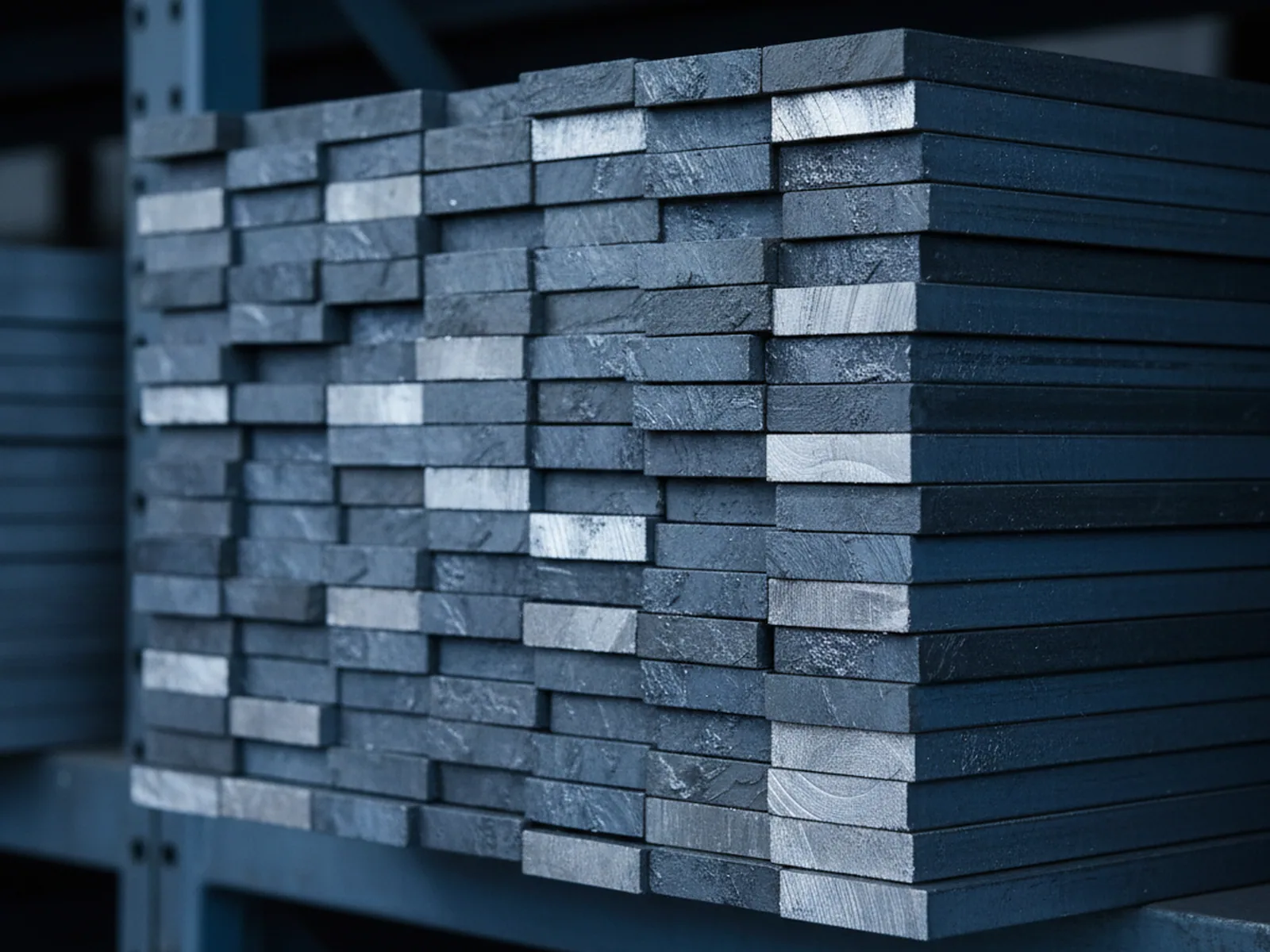
H13
Hot work For die casting and hot forging tooling. -
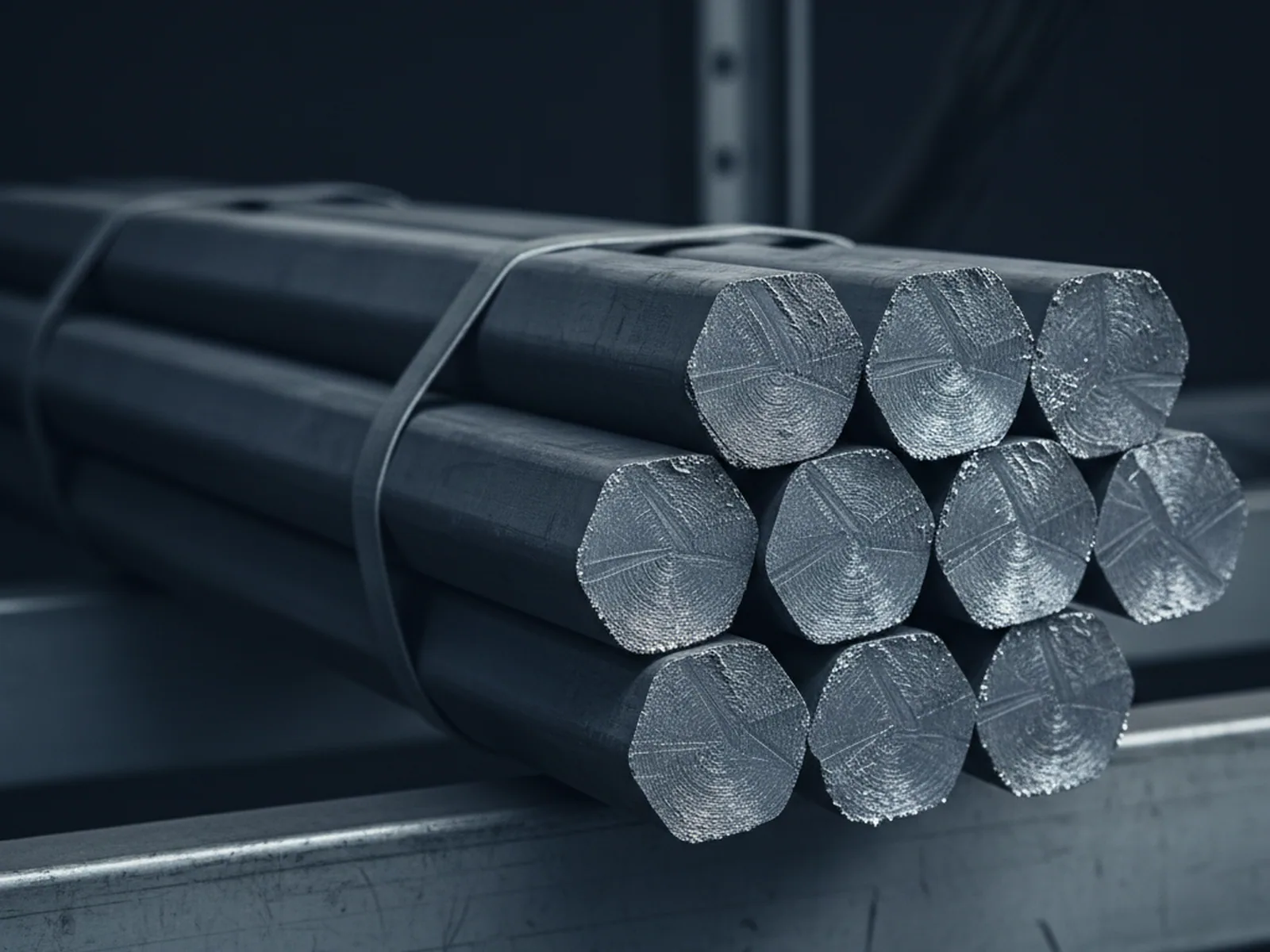
D2
Cold work For blanking and forming tools. -
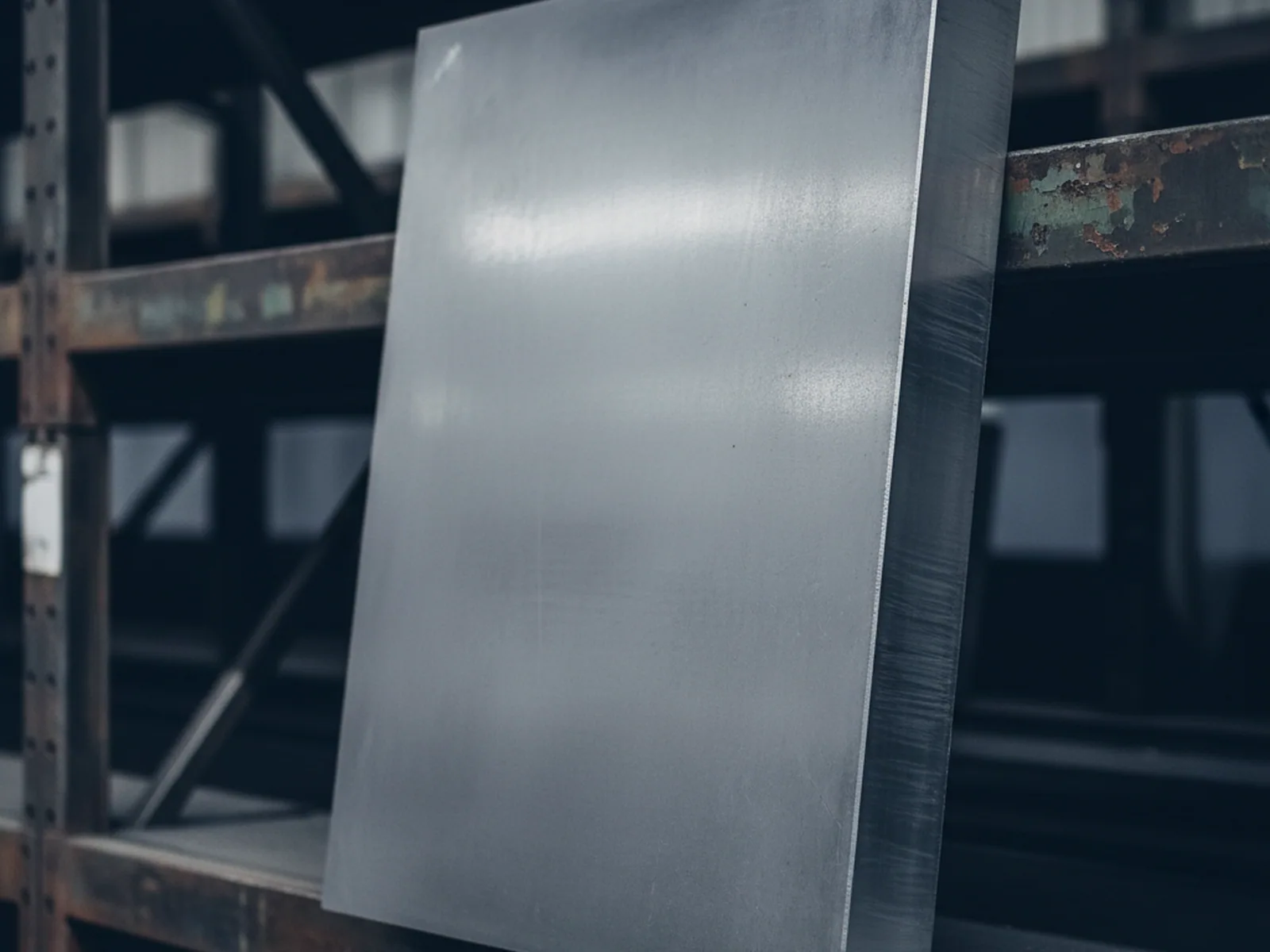
1.2316
Plastic mould Corrosion resistant plastic mould steel. -
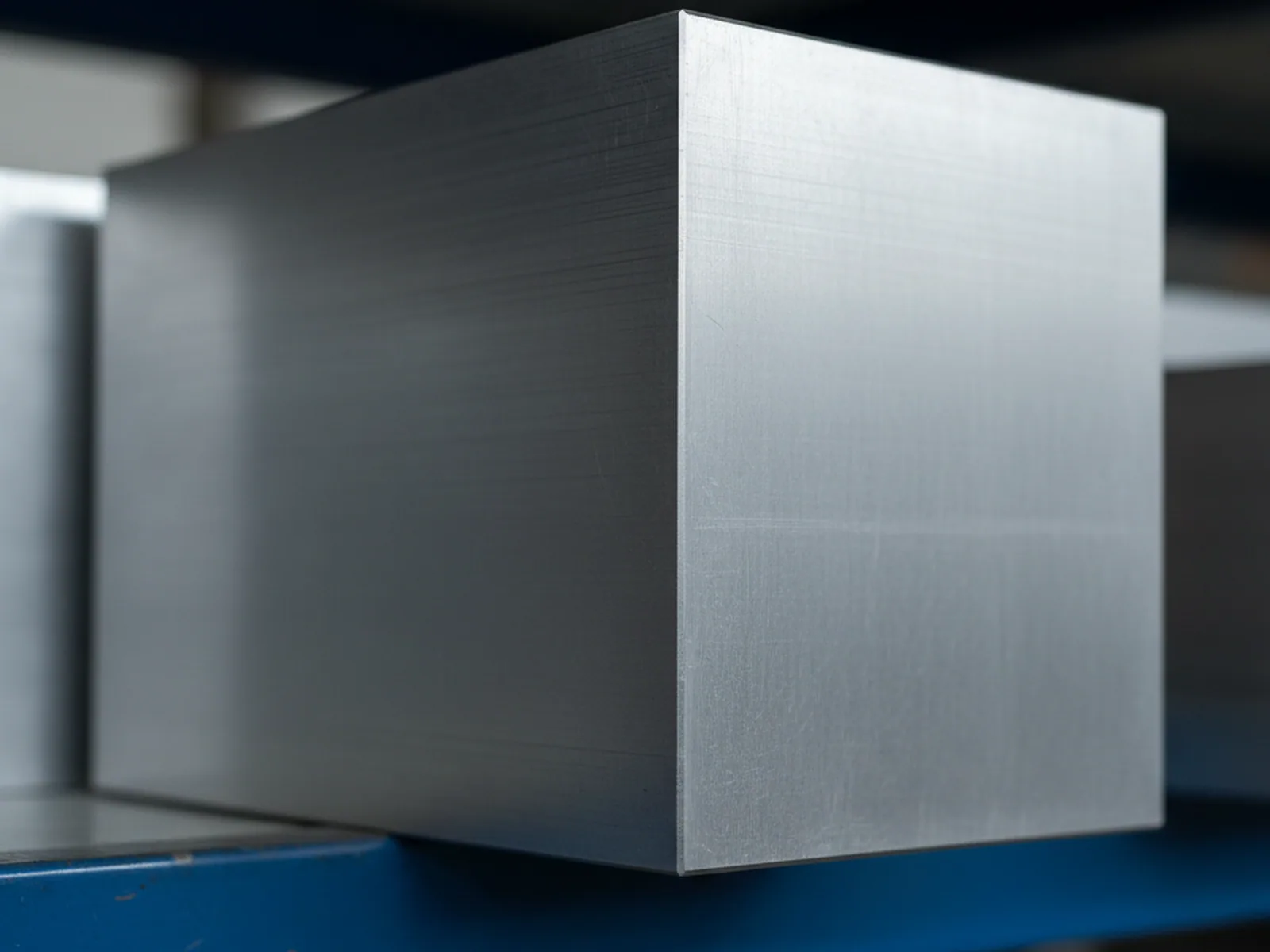
1.2085
Pre-hardened Pre-hardened stainless mould steel, delivered at 29 to 33 HRC. -
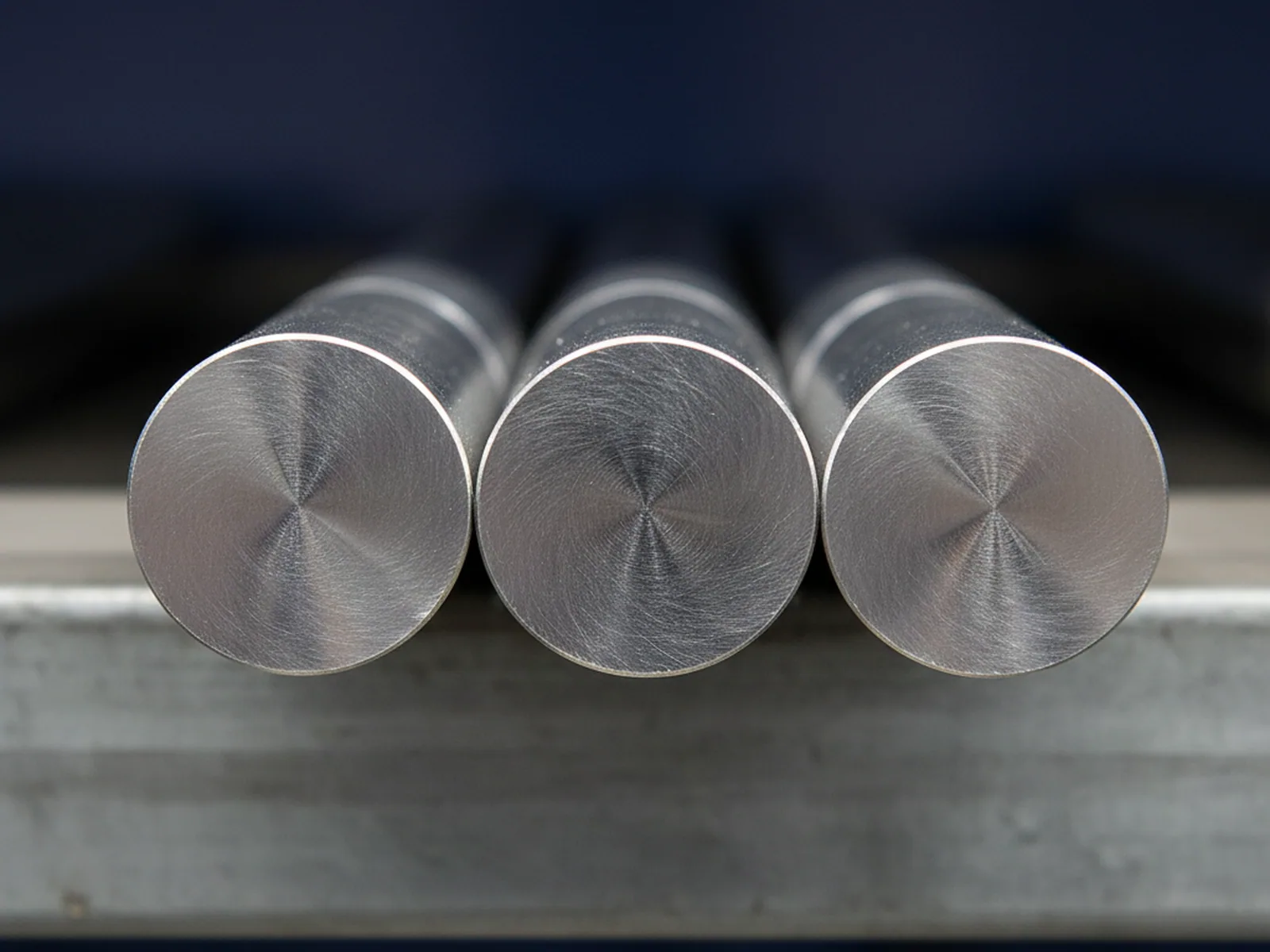
420
Pre-hardened Pre-hardened stainless mould steel, delivered at 30 to 34 HRC.
These are the lines a stockholder reorders against a rhythm rather than a project.
When a size is drawn down it is put back on the shelf from our own melting, on our own forging lines, under the same regime as the batch before it.
Supply in Numbers
Mixed Replenishment Lists, Line by Line
A replenishment list from a distributor is rarely one grade. It carries three or four of the stock grades, one or two that are not stocked, a spread of sections, a quantity against every size, and a delivery condition that may or may not be written down. The single most useful thing a mill can do with that list is refuse to answer it as one thing.
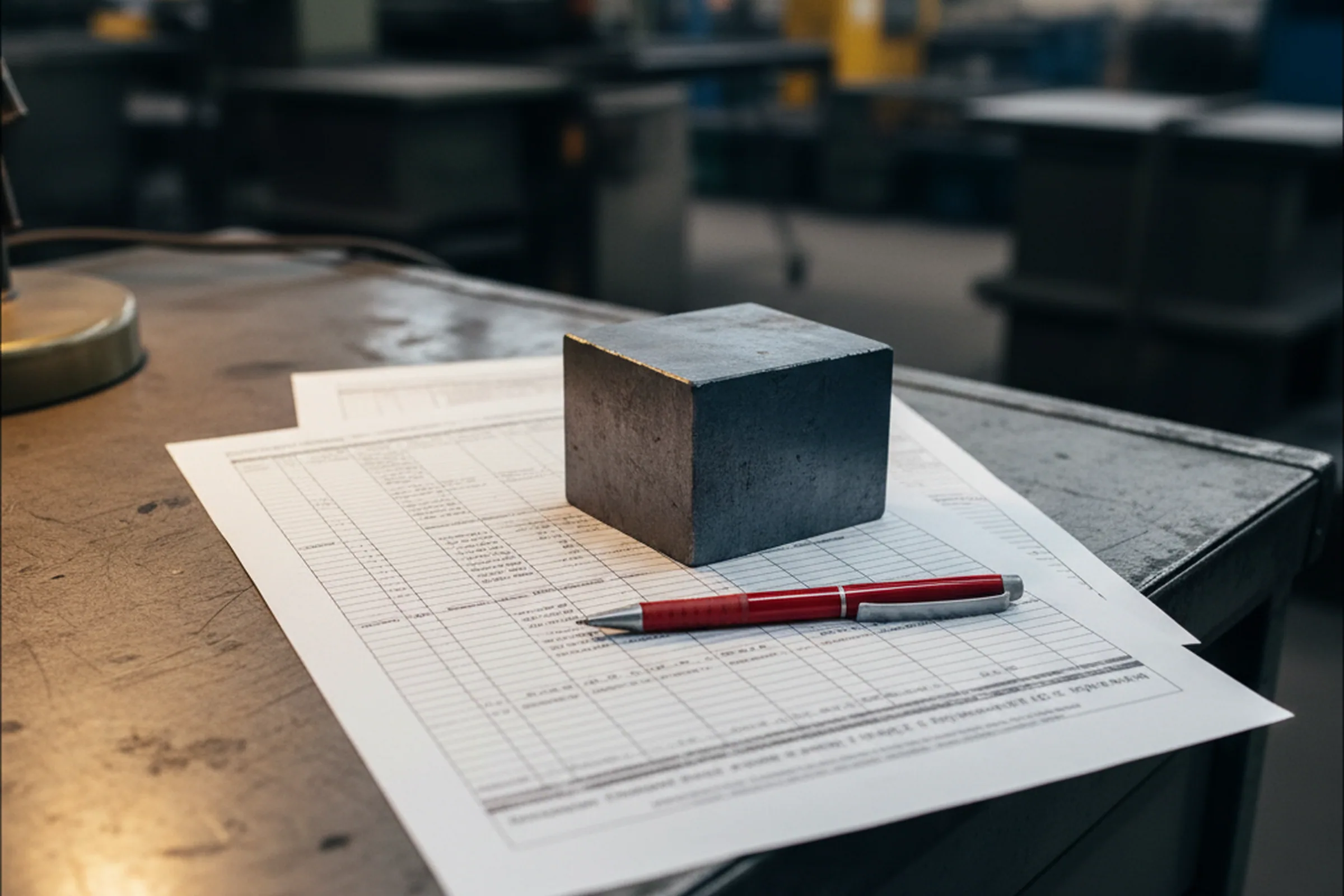
Four things read off the line before a date is attached
Every line is answered on its own. Before a date is attached, the technical desk reads four things off it.
- 01 · Designation
- The designation your customer wrote mapped onto one of our fourteen grades and confirmed in writing so you can forward the mapping.
- 02 · Section
- The section, and which forging line it belongs on.
- 03 · Delivery condition
- The delivery condition, because annealed and pre-hardened are two different products and a line that does not say which one gets a question rather than an assumption.
- 04 · Downstream allowance
- What the operations after ours need left on the piece.
Then each line comes back marked stock or production, with its own date. Stock lines answer immediately at 7 to 10 days. Production lines carry 25 to 35 days from melt, covering melting, electroslag remelting, forging, heat treatment, finishing and the eight inspection steps, with the forging line named.
One line on that list is worth putting there on purpose. That line does not come back with the others. It goes to production scheduling first, because the top of a range is where a date stops being a standard figure and becomes a question about which press is free and which ingot the piece starts from.
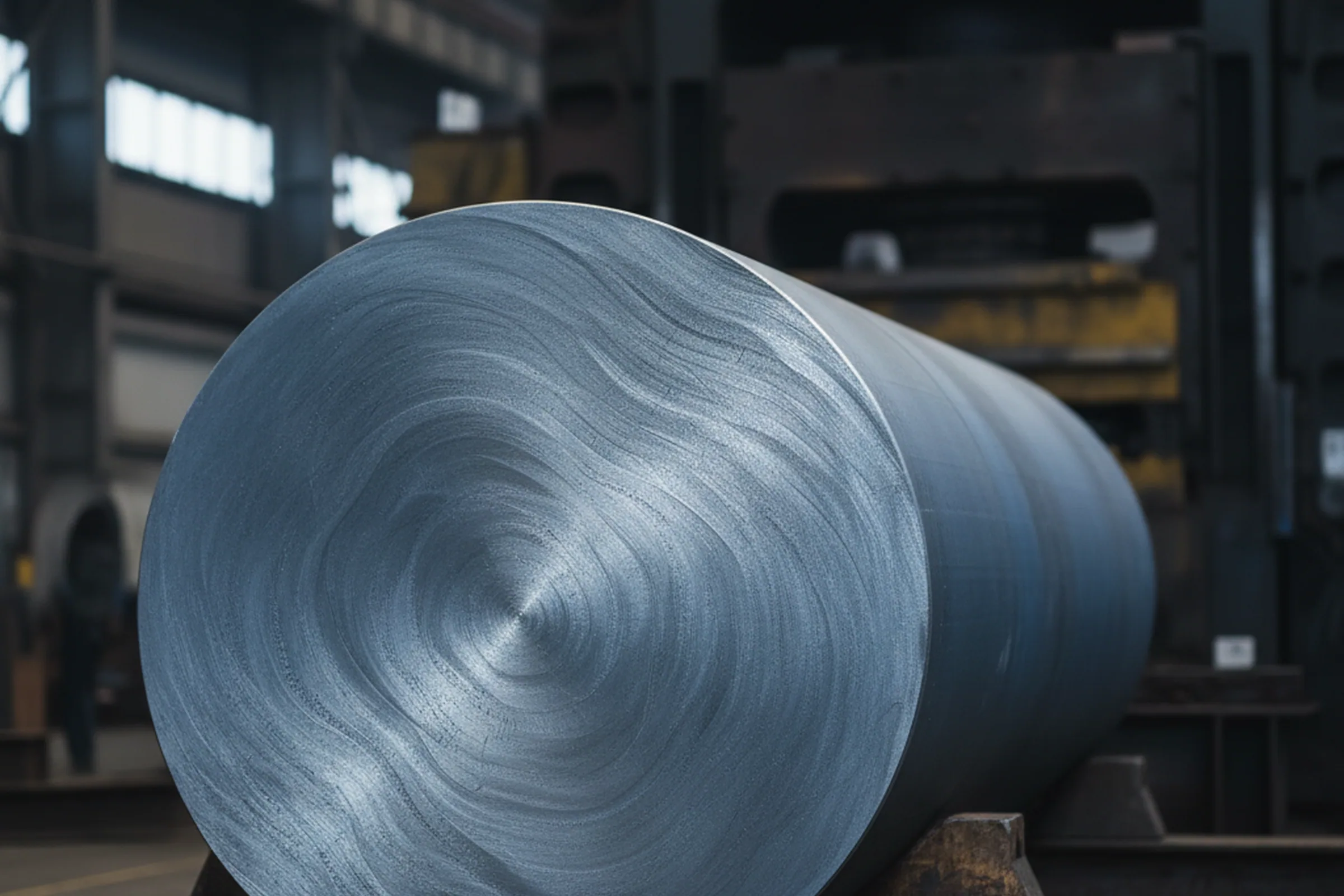
- Grade mapping
- Stock or production
- A date per line
- The certificate contents each line will carry
If scheduling has not confirmed inside the 24 hours, that line says it is with scheduling and gives the hour it will follow, while every other line on your list is already answered.
A date offered for the heaviest section on a list without anyone consulting a schedule is a number chosen to be safe, and safe numbers are the ones that cost you three weeks of turnover on the lines that could have shipped from stock.
The second thing worth doing costs nothing at all
Two replies, side by sideSend the same list again a fortnight later and read the two replies side by side.
- The stock lines
- should still read 7 to 10 days, and for the same reason as the first time: those five grades are replaced out of our own melting rather than topped up off somebody else's rack, so the figure describes how the shelf is refilled instead of what happened to be left on it that week.
- The production lines
- should sit in the same band and name the same forging line.
- A stock position sourced elsewhere
- moves between the two replies, because it was somebody else's stock position both times.
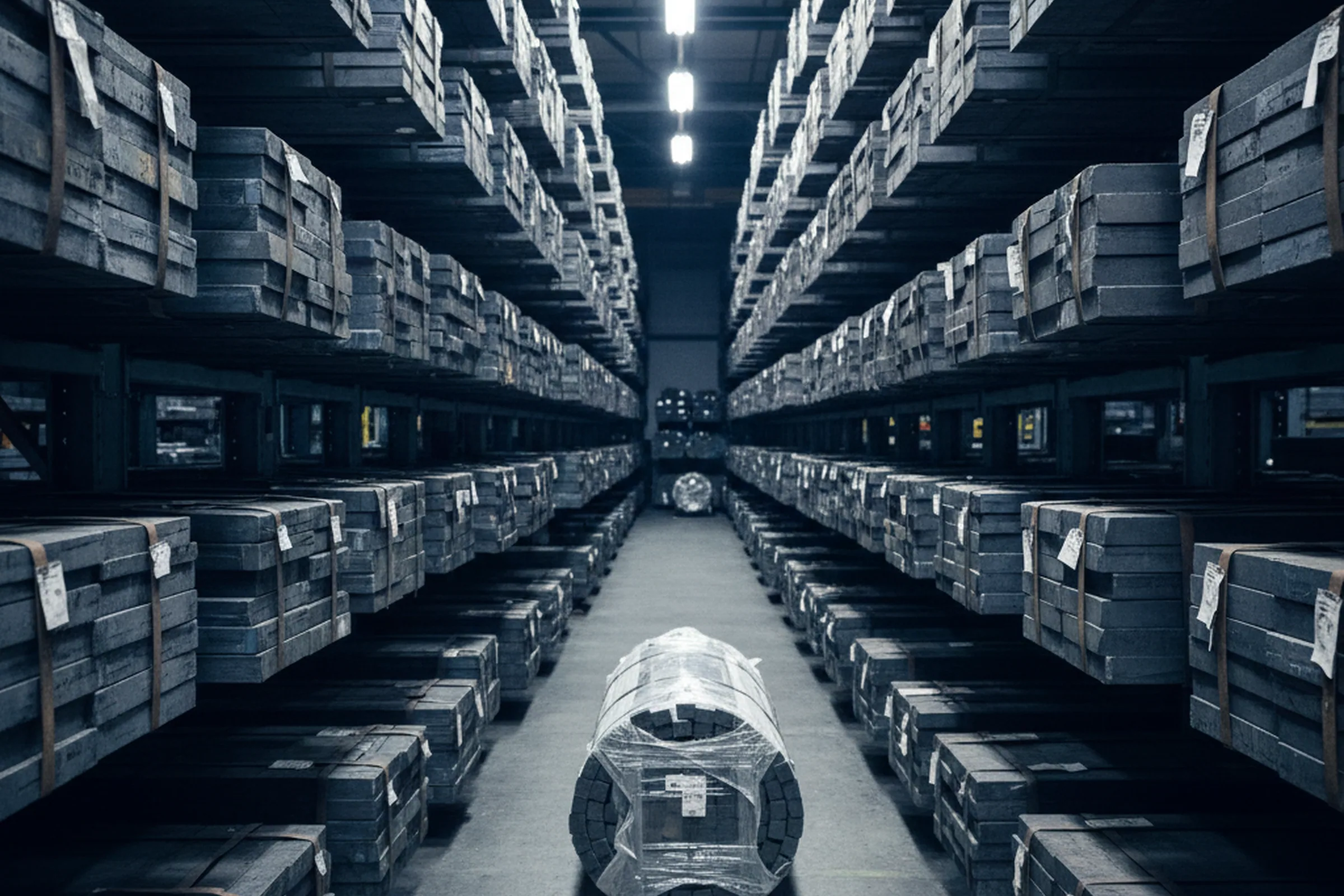
What you end up with is one document that can be priced and quoted from directly: grade mapping, stock or production, a date per line, and the certificate contents each line will carry.
Project Orders for Wholesale Buyers
The nine grades outside the stock range and the sections above the common sizes arrive as project orders rather than replenishment, and they are poured for the order. That means the heat behind the certificate was melted after your order was placed, and the melting and forging record for it belongs to your order alone.
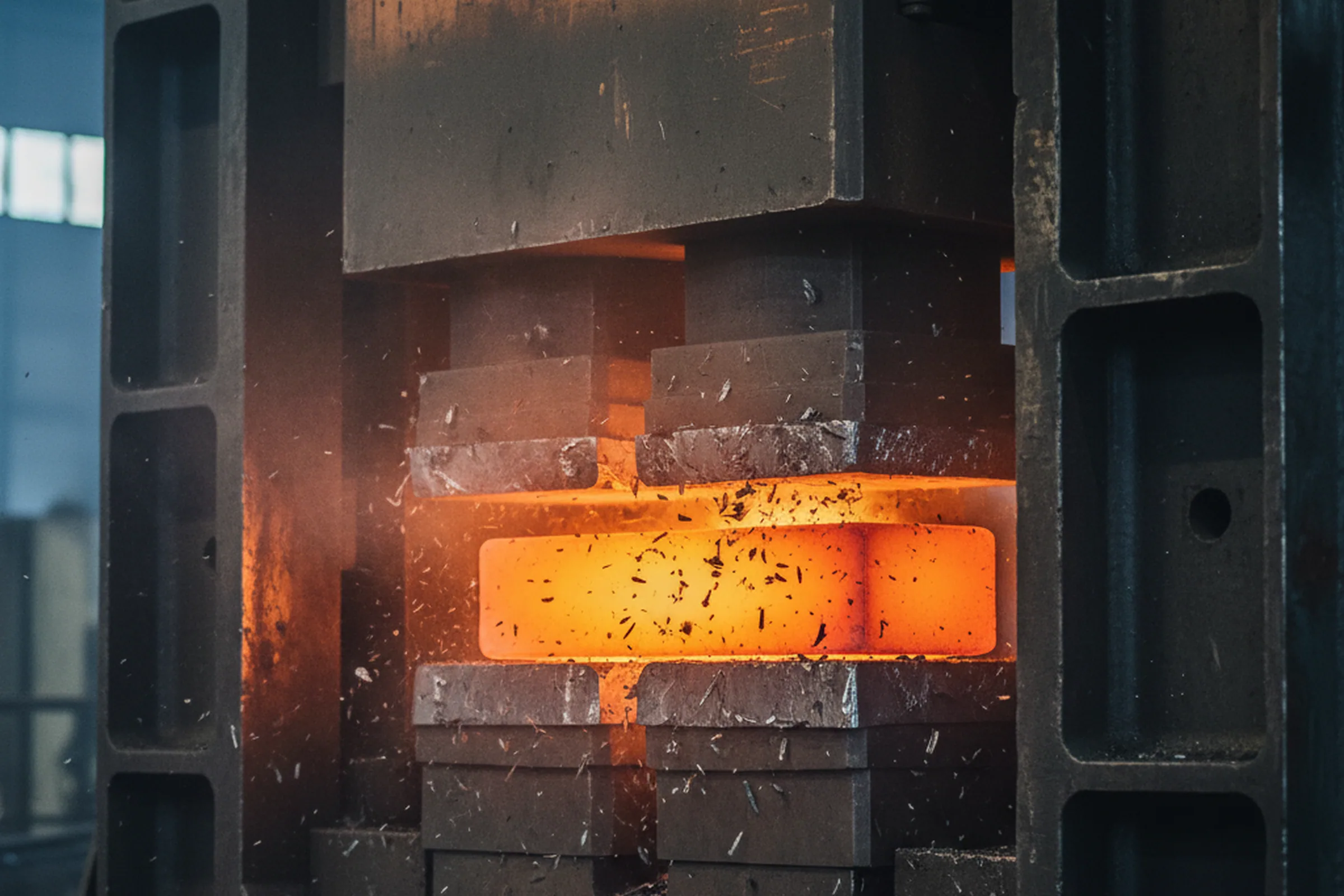
Three forging lines cover the range
- 2,500 tFast forging press
- Takes rounds from Ø300 to 600 mm and flats 200 to 500 mm thick by 400 to 1,200 mm wide.
- 1,600 tPress
- Takes rounds Ø150 to 350 mm and flats 20 to 250 mm thick by 200 to 800 mm wide.
- Ø16–150Radial precision forging
- A radial precision forging machine holds the small end, Ø16 to 150 mm, where dimensional accuracy and surface come off that machine rather than off a later operation.
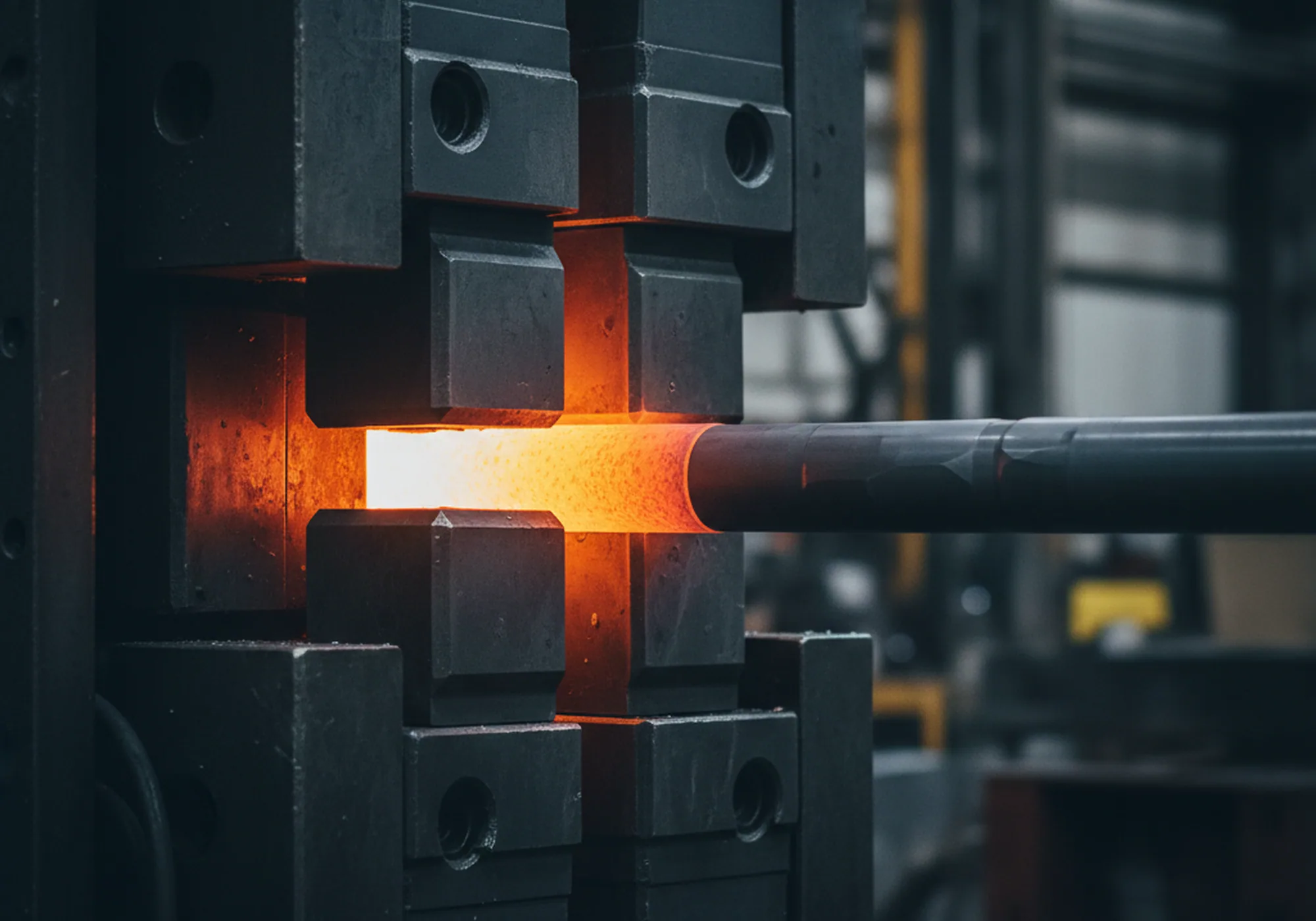
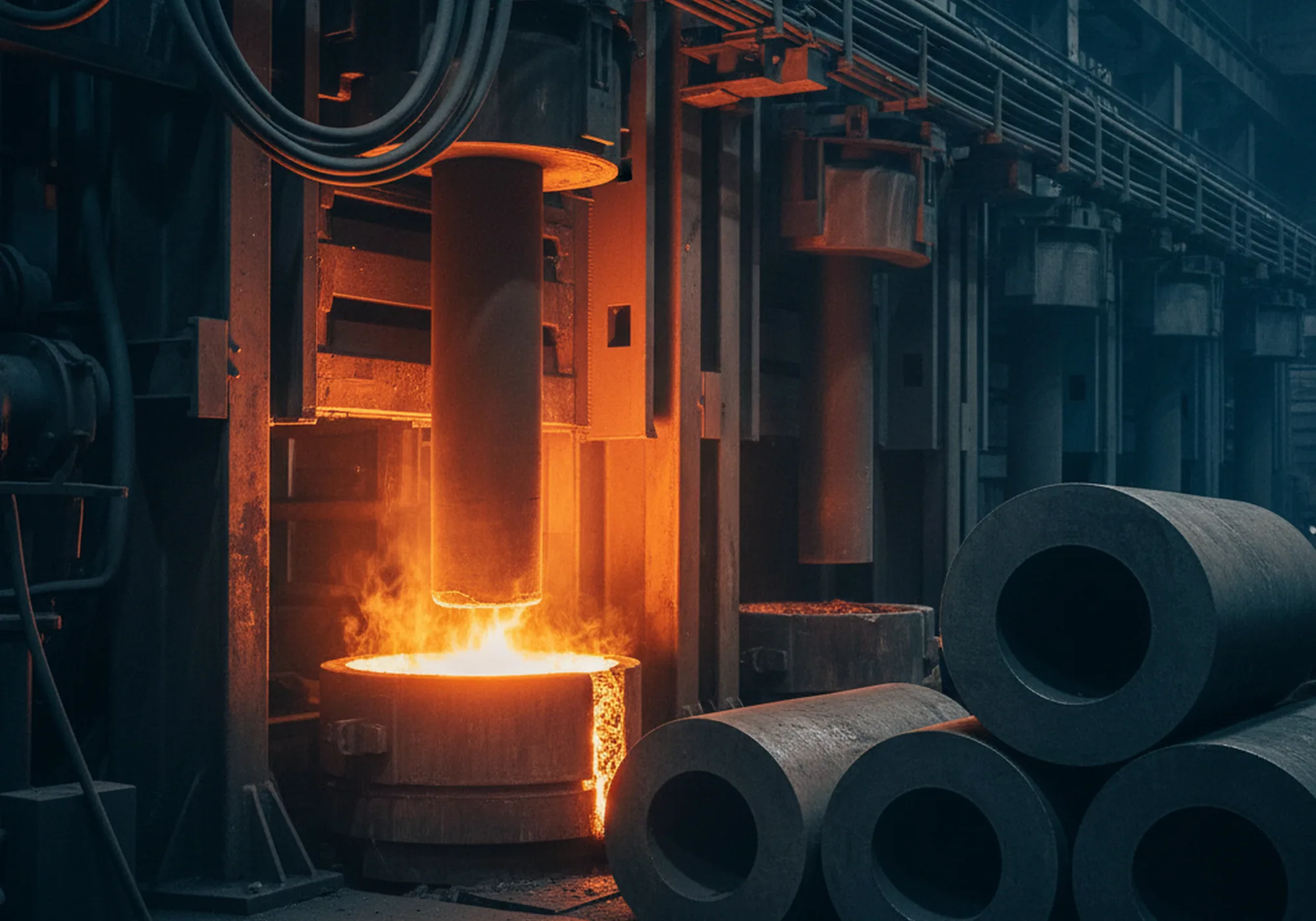
Ten electroslag furnaces refine ingots of 3 to 12 tonnes across the whole grade list, so a project order on a grade you have never bought here still runs the same refining route as the stock grades.
Project work is where a wholesale buyer or a large scale procurement account usually starts, and it is the same 25 to 35 day clock whichever of the nine grades it is.
Section Range and Surface Conditions
One source covers the rack and the project list.
- Rounds Ø16 to 600 mm
- Flats and plate 20 to 500 mm thick, 200 to 1,200 mm wide
- Fourteen grades: cold work, hot work, plastic mould, high speed and stainless tool steel
- Four surface conditions: black forged and descaled, turned, ground, six face milled
- Delivery condition: annealed inside a hardness window set per grade, or pre-hardened on 1.2085 and 420
Sawing to length, grinding, milling and machining to drawing are available on any of it, and the pieces come off those machines still carrying the heat number of the bar they were cut from. The processing pages set out how each of those runs: saw cutting, grinding and milling and custom machining.
Send Your Replenishment List
Send the grades, the sections and the quantity per size, with one section from the top of the range on the same list. Feasibility per line, stock or production, and a date per line come back inside 24 hours on a working day.
- The grades
- The sections
- The quantity per size
- One section from the top of the range
Answers Written for Your Customer
An enquiry that reaches you from a tool room is usually not a purchasing question. It is a metallurgical one wearing a purchase order's clothes: whether this grade will hold up in that die, what the drawing designation actually corresponds to, how much stock to leave on before the tool room's own hardening cycle. You can answer it twice, once by asking us and once by rewriting what we send, or the answer can arrive already written for the person who asked.
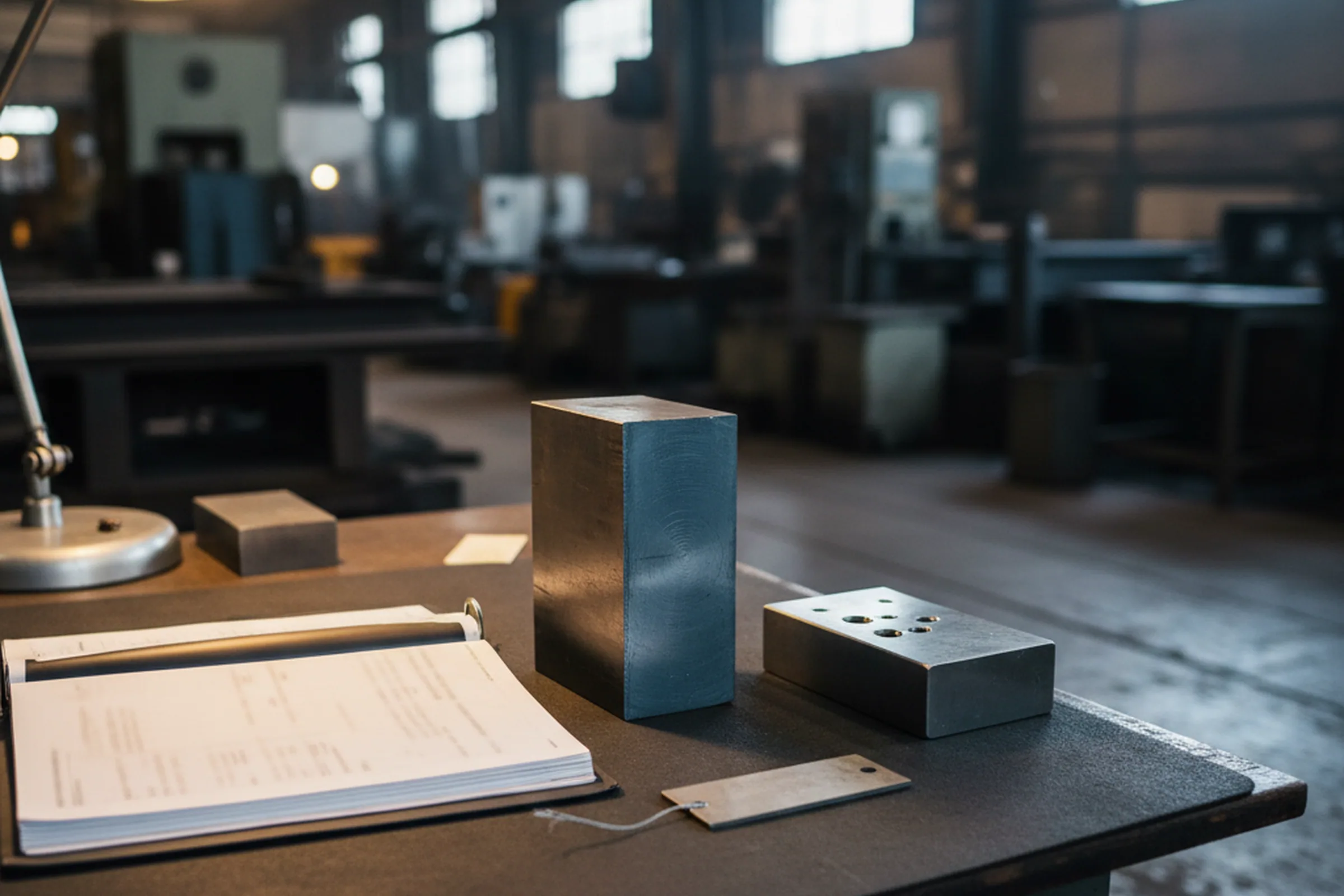
Send it as it arrived. What comes back is addressed to that question and carries five parts.
- 1
- The designation on the drawing, mapped onto one of our fourteen grades and stated in writing.
- 2
- Where the two differ in composition or in route, and what that difference does to this particular tool rather than in general.
- 3
- The delivery condition it belongs in, annealed or pre-hardened, and the allowance the operations after ours will need.
- 4
- The section, and the forging line and ingot behind it.
- 5
- And what the certificate for that heat will carry: the measured analysis, the hardness reading against the window for that grade, the grain size and carbide ratings as measured values, and the individual ultrasonic result for the bar.
Grade names outside our fourteen get a written comparison instead of a substitution: which of ours is nearest, where it differs, and what that means for the tool described in the enquiry. Nothing is quietly swapped for the closest thing in the warehouse, because a substitution that is not written down is one your customer discovers on the bench.
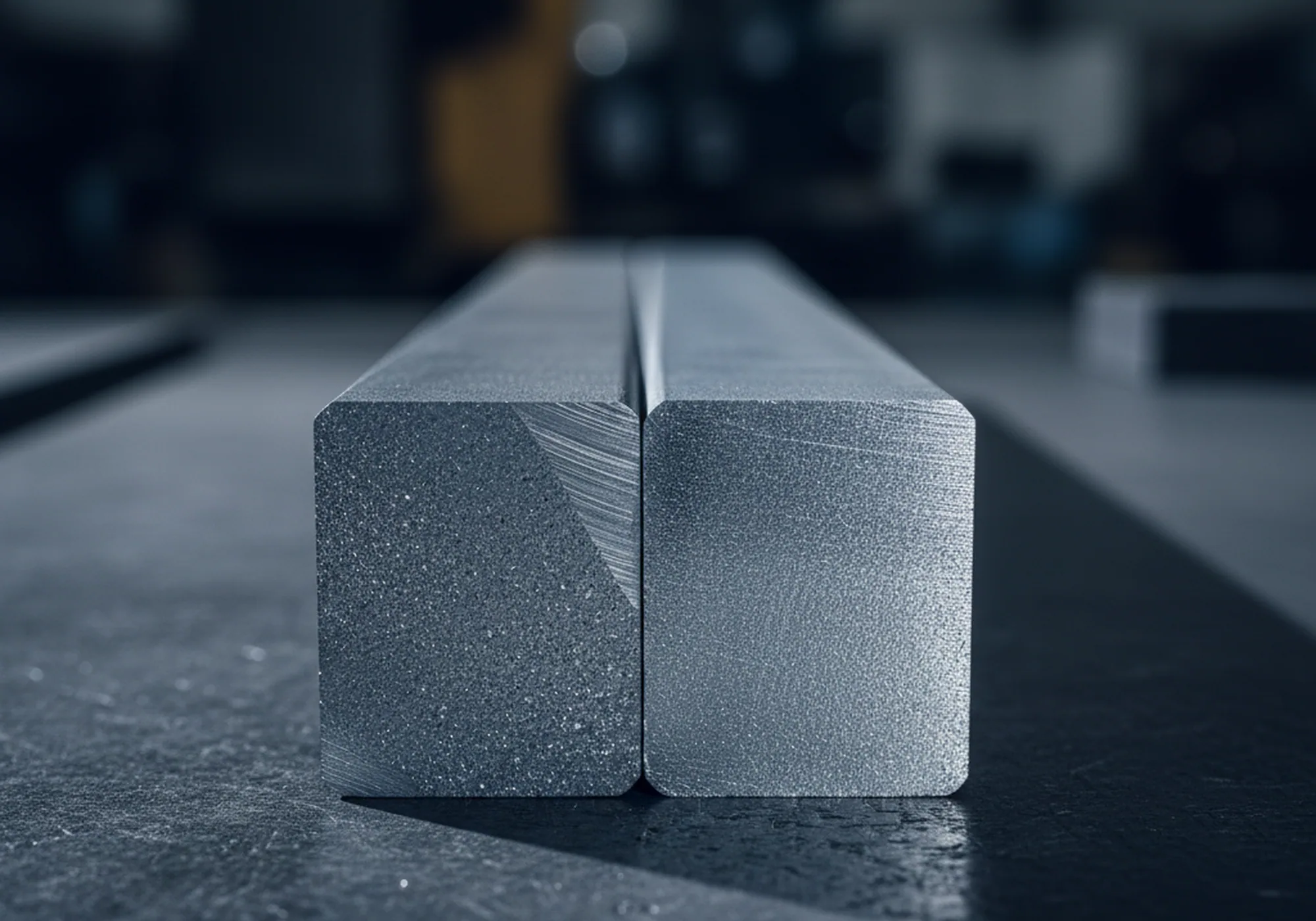
Three situations get a question back rather than a confirmation
All three are cheaper to raise before a saw runs than after.
- 01
Three that do not line up
A grade, a section and an application that do not line up, which is usually a designation copied wrongly somewhere up the chain.
- 02
A tolerance that will not survive
A finished tolerance that will not survive the hardening cycle the tool room intends to run in its own furnace.
- 03
The extreme of a range
A section sitting at the extreme of a range, which goes to scheduling before any date is quoted.
Document requests are handled on the same clock. Where your quality department, or your customer's, sends a checklist, it comes back answered item by item within 24 hours on a working day, with a sample certificate on the grade being quoted attached to it, rather than a general company pack for somebody to search through.
The technical desk of six writes these, with the metallurgical questions going to the engineering group of sixteen that issues the process regimes. The form is the point: an answer you forward is worth several times an answer you have to translate first, and the difference shows up as the hours you did not spend rewriting and the authority your customer hears in the reply.
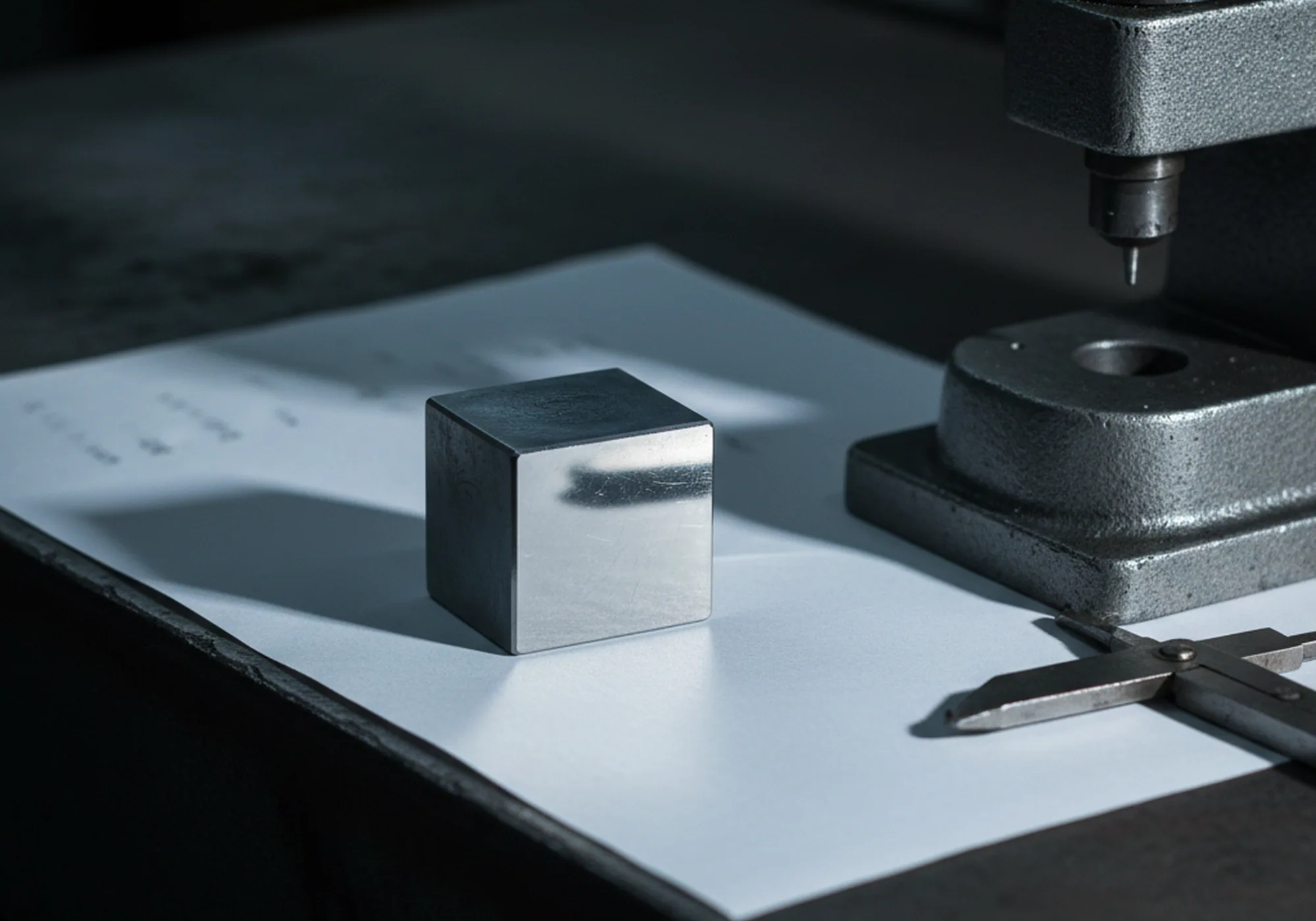
Marking, Packing and Documents by Destination
What arrives at the port has to satisfy your customs entry, your customer's goods inwards, and your own brand, and none of that is decided at the moment of loading. It is set when the account is set up and repeated on every batch.
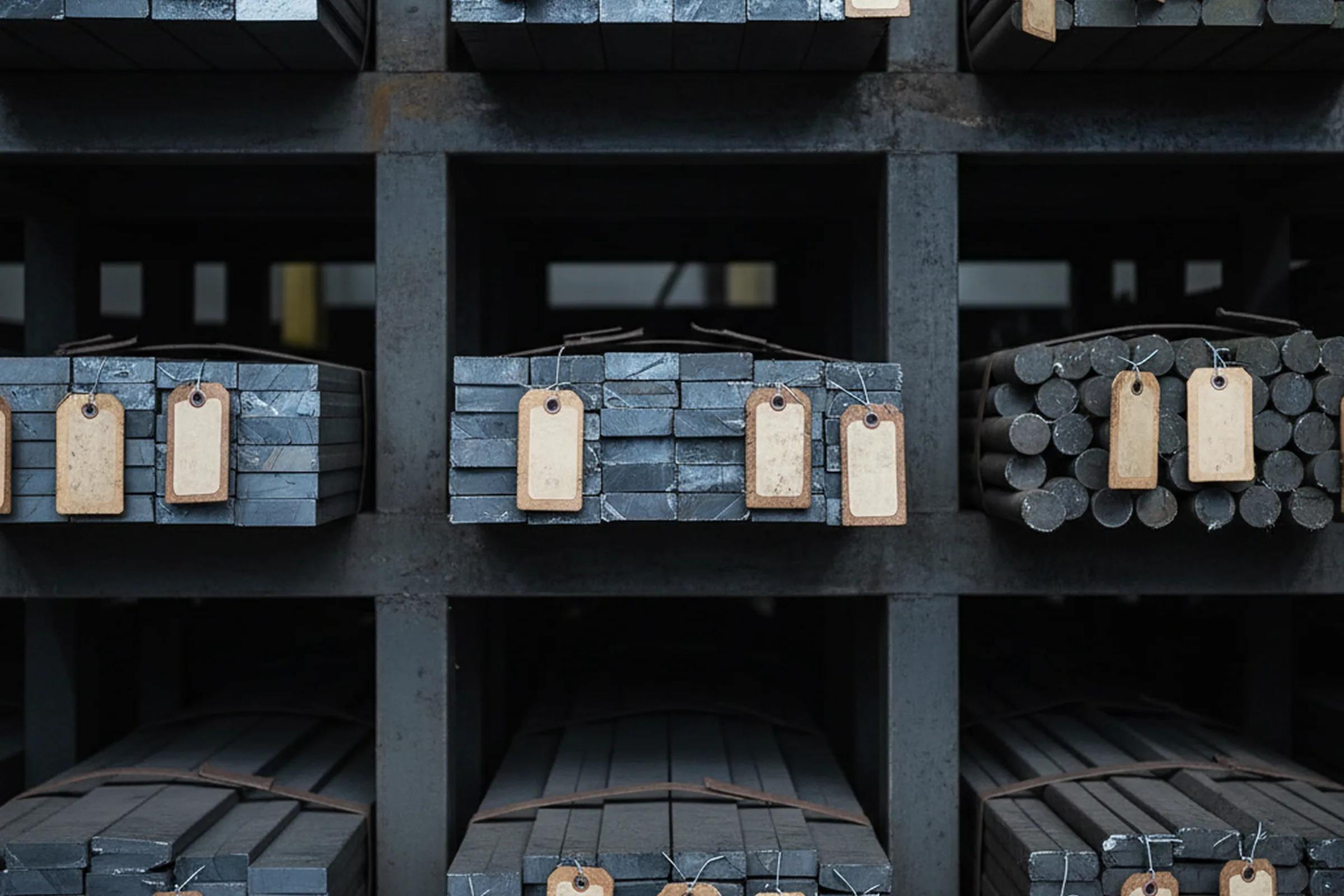
Every piece carries a heat number tag, and pieces cut to length are marked individually so a rack of similar looking lengths stays identifiable after the crate is gone. Bundles are steel strapped, with timber dunnage or cases made to the fumigation requirements of the destination, and rust preventive oil applied for the voyage.
Marking is executed to your specification rather than ours: the language, the content and the brand identification you nominate.
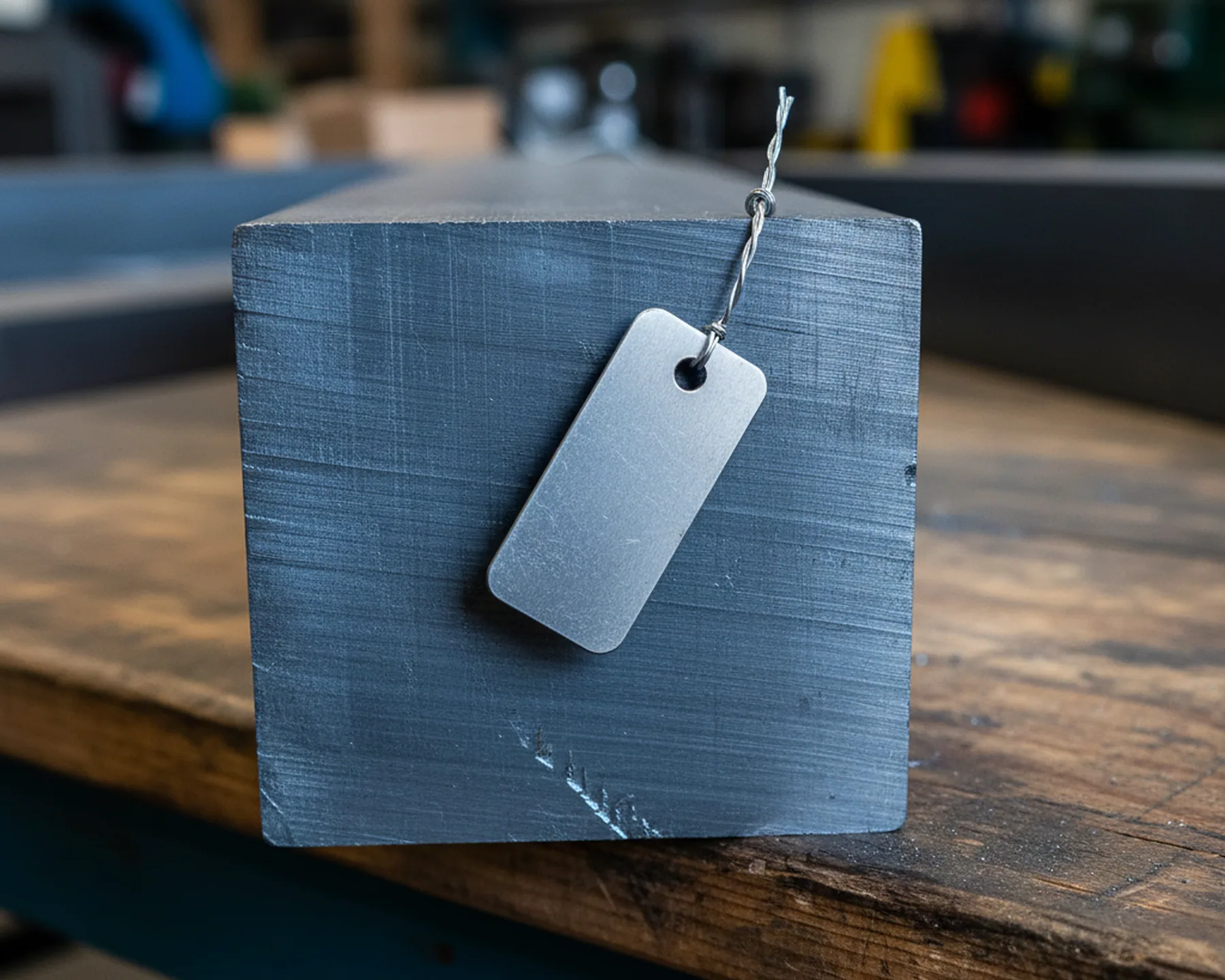
Heat number tag
On every piece, and individually on pieces cut to length.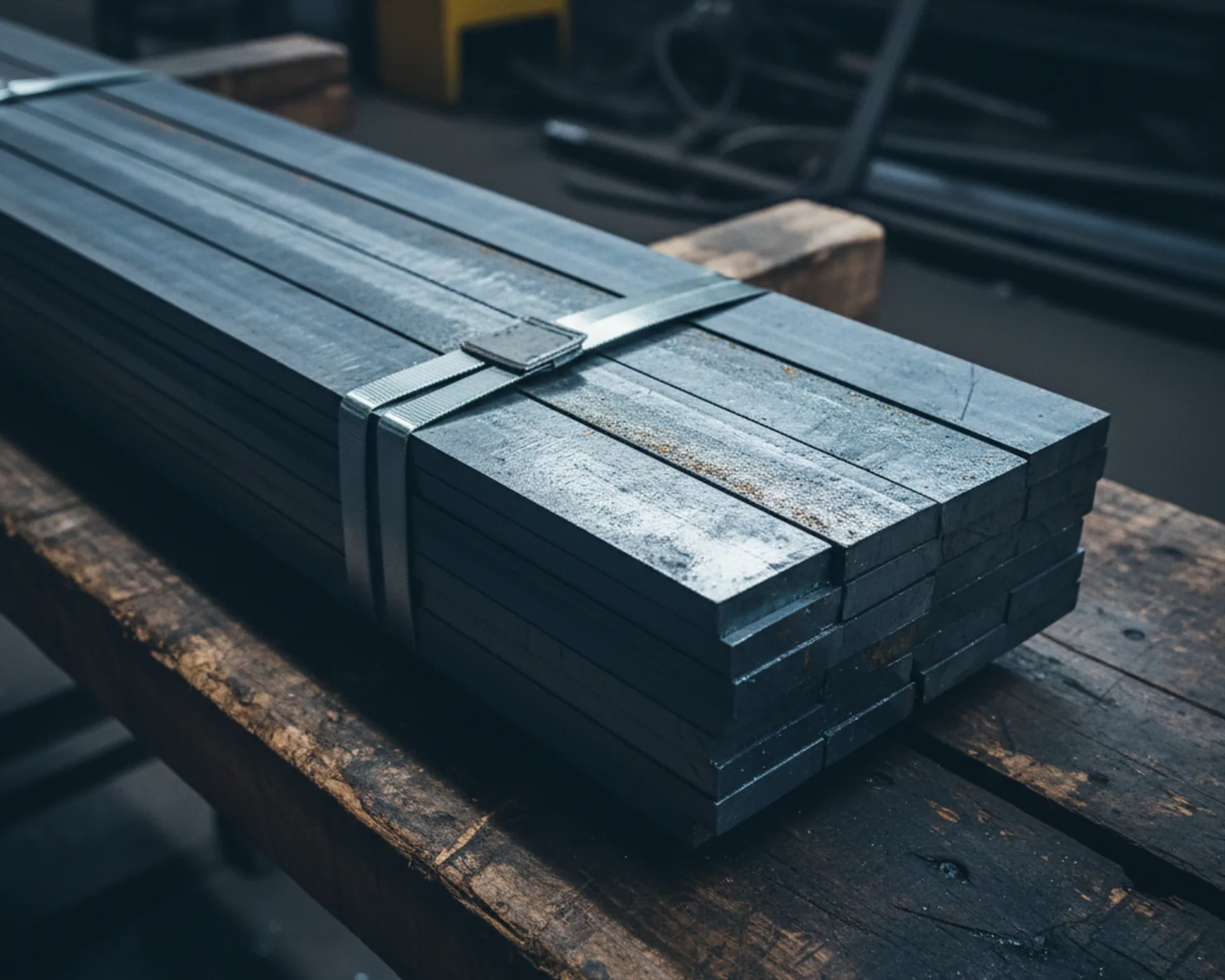
Steel strapped, on dunnage
With rust preventive oil applied for the voyage.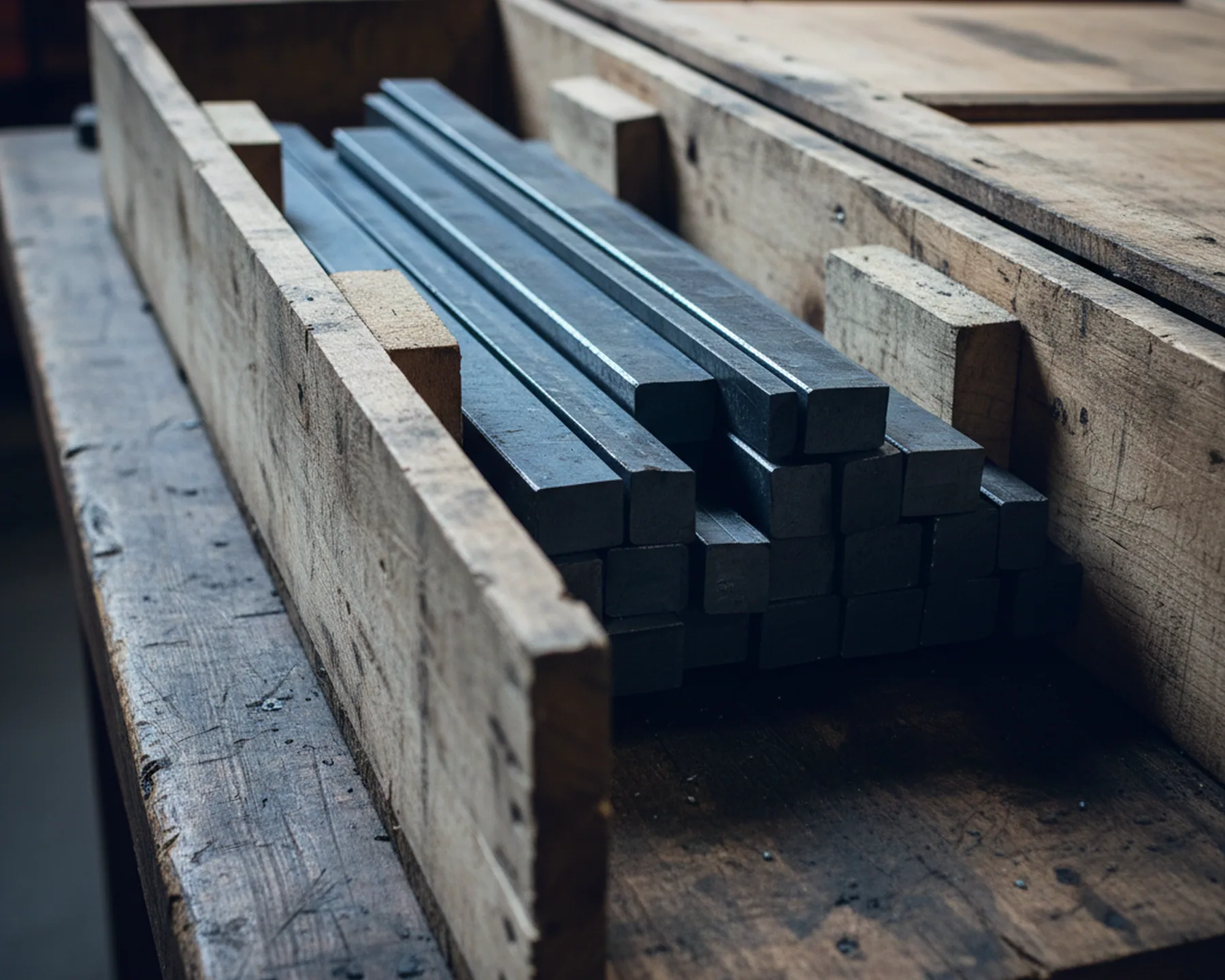
Cases to the destination
Made to the fumigation requirements of the destination.Documents travel with the steel rather than following it
- EN 10204 3.1 MTC
- Every heat carries its own.
- CBAM data sheet
- Every batch to an EU destination carries a CBAM embedded emissions data sheet in the declaration format.
- TÜV certificate copy
- A copy of the TÜV carbon footprint certificate travels with it.
- ISO 9001
- Certification covers the system behind them.
For a European stockholder the carbon documentation is now asked for as routinely as the chemistry, and a delivery that arrives without it sits in a port rather than on your rack.
Marking, packing and dispatch belong to a warehouse and logistics group of 22 people working from the account specification, so the second crate is packed and marked the way the first one was.
Order Contacts and Signing Authority
Six functions touch an order and it is worth knowing which one holds what, because it decides who you write to when something has to move.
- Commercial desk
- Holds the account and the commercial thread.
- Technical desk
- Maps grades, delivery conditions and allowances at the enquiry stage.
- Engineering group
- Issues the process regime for the heat before it is scheduled.
- Production scheduling
- Owns the date.
- Quality department
- Owns release and is the only signatory on an EN 10204 3.1 MTC.
- Warehouse and logistics
- Own marking, packing and dispatch.
Two routes cover almost everything you will need after an order is placed.
- Route 01
Material questions
Go to the quality department.
- Route 02
Date and document questions
Go to the commercial desk.
- Straight through
A question that quotes a heat number
Goes straight to the person holding the records for that heat rather than travelling along a chain of people repeating it, which is the difference between an answer this afternoon and an answer next week.
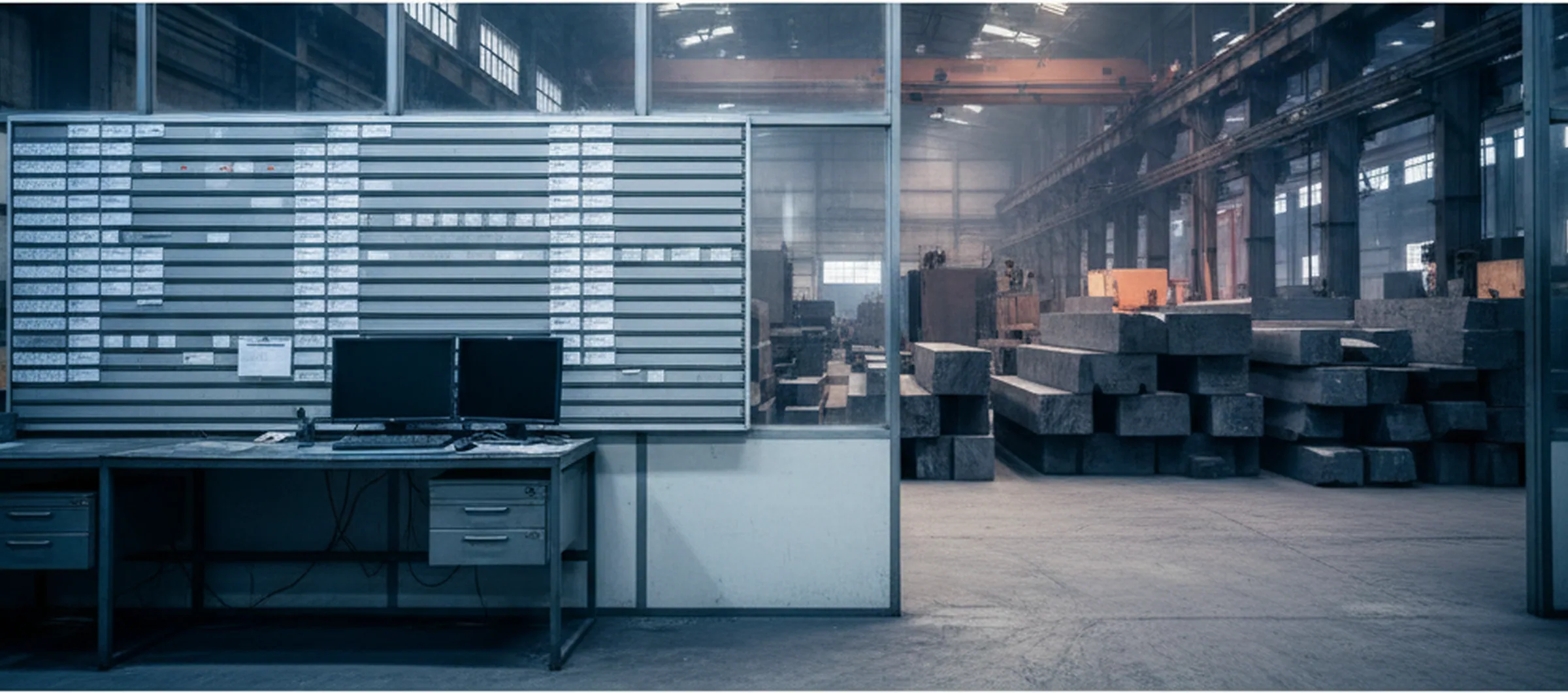
Trial Order Into Regular Replenishment
First business does not have to start at full rhythm. A first order can run as a single verification order, put through your own laboratory and your customers' own benches, before the account settles into regular replenishment.
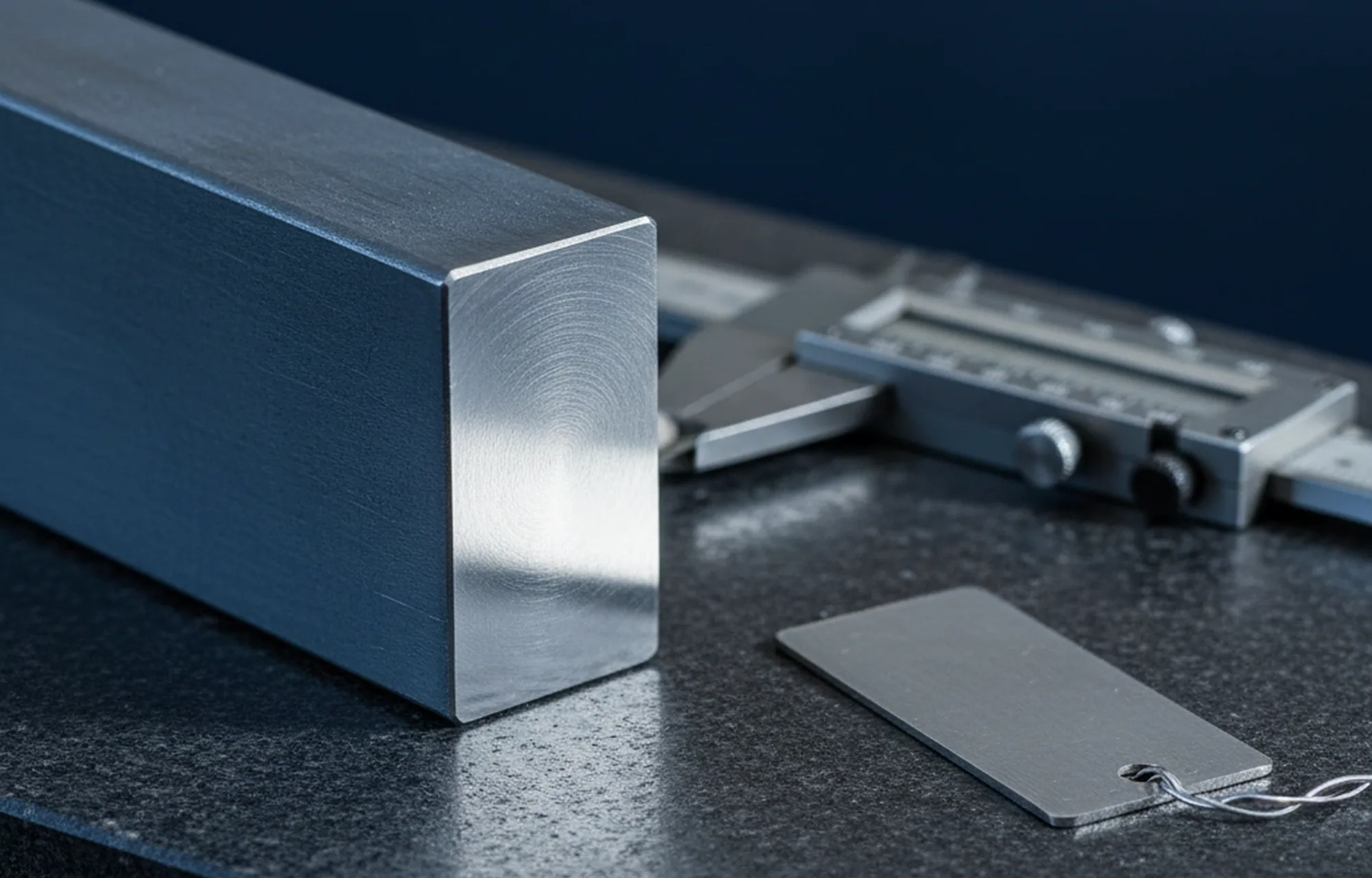
Nothing about it is handled differently inside the works
- Same
- melting and electroslag route
- Same
- forging line for the section
- Same
- annealing regime issued for the grade
- Same
- eight inspection steps
- Same
- 100% ultrasonic testing to SEP 1921 Class D/d or E/e
- Same
- certificate signed by the same department
That is the whole point of running one: what you verify is what the fifth delivery will be, because there is no separate path for a first order to have travelled down.
Once it holds up, the five stock grades run against your own turnover rhythm and the other nine come in as your customers' projects call for them.
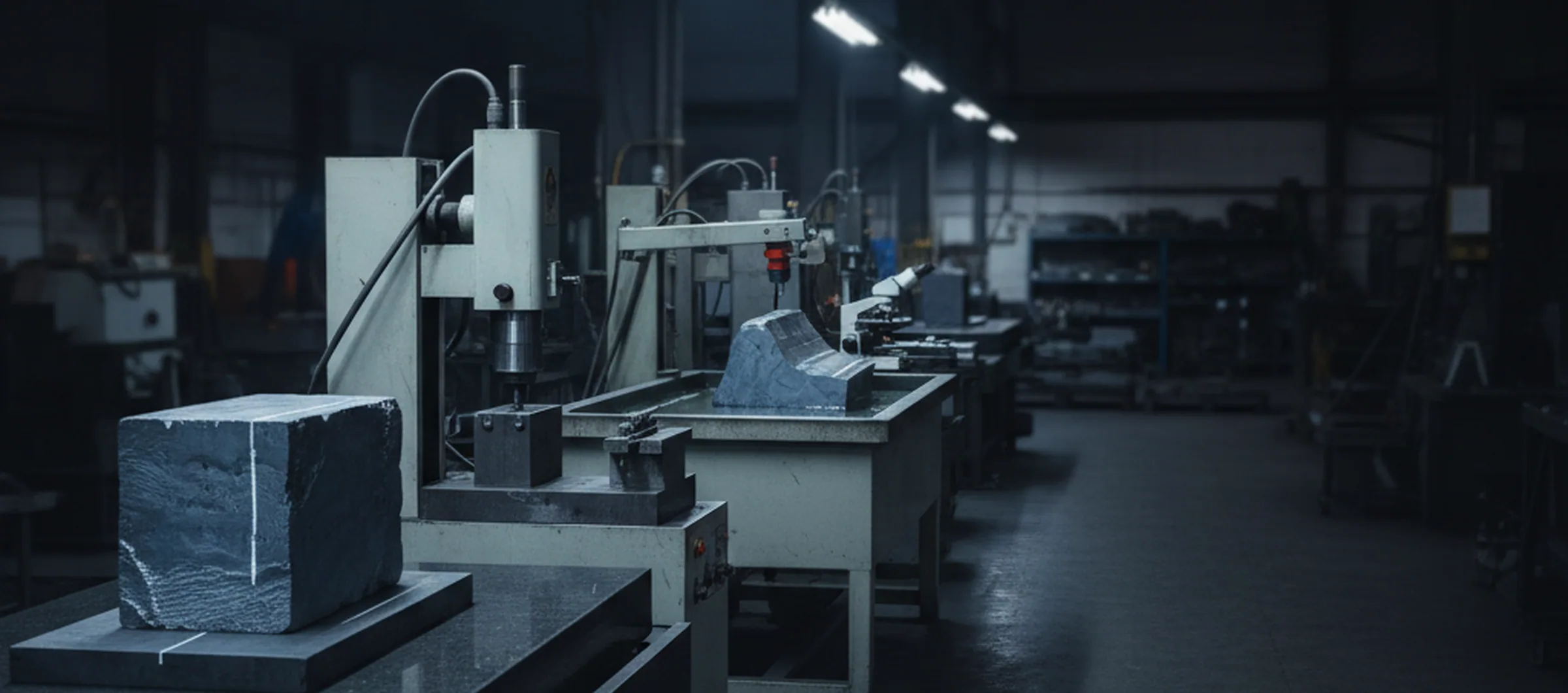
Tool Steel Distributor Program Lead Times
These are the figures a tool steel distributor program is quoted from, and they are the ones to build your own downstream commitments on.
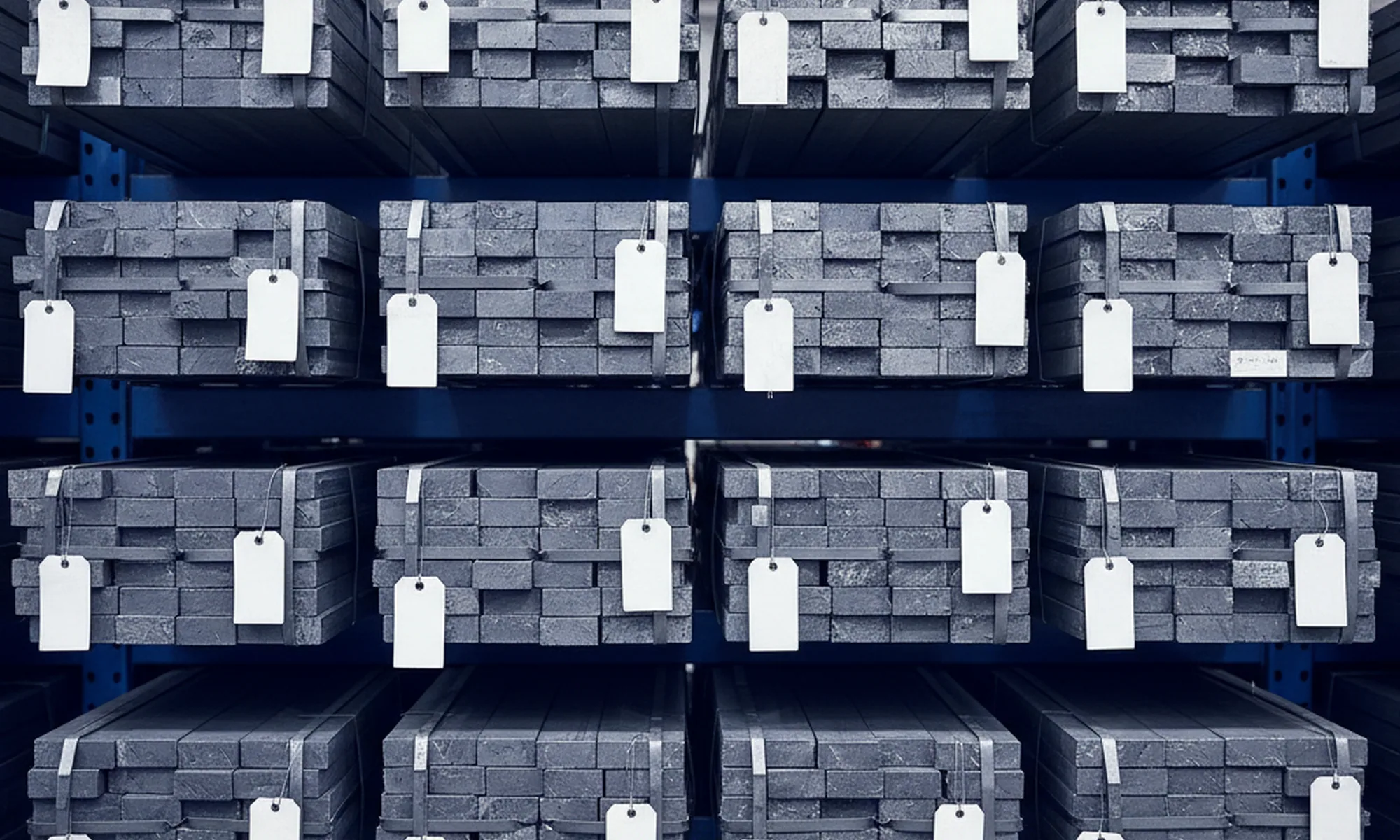
| What you are quoting | Time from here |
|---|---|
| Stock sections in the five stock grades | 7 to 10 days |
| All other grades and sections, from melt | 25 to 35 days |
| Cut to length added to either | + 2 days |
| Ground or milled added to either | + 5 days |
| Machined to your customer's drawing | Quoted per drawing |
Processing time is added to the line it belongs to and shown on that line, so a list with three cut lines and two plain ones does not come back with one figure covering all five.
Customer Mix and Queue Position
of our customers have been buying here for more than five years, which is the only meaningful evidence that a replenishment rhythm can actually be repeated rather than promised.
The largest single account stays under 8% of a year's output. What that is worth to you sits in the schedule: no one buyer's programme is large enough to push your production line into a later week when it comes in.
Claims From Your Customers
A claim does not usually arrive while the steel is on your rack. It arrives months later, from a tool room, about a tool that cracked or wore early, and it lands on your desk rather than ours. What decides how that conversation goes is whether you can put a set of readings in front of your customer within a day or two.

Every heat is indexed by its heat number.
- 01The melting analysis
- 02The forging regime issued for that order
- 03The annealing chart
- 04The eight inspection records
- 05The individual ultrasonic reading for each bar
- 06The certificate copy
Production and inspection records and certificate copies are held for ten years. Quote the heat number and the records come out of the archive against it, including the reading for the specific bar rather than an average across the batch.
- Held back
A heat that does not pass
Where a heat does not pass inspection here it is held back rather than shipped, and the shortfall is remade from our own melting to the same specification, so a batch never reaches your rack because somebody decided it was close enough.
- In writing
A result disputed after delivery
The comparison and any retest are issued to you in writing in a form that can be forwarded to your customer as it stands, without you having to summarise it in your own words and take on the summary.
How a disputed reading is settled between two laboratories is set out in full on the tool steel manufacturer home page.
Start a Tool Steel Distributor Program Enquiry
One list opens the account: the grades you already carry, the sections, the quantity per size, and one top of range section added on purpose.
- Each line comes marked stock or production
- With its own date
- And the certificate contents it will carry
- Back inside a working day
- +86-18972782802
- Desk hours
- 09:00 to 18:00 GMT+8, Monday through Friday
- Also ask for
- A sample certificate or a works visit date, in the same message
Send your replenishment list
The grades, the sections and the quantity per size — and one section from the top of the range on the same list.