Electroslag remelting · all fourteen grades

ESR Tool Steel: Every One of Fourteen Grades Electroslag Remelted

Electroslag remelting decides what the inside of a bar looks like before it is ever forged. We run ten electroslag furnaces and put all fourteen grades through them — and that is a claim you can settle with arithmetic instead of trust.

One furnace
5 t ingot ≈ 14 h → ≈ 6.7 t/day, at ~80% utilisation
=
≈ 2,400 t / year
Ten furnaces
10 × 2,400 t/year
=
24,000 t / year
Our output
2,000 t/month × 300 production days
=
24,000 t / year

Remelting capacity and total output are the same number. That is what makes every a fact.

100% ultrasonic testing to SEP 1921 Class D/d or E/e, one bar at a time  ·  EN 10204 3.1 MTC with every batch  ·  measured grain size and carbide distribution ratings for your heat

Range — 14 grades, 5 families

ESR Tool Steel Grades and Families

Fourteen grades leave this works, and all fourteen are electroslag remelted. The ingot size changes with the grade and the section ordered. The route does not.

Sawn end faces of ESR tool steel round bar in four diameters, colour-marked by heat

Bar ends from four heats, colour-marked for dispatch.

  • Hot work5 grades
  • Cold work5 grades
  • Plastic mould3 grades
  • High speed1 grade

There is no premium remelted line here and a standard one underneath it. Every grade goes through the electroslag shop.

The fourteen grades produced, their equivalent designations and families
GradeAlso calledFamily
H131.2344, SKD61Hot work
1.2367Hot work
H111.2343Hot work
H101.2365Hot work
1.2714Hot work, forging dies
D21.2379, SKD11Cold work
DC53Cold work
D31.2080Cold work
D61.2436Cold work
O11.2510Cold work, oil hardening
1.2316Plastic mould, corrosion resistant
1.2085Plastic mould, pre-hardened
4201.2083, 3Cr17Plastic mould, mirror finish
M21.3343High speed

Equivalent designations are one grade here, quoted from one specification and certified once, with cross-references to AISI, DIN and W-Nr, JIS, GB, ASSAB and BÖHLER confirmed in writing on the first reply. Order in the designation your customer uses.

Shop — 1 melting bay, 10 ESR furnaces

The Electroslag Melting Shop

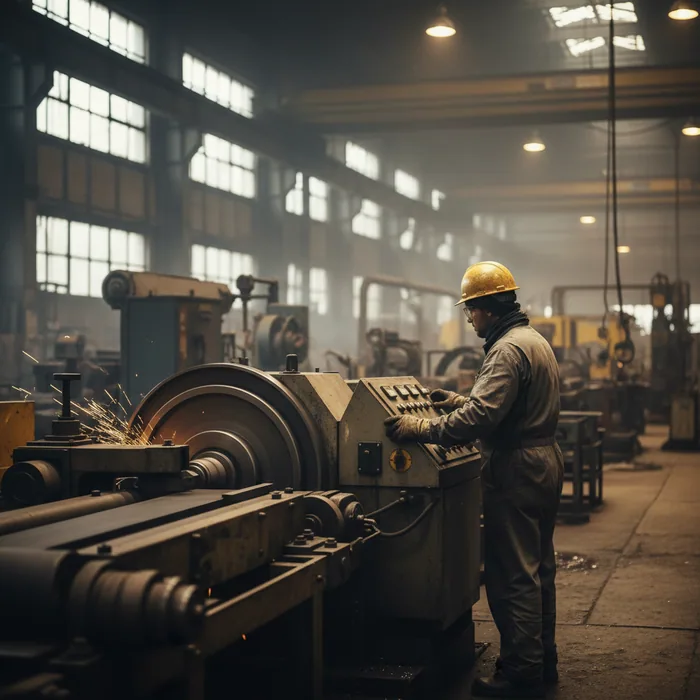
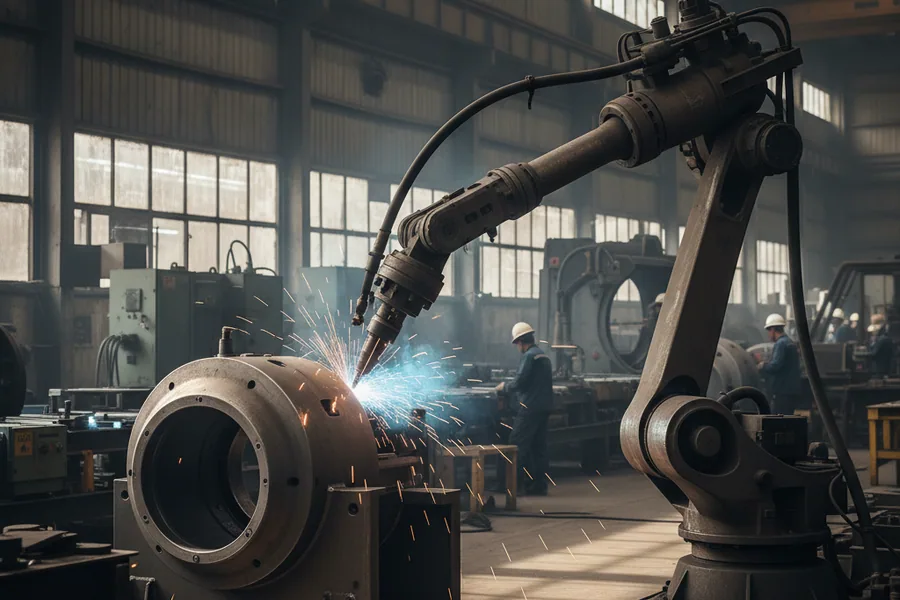
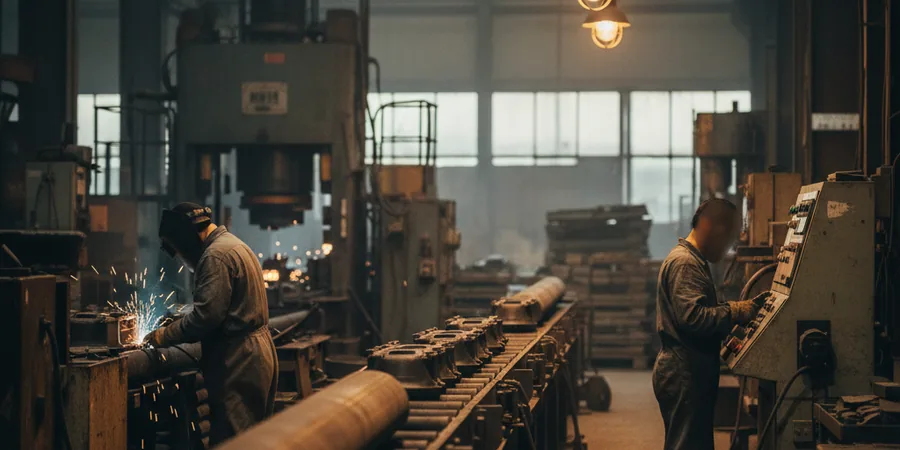
Two 15-tonne medium-frequency induction furnaces run on three shifts, three heats a day each, and pour electrode ingots of 3 to 12 tonnes. Composition is set in those furnaces, on our own spectrometers, which is what makes the analysis on the certificate ours to report rather than a figure inherited from whoever sold us an ingot.

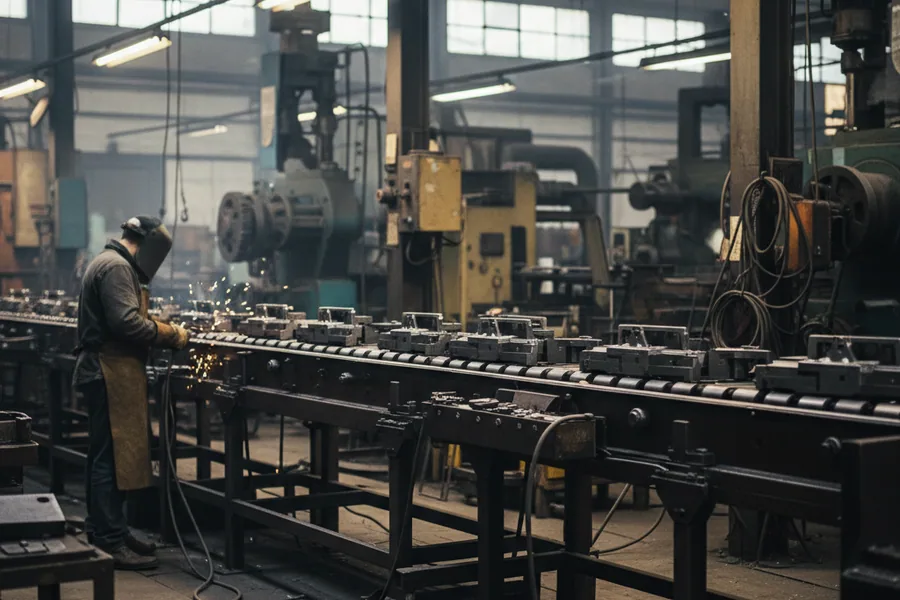
One shop, ten furnaces, continuous operation

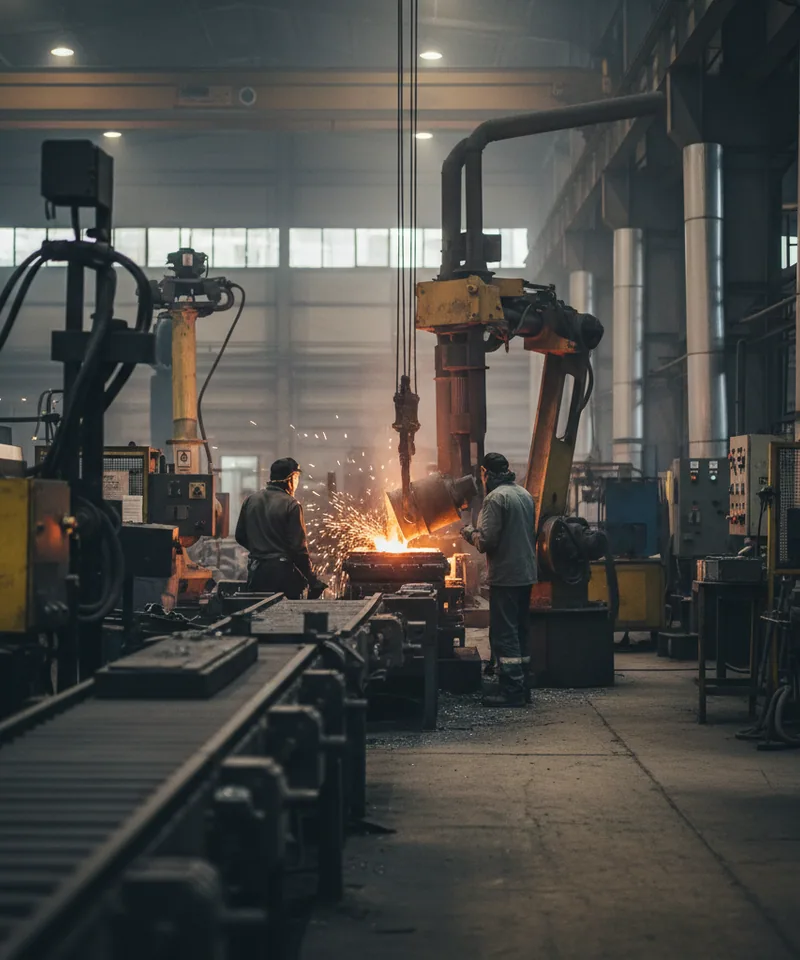
The electrode goes next to the electroslag shop. The electrode tip is melted through a layer of molten slag, and the metal passes through that slag drop by drop before it reaches the pool below. A new ingot builds upward inside a water-cooled mould, and it solidifies as it builds rather than all at once.

Two things happen in that one pass, and both matter downstream: the slag takes sulphur and non-metallic inclusions out of every drop, and the ingot is rebuilt with a solidification pattern that a conventionally cast ingot cannot have.

2016, the year every meant every

The shop reached ten furnaces in 2016, and that is the year every grade started going through it rather than a selected part of the range. Forty-eight people work in melting and electroslag refining. The regime for each grade, including which ingot size a given section is started from, is issued by our metallurgical and process engineers before the order reaches the shop floor.

Melting
2 × 15 t medium-frequency induction furnaces, three shifts, three heats a day each
Electrode ingots
3 – 12 t, size chosen per grade and per ordered section
Electroslag
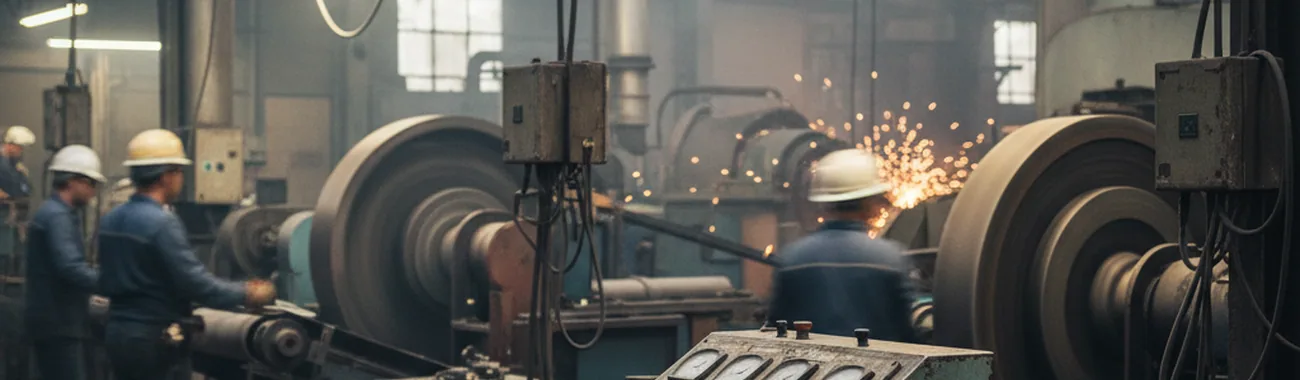
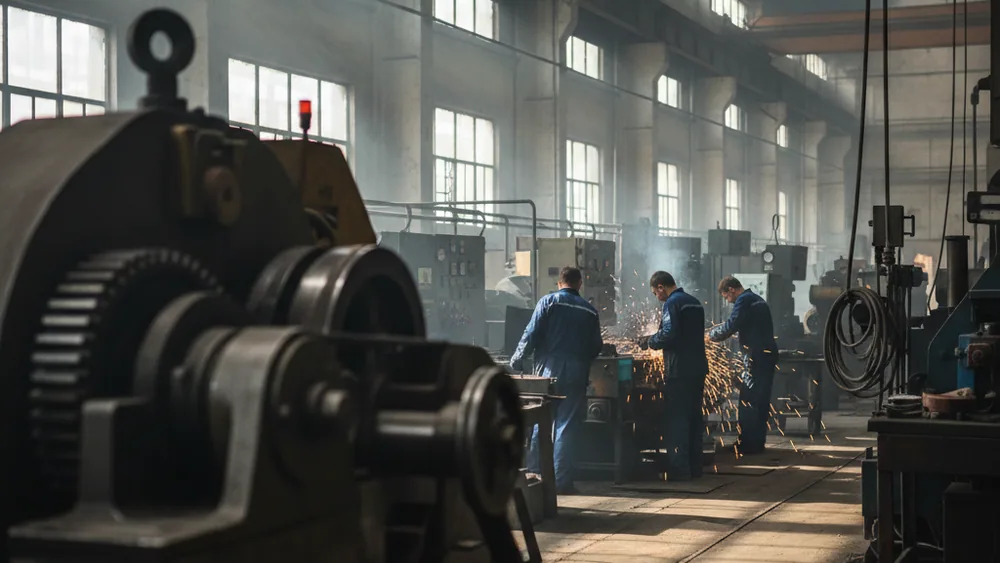
10 furnaces in one shop, continuous operation, covering all fourteen grades
People
48 in melting and electroslag refining
Cross-section of an electroslag remelting furnace A consumable electrode is melted through a molten slag layer; droplets pass through the slag into a metal pool and freeze upward inside a water-cooled mould, leaving a thin slag skin on the ingot surface. Electrode Molten slag Metal pool Water-cooledmould Slag skin Freezes upward
One pass: the drop is cleaned by the slag on its way down, and the ingot is rebuilt from the bottom up.
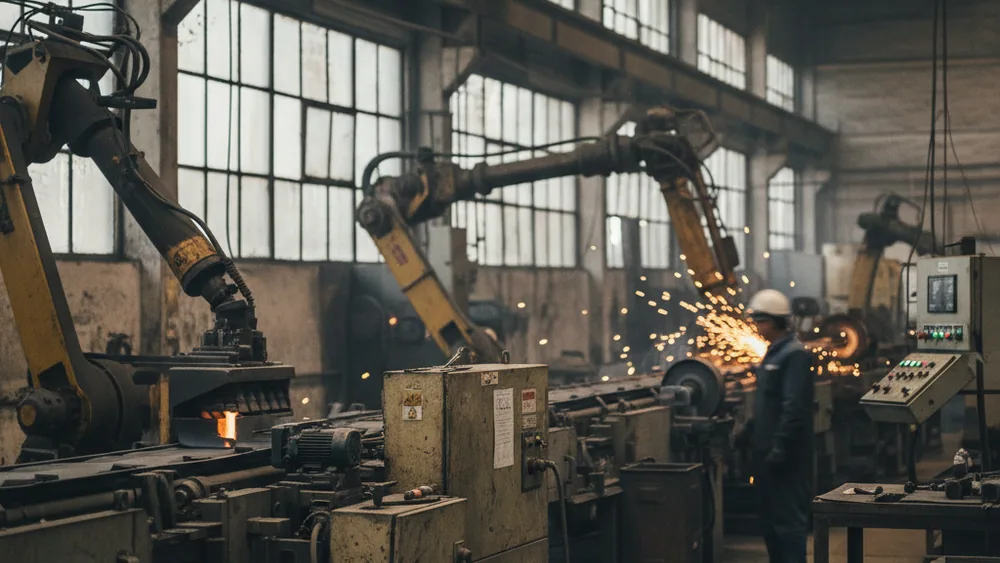
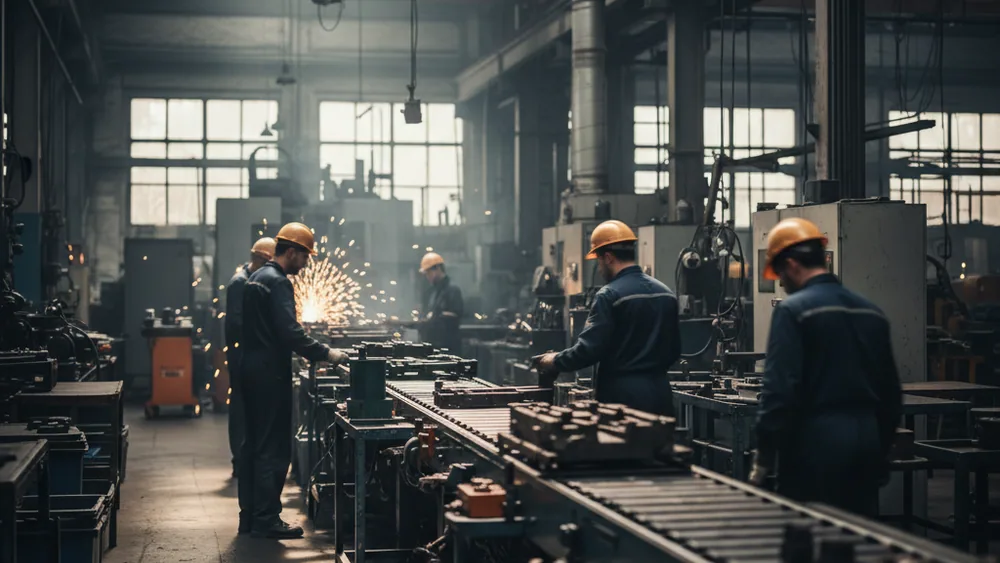
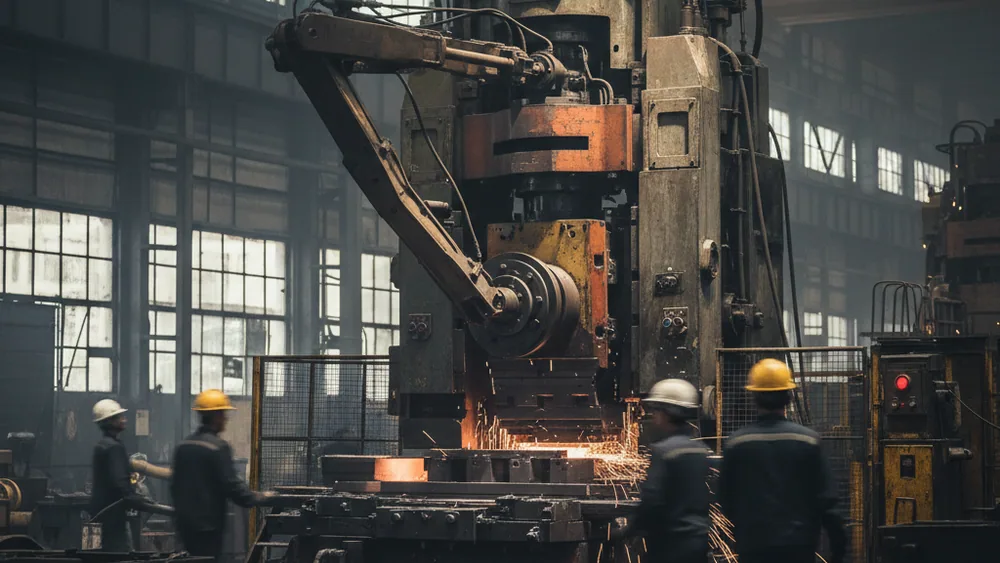
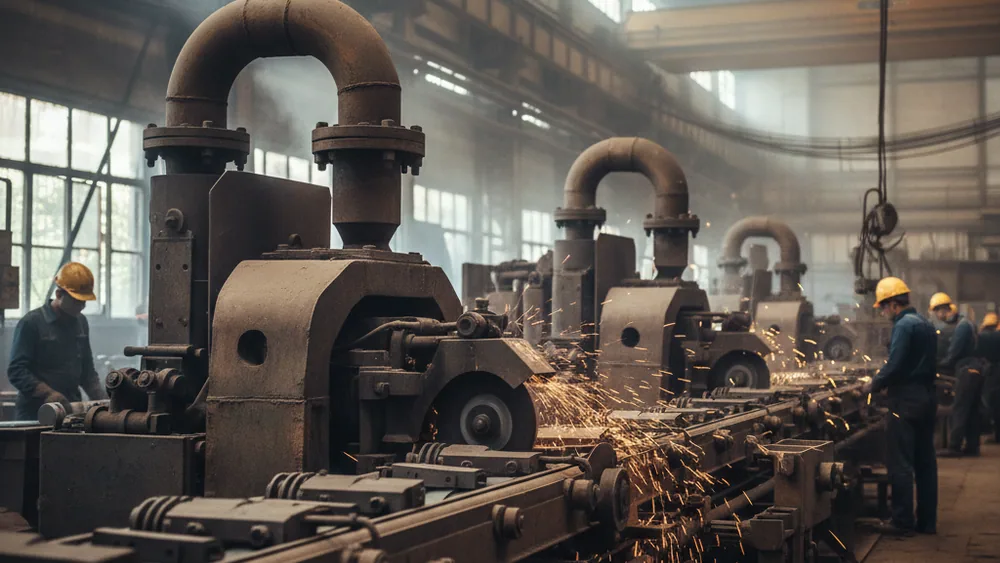
Induction furnace pouring an electrode ingot for ESR tool steel production Row of electroslag remelting furnaces running continuously in the ESR tool steel shop

One pass

What an ingot does while it freezes, it does once. No operation after it puts back what solidification took away.

Load-bearing — the two-minute check

ESR Tool Steel Capacity Arithmetic

Every mill selling remelted steel says the grades are remelted. That sentence is worth exactly as much as the furnace capacity behind it, so here is ours in three lines you can check on a calculator.

One furnace
5 t ingot ≈ 14 h → ≈ 6.7 t/day
=
≈ 2,400 t / year
One 5-tonne ingot takes about 14 hours on one furnace. That is roughly 6.7 tonnes a day, and after allowing about 80 percent utilisation for electrode changes, mould handling and maintenance, roughly 2,400 tonnes a year from a single furnace.
Ten furnaces
10 × 2,400 t/year
=
≈ 24,000 t / year
Ten furnaces at about 2,400 tonnes a year each is about 24,000 tonnes a year of remelting capacity.
Our output
2,000 t/month × 300 effective production days
=
24,000 t / year
Our annual output is 24,000 tonnes, produced at 2,000 tonnes a month across 300 effective production days.

The two numbers meet, and that is the whole point of putting them on a public page.

For the word every to be physically true, remelting capacity has to be at least equal to total output, because steel cannot be shipped through a furnace that does not exist. Ours is equal to it, with the utilisation figure already deducted rather than quoted at theoretical full load, since any engineer reading a capacity claim will ask whether it assumes the furnaces never stop.

Run the same check on any mill

  1. Ask how many electroslag furnaces it operates.
  2. Ask what it produces in a year.
  3. Multiply the furnace count by a realistic annual figure per furnace and compare it with the tonnage. If remelting capacity comes out well below total output, the remelting is selective, applied to part of the range, and the grade you are quoting may or may not be in that part.

It costs nothing, needs no visit, and is the same calculation we have run on ourselves.

Two limits on what this arithmetic says

The 14 hours is the basis of a capacity figure, not a delivery promise on your ingot, and nothing here means a furnace is standing idle on the day your order arrives, because production to order is scheduled work.

The arithmetic proves one thing only, which is that all fourteen grades can be remelted here, and are.

Electroslag remelting capacity, line by line
BasisFigure
Electroslag furnaces10
Ingot size range3 – 12 t
One 5 t ingot, one furnace≈ 14 h
One furnace, per day≈ 6.7 t
Utilisation allowed for~80%
One furnace, per year≈ 2,400 t
Ten furnaces, per year≈ 24,000 t
Annual output24,000 t
Control panel of an ESR tool steel remelting furnace, melt rate held by hand

Melt rate is logged for each run, against the heat.

The ten electroslag furnaces that remelt every ESR tool steel grade produced here

Sizing — 3 to 12 t, chosen before melting

Ingot Sizes and Section Range

The ingot size is chosen from the 3 to 12 tonne range by the section you have ordered, and that choice is made before melting, not after.

Heavy sections go from the 2,500-tonne fast forging press. The 1,600-tonne press covers the middle of the range. Small round sections, 16 to 150 mm, are forged on the radial precision forging machine, which is what gives that end of the range its dimensional accuracy and surface rather than leaving it to be turned out of something larger.

Why the ingot changes and the ratio does not

Reduction is where the ingot size earns its place. When the finished section gets heavier, what changes is the ingot we start from, not the reduction ratio, and the 3 to 12 tonne range exists so that a minimum 4:1 forging ratio is held on a 600 mm bar as well as on a 60 mm one. Buying an ingot on the open market means taking the size that is available; melting and remelting in-house means picking it.

The reduction regimes themselves, and what they do to structure, are set out on our EFS page.

Round barØ 16 – 600 mm
Flat bar and plate20 – 500 × 200 – 1200 mm
Round bar diameter covered by each forging line The radial precision forging machine covers 16 to 150 millimetres, the 1,600 tonne press 150 to 350 millimetres, and the 2,500 tonne press 300 to 600 millimetres of round bar diameter. Round bar diameter, mm 16150 350600 Radial precision forging 1,600 t press 2,500 t press →
Three forging lines, one continuous band from 16 to 600 mm.
Remelted ESR tool steel ingot being stripped from its water-cooled mould
Forging line coverage by section
LineRound barFlat bar and plate
2,500 t fast forging pressØ 300 – 600 mm200 – 500 × 400 – 1200 mm
1,600 t fast forging pressØ 150 – 350 mm20 – 250 × 200 – 800 mm
Radial precision forging machineØ 16 – 150 mm

Load-bearing — five effects, five document lines

Remelting Effects Inside the Bar

Five things change inside the steel, and each one is visible on a line of the document that travels with the batch. Reading them in that order is the fastest way to judge remelted material on paper.

Macro-etched disc cut from an ESR tool steel bar showing a sound centre

A disc cut from the remelted bar, macro-etched: no central cavity to find.

Conventional casting compared with progressive remelted solidification A conventionally cast ingot freezes inward from every side and forms a shrinkage cavity and porosity at its centre; a remelted ingot freezes upward from a shallow pool as it is built, so no central cavity forms. Cast ingot Remelted ingot Freezes inward · cavity Freezes upward · no cavity
Same steel, two solidification patterns.
  1. Solidification is progressive

    The ingot freezes from the bottom upward as it builds inside the water-cooled mould, so the shrinkage cavity and central porosity that form when a large conventionally cast ingot solidifies inward from all sides do not develop.

    Where this shows

    100% ultrasonic testing to SEP 1921 Class D/d or E/e, one bar at a time, with the individual result recorded against the heat number. Internal soundness is the one property a buyer genuinely cannot inspect on arrival, and it is the reason the ultrasonic line is checked bar by bar rather than sampled.

  2. Sulphur and inclusions drop

    Every drop of metal passes through molten slag on its way down, and the slag takes sulphur and non-metallic inclusions with it.

    Where this shows

    The measured composition for your heat on the EN 10204 3.1 MTC, produced on our own spectrometers, with the sulphur line as the direct reading. Non-metallic inclusion rating can be added to the order as an extra test item when your customer specifies one.

  3. Segregation narrows

    Because the ingot is rebuilt drop by drop rather than poured and left to separate, composition stays consistent from bottom to top and from surface to centre.

    Where this shows

    The analysis on the certificate describes the bar you received rather than an average across an ingot that varies through its own height.

  4. Carbides come out finer

    In the high-carbon high-chromium cold work grades, the eutectic carbide network formed during solidification decides how a blanking edge behaves, and a fast, progressive freeze forms it finer and better spread than a slow one.

    Where this shows

    Carbide distribution rating, the eighth of our eight inspection steps, measured in our metallography room on your heat.

  5. Grain structure is more uniform

    The structure is cleaner and more even, which is what the subsequent forging reduction and annealing regime then work on.

    Where this shows

    The grain size rating, the seventh step, measured on the same sample. Both structural ratings are reported as measurements taken on your heat rather than as a fixed level printed once and applied to everything, and magnetic particle testing covers surface and near-surface indications alongside them.

Bar-by-bar ultrasonic testing of ESR tool steel round bar against SEP 1921 Optical emission spectrometer reading the composition of a remelted heat Metallography bench where grain size and carbide distribution are rated

Reply T+24 h

Send the Grade and the Section

Tell us the grade, the section and the quantity per size, and you get feasibility, stock or production, and the document set back within 24 hours on a working day.

Load-bearing — six things to ask for

Verification by Heat Number

Everything above is checkable, and the heat number is what makes it checkable. Here is what to ask for, in the order a purchasing desk normally needs it.

Test samples cut from one ESR tool steel heat, laid out for chemistry, hardness and metallography
One heat, one set of samples, one set of measured values on the certificate.
  1. Ask for a sample certificate

    An EN 10204 3.1 MTC ships with every batch, signed by the quality department's authorised inspection representative. That department reports to the general manager and sits outside production, and output and delivery targets are not part of how it is assessed, which is what allows it to hold material that production would rather ship.

    Ask before you order, on any of the fourteen grades

  2. Read what it carries

    The grade in your designation, the heat number, measured composition from our own spectrometers, hardness, the ultrasonic result against the acceptance class your order specified, and the measured grain size and carbide distribution ratings for that heat.

    The rating is the one measured on your heat — not a level printed once

  3. Ask for a single bar

    Because ultrasonic testing is done one bar at a time and each result is recorded against the heat number, an individual reading can be retrieved for a specific bar rather than a batch average.

    Records and certificate copies retained for 10 years

  4. Ask who signed

    Ultrasonic operators are trained and examined to ISO 9712 Level II and recertified every three years, and an unqualified operator cannot sign a test result here.

    ISO 9712 Level II · recertified every 3 years

  5. Ask for the system documents

    ISO 9001, EU CBAM compliance and TÜV carbon footprint certification are held and current, and where your quality department sends a document checklist we answer it item by item rather than returning a general information pack.

    Checklist answered line by line, T+24 h on a working day

  6. Ask to watch it

    The bar-by-bar ultrasonic test, spectrometer sampling and metallographic preparation can all be seen being performed in the works, on the material they are testing.

    Booked about 5 working days ahead

Ultrasonic probe traversing the surface of an ESR tool steel bar under couplant

The ultrasonic class is the one your order specifies, Class D/d or Class E/e under SEP 1921, so the test and the report are both run against the class your customer works to.

Stock — 5 grades held finished

ESR Tool Steel From Stock

The five grades held finished are the same electroslag remelted material as anything produced to order, certified the same way.

  • H13
  • D2
  • 1.2316
  • 1.2085
  • 420

Stock coverage, dispatch windows and processing lead times are set out on our homepage.

Finished ESR tool steel bar held in the stock warehouse, marked by grade

One route

There is no unremelted line here for an order to slip onto when the shop is busy. Ten furnaces, one shop, the whole range.

Routes — 3 furnaces, 3 questions

ESR, VAR and Ladle Refining

Three refining routes turn up in tool steel specifications, and they answer different questions.

Consumable electrode lowered into the slag pool of an ESR tool steel furnace

The electrode is consumed from the tip; the ingot below it is a second casting.

Ladle treatment, electroslag remelting and vacuum arc remelting compared
RouteActs onWhere it is the right answer
Ladle treatmentLiquid steel before casting: cleanliness and compositionWhere composition and cleanliness are the requirement and solidification structure is not the deciding property
Electroslag remeltingCleanliness and solidification structure, in one pass, after the first solidificationHeavy tool and die sections that have to behave the same at the centre as at the surface
Vacuum arc remeltingDissolved gases and inclusion levels, under vacuumAerospace structural steels, titanium alloys, superalloys

Why the middle row is the tool steel answer

Ladle treatment improves cleanliness and adjusts composition, and it is effective at what it does, but the steel is still poured into a mould and left to solidify inward as one mass.

Electroslag remelting works after that first solidification. A solid electrode is remelted through molten slag and a second ingot is built progressively, so the process acts on cleanliness and on solidification structure in the same pass. That combination is what tool and die steel needs, because a die block is a heavy section, and it is why our whole range goes through it.

Machined face of a heavy ESR tool steel die block section

Where VAR is the right answer

Vacuum arc remelting remelts under vacuum instead of slag. It is the right answer where dissolved gases govern the result and where inclusion levels have to go lower still.

Said plainly

We operate ESR. We do not operate vacuum arc furnaces.

For tool steel sections the electroslag route is the one that fits the requirement. Where a specification genuinely calls for VAR material, it calls for a different mill, and we will say so.

Solidified slag cap lifted off a finished ESR tool steel ingot

By family — 4 failure modes

Remelting by Grade Family

What remelting is doing for you depends on which family you are buying, and it is worth knowing which effect your customer is actually paying for.

Hot work ESR tool steel bar heated for forging
  • H13
  • 1.2367
  • H11
  • H10
  • 1.2714

Hot work

Fails through thermal fatigue

A crack network develops on a die face cycled thousands of times, and it starts wherever there is an inclusion or a segregated band to start from. Cleanliness and uniformity are the effects that matter here. H13 is covered in detail on its own page.

Cold work ESR tool steel flat bar stacked for blanking dies
  • D2
  • DC53
  • D3
  • D6
  • O1

Cold work

Decided by its carbides

Around 12 percent chromium and high carbon produce a eutectic carbide network on solidification, and its coarseness and directionality govern edge retention and how much the tool moves in hardening. Remelting is the first of the two steps that break that network up, forging reduction being the second. Our D2 page follows this through to the tempering routes.

Polished plastic mould grade ESR tool steel plate surface
  • 1.2316
  • 1.2085
  • 420

Plastic mould

Judged on a finished surface

Every inclusion near the surface becomes a defect a moulder can see in the part, so the cleanliness gained in the slag is the property being bought.

M2 high speed ESR tool steel round bar cut for cutting tool blanks
  • M2

High speed

Holds an edge or does not

M2 is carried for cutting tool and punch applications, and remelting refines the carbide distribution that governs how well it holds that edge.

After — forging ratio and annealing

EFS Refining After Remelting

Two steps, in this order

Remelting sets the starting structure. EFS, our grain refining process, works on it afterwards through controlled forging reduction and grade-specific annealing regimes.

  • Hot work
  • Cold work
  • Plastic mould
Applied across
Hot work, cold work and plastic mould grades
Not applied to
M2 high speed steel, which does not run the EFS route
Reported as
Grain size rating and carbide distribution rating, measured on your heat

What those two ratings mean, and how the regimes are written and held, are covered on our EFS page.

Car-bottom annealing furnace loaded with forged ESR tool steel bar

Six areas open

The bar-by-bar ultrasonic test can be watched being performed, on the bar it is testing.

Visit — booked 5 working days ahead

Works Visit to the Melting Shop

Six areas open, and the operations behind your certificate watched as they are performed.

  • Melting and electroslagBoth furnace types, in operation
  • ForgingAll three lines
  • Heat treatmentAnnealing and pre-hardening
  • FinishingSawing, grinding, milling, turning
  • Inspection centreUltrasonic, spectrometer, metallography
  • Finished goods warehouseStock grades and marking

What can be watched, and on what terms

Bar-by-bar ultrasonic testing, spectrometer sampling, metallographic rating and certificate retrieval can all be watched being done. Arrangements are set out on our company page.

Notice
About five working days ahead
Third party
An inspection representative you appoint is received on the same terms
Remote
A video visit follows the same route, stopping at any station you name
Visitor walkway above the ESR tool steel melting and remelting bay Inspection centre where ESR tool steel bars are ultrasonically tested and rated Fast forging press drawing down a remelted ESR tool steel ingot

Who we sell to — the distribution layer

Supply to Distributors and Stockholders

We are a source mill selling to distributors, stockholders, wholesalers and large-scale procurement buyers, and the distribution layer is who this works is built to serve.

End users approaching us directly are referred to a distributor in their market.

You are not competing with your own supplier for the tool rooms you sell to.

Changing mills

A first order can be run as a trial to verify the material against your own requirements before it becomes regular replenishment, and buyers who are changing mills usually do exactly that. Once the material is accepted, the same grades come back on a replenishment rhythm, from the same specification and the same written process regime.

Processing here
Cutting to length, grinding, milling and machining to drawing
Onward sale
Marked and packed to your own brand specification
Technical desk
Grade selection, equivalents and heat treatment routes answered within 24 hours on a working day, before an order as well as after one
ESR tool steel bar bundled and strapped for onward sale under a distributor's own label Band saw cutting remelted tool steel bar to ordered length

Cut, banded and packed for onward sale under your own label.

Non-conformance — no concession shipment

Material Held Back at Inspection

Material that fails inspection is held back and not shipped. There is no concession shipment here.

What happens

The heat is re-inspected. The shortfall is re-produced from our own melt, to the same specification — possible only because the melt is ours.

What that means for you

A short delivery is a scheduling problem you can manage. A batch that reaches your customer out of specification is a claim you cannot. How a disagreement over a test result is settled is set out on our homepage.

Held back
Segregated from released stock, not shipped
Never
Shipped on concession
Bar ends painted with a segregation colour code, racked apart from released stock

Seven lines — one complete reply

ESR Tool Steel Inquiry Checklist

Seven lines, and the first reply is a complete one, inside 24 hours on a working day.

Grade

In whatever designation your customer wrote. Equivalents are mapped and the mapping comes back in writing so you can forward it.

Section and quantity per size

So each line is checked against stock or production separately rather than as a total tonnage.

Delivery condition

Annealed, or pre-hardened where the grade offers it.

Ultrasonic acceptance class

Class D/d or Class E/e under SEP 1921. If your customer has not stated one, say so and the technical desk will ask what the tool is before anything is cut.

Surface condition

Black forged, peeled, ground, or milled on six faces.

Added test items

Beyond our eight steps, where your customer specifies them: non-metallic inclusion rating, impact testing, or a hardening test sample taken from the same heat.

Marking and packing

Including your own brand specification.

What comes back

Feasibility line by line, stock or production, the grade mapping confirmed, and the documents that will ship with the batch.

Before you commit to anything

Ask for a sample EN 10204 3.1 MTC on any of the fourteen grades, and read the ultrasonic, grain size and carbide lines on it. That single document answers more about a mill than any brochure will.

End faces of several ESR tool steel grades side by side, colour-coded by family
Remelted tool steel bundles staged at the loading bay for dispatch

Reply T+24 h

Send the Grade, the Section and the Quantity

You get feasibility line by line, stock or production, the grade mapping in writing, and the document set that will ship with the batch — within 24 hours on a working day.

Grades remelted
14 of 14
·
All five families
Ultrasonic
100%, one bar at a time
·
SEP 1921 D/d or E/e
Certificate
Every batch
·
EN 10204 3.1 MTC

Or write to wonderful@fcstoolsteel.com · +86-18972782802 on WhatsApp. Mon–Fri 09:00–18:00 (GMT+8).