D6 Tool Steel: 1.2436 Bar for Knife Sets and Long Edges
D6 tool steel is the tungsten-bearing member of our high carbon high chromium family, and it is bought almost entirely as edges: slitting knives, shear blades, deep drawing dies and small cold rolling rolls.
That changes what an order looks like. A D6 enquiry is usually not a piece of steel but a list — an arbor of knives, a pair of blades across a width, the spares that go with them — and the things that decide whether the set performs are the things that keep every piece in it identical, and keep it identical several millimetres down, where the edge will be after a dozen regrinds.
- 01
- 02
- 03
- 04
- 05
- 06
- 07
- 08
- 09
- Spare
- Spare
D6 tool steel, 1.2436 and X210CrW12 name one grade here, and it leaves as a marked set rather than as loose bar: melted, electroslag remelted, forged, annealed, finished and taken through eight inspection steps inside a single works.
Rounds run Ø 16 to 600 mm. Flats and plate run 20 to 500 mm thick by 200 to 1200 mm wide. Delivery is annealed at 255 HB or below, in black forged, turned, ground or six face milled condition. D6 sits outside the five grades we hold finished, so each set is made for the order: 25 to 35 days, and a first set can go through as a trial before a programme depends on it.
- Electroslag remelted, every bar.
- 100% ultrasonic testing to SEP 1921 Class D/d or E/e, bar by bar.
- One EN 10204 3.1 MTC covering the whole set.
- Heat number marked where regrinding will not reach it.
We supply the distribution layer — distributors, stockholders and wholesalers whose customers run slitting lines, shear shops and press rooms — in more than 100 countries, and have done for nineteen years. The service centres and tool rooms below you stay yours.
Send the knife list — piece count, sizes, upper and lower blades, spares — with the section and who hardens it, and a written answer is back within 24 hours on a working day.
This page covers what the tungsten buys, how a set is put on one heat, what happens at a top-up, and what is settled before a blank is cut.
D6 Tool Steel Shear Blade Applications
D6 tool steel belongs where an edge is worn away rather than knocked off, and where the tool will be reground many times before it is scrapped.
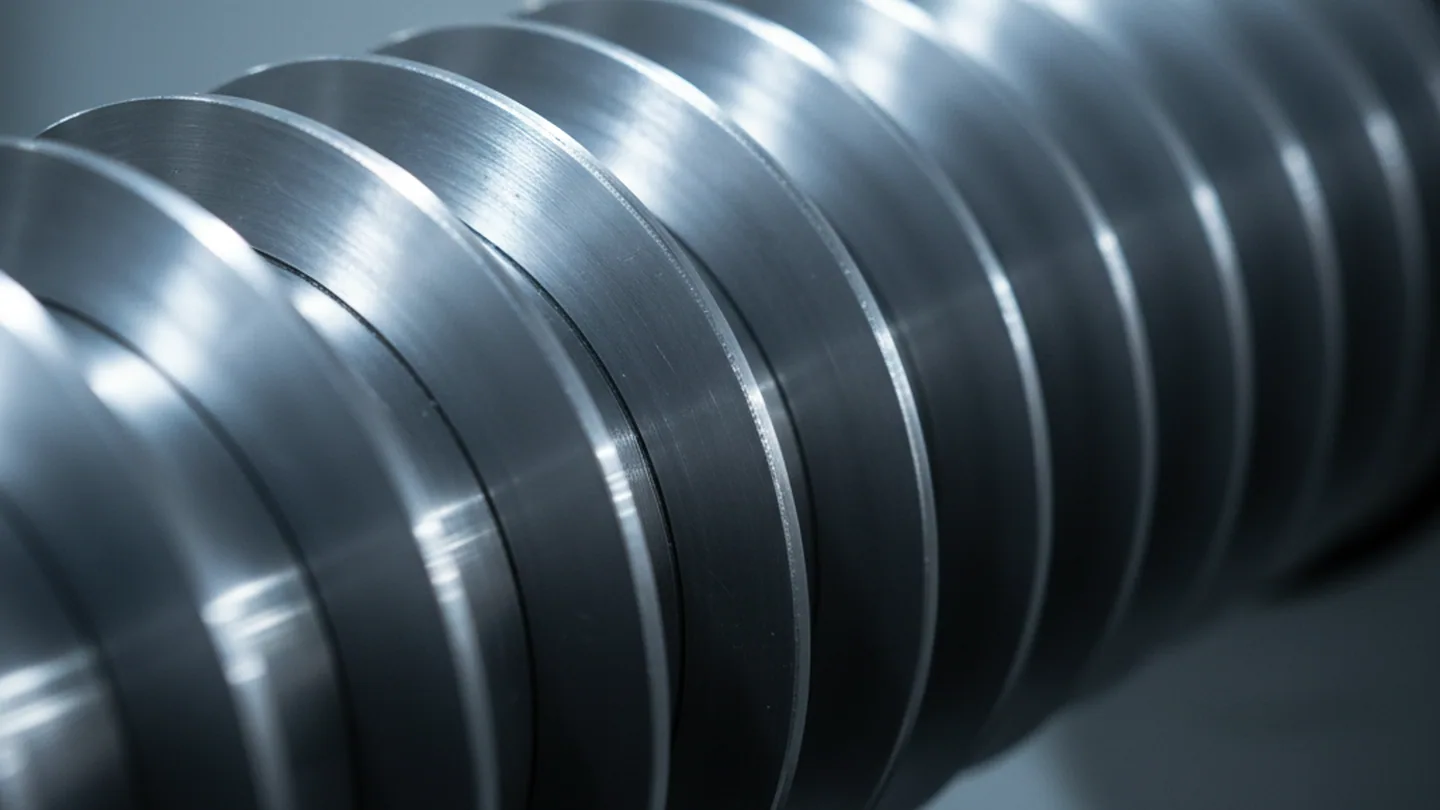
Slitting knives and spacers for coil lines
Circular knives working strip continuously, where the profitable measure is metres run between changeovers rather than hardness at handover.
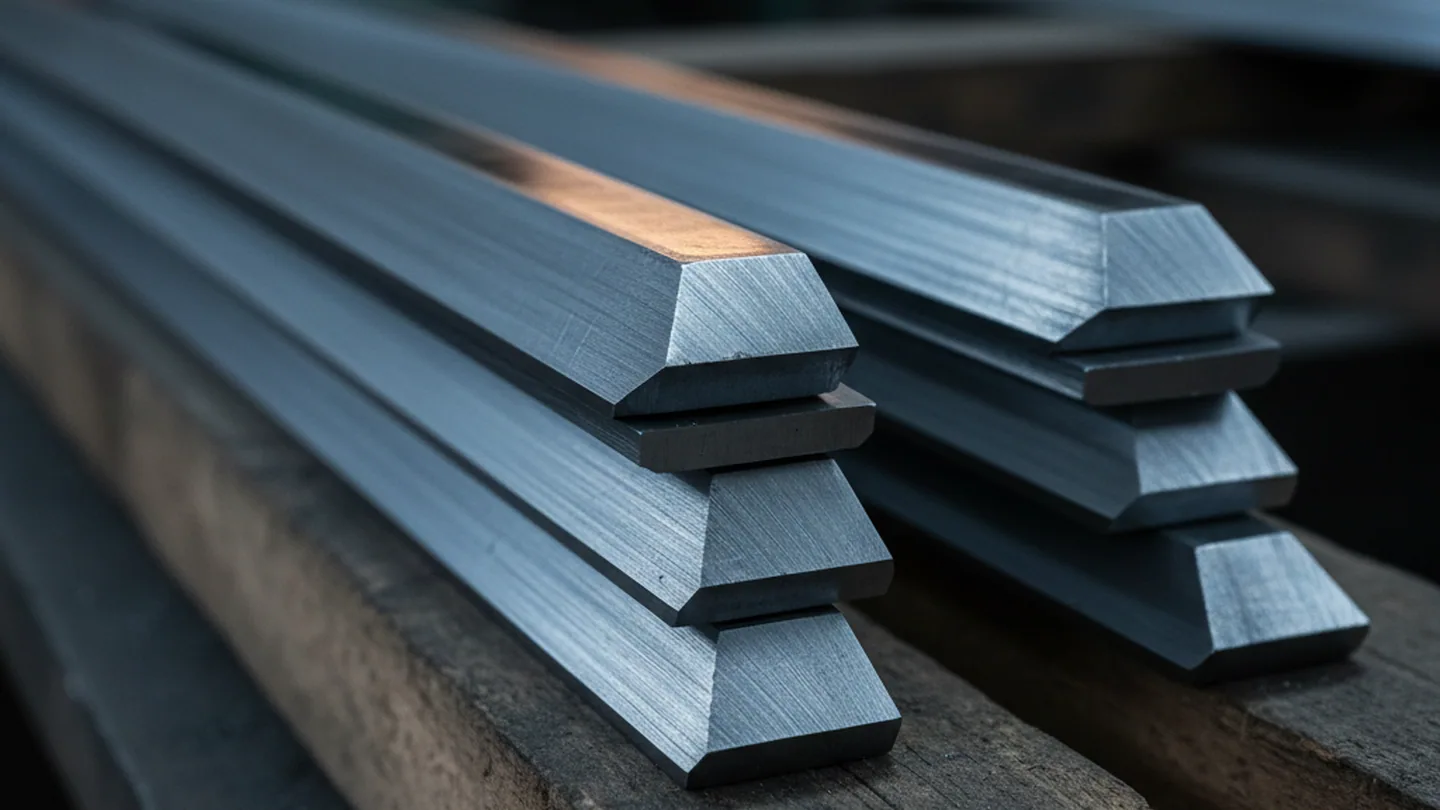
Shear blades for thin and medium gauge stock
Straight blades taking a clean cut in a supported, purely shearing load path, ground back and reset repeatedly across their service life.
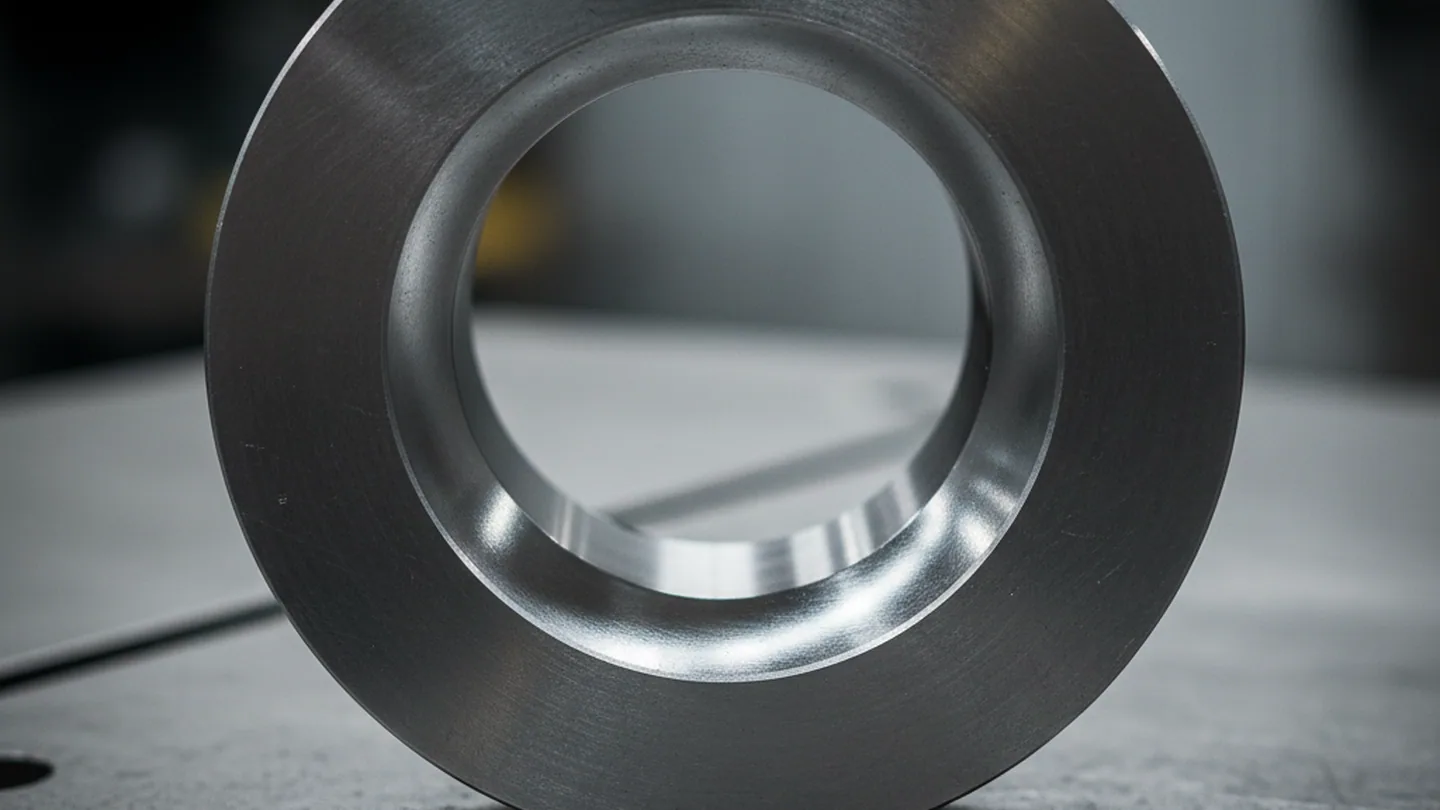
Deep drawing and forming dies
Tools whose working surfaces are in compression while sheet slides across them, where galling and abrasion set the service interval.
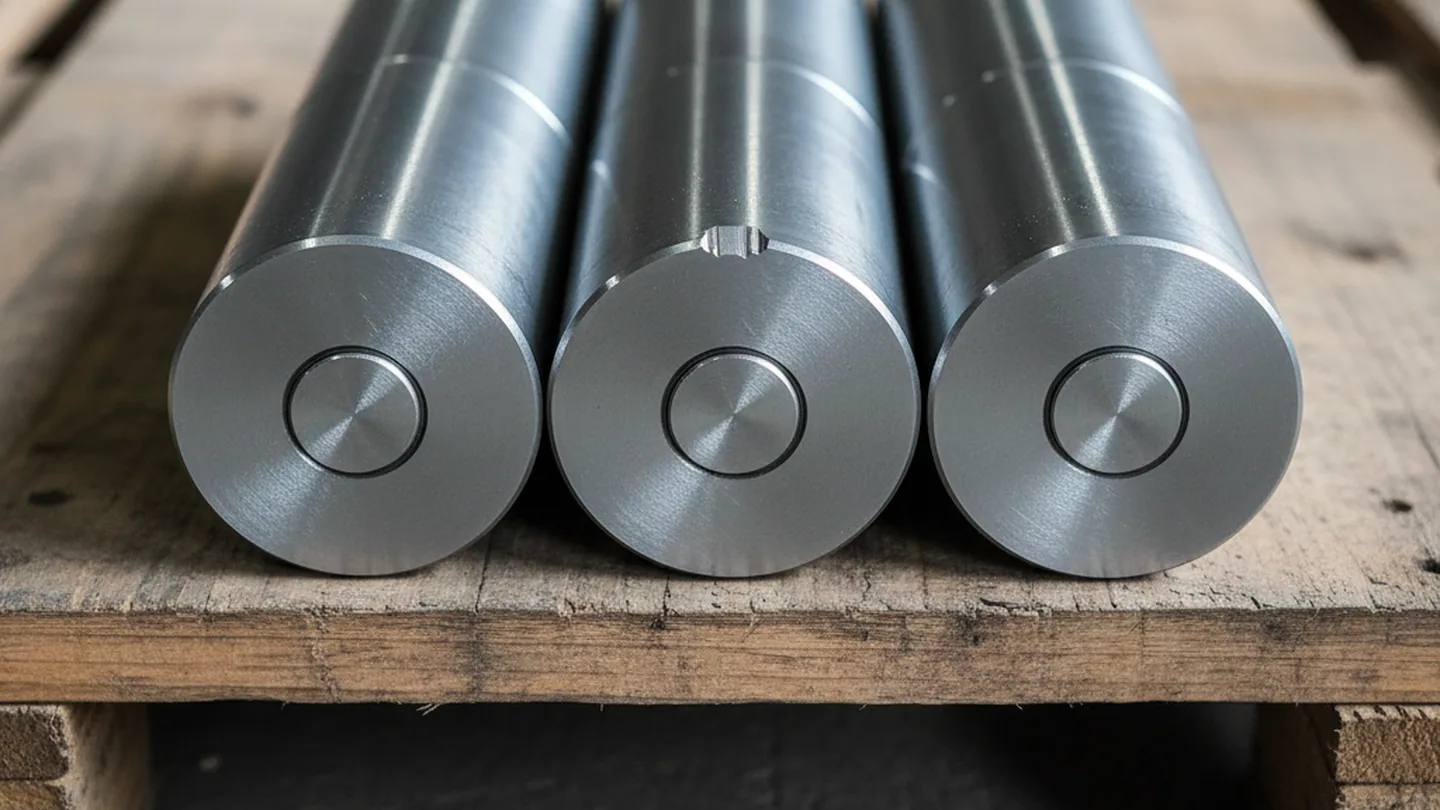
Cold rolling rolls and trimming tools
Cold rolling rolls in small sections, and trimming tools on cold rolled strip, sit in the same family: continuous contact, abrasive counterface, no impact.
Abrasion decides the life, the load is shear or compression without a hammering component, and the tool earns its keep through repeated regrinding.
D6 Tool Steel and D3
D6 tool steel and D3 sit in the same high carbon, twelve percent chromium family and share their delivery condition, their annealed ceiling and their hardening behaviour. One element separates them: D6 carries 0.60 to 0.80 percent tungsten and D3 carries none.
Tungsten forms carbides of its own, and they are harder than the chromium carbides that make up most of the structure in both grades. At a cutting edge that difference is the whole argument. An edge is a line of hard particles meeting an abrasive counterface, and each pass either wears the matrix around a particle away or takes the particle out. Harder particles survive more passes, so the edge holds its geometry longer and the interval between regrinds stretches.
For a line running strip that interval is money in a form the operator already tracks: metres between changeovers, changeovers per shift, hours the line is not running. It is also the number your customer will quote back at you when he compares two suppliers.
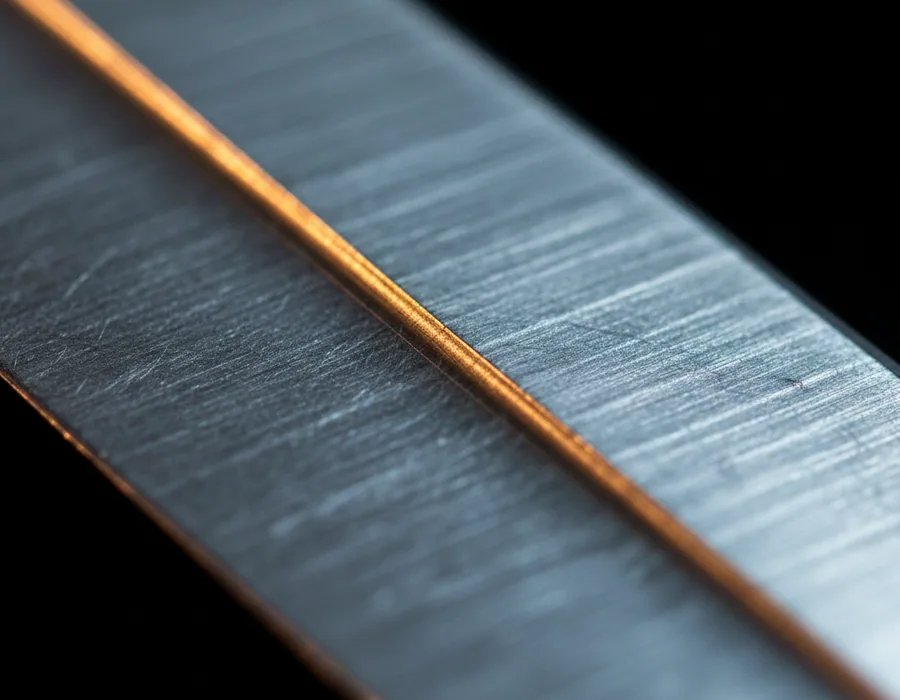 D6 — tungsten carbides at the edge
 D3 — chromium carbides only
| D6 | D3 | |
|---|---|---|
| Tungsten | 0.60 – 0.80 % | None |
| Carbide hardness at the edge | Higher | Lower |
| Interval between regrinds | Longer | Shorter |
| Toughness within this family | Lowest | Low |
| Typical tools | Slitting knives, shear blades, drawing dies, small rolls | Thin gauge blanking, thread rolling, wire drawing, powder compaction |
Everything the two grades hold in common — quench medium, the single tempering range, delivery condition and what the section does in hardening — is set out on D3 and is not repeated here.
D6 Tool Steel Composition
D6 tool steel is supplied to the 1.2436 window, designated X210CrW12 in the European system. The tungsten row is the grade.
| Element | % |
|---|---|
| Carbon | 2.00 – 2.30 |
| Silicon | 0.10 – 0.40 |
| Manganese | 0.30 – 0.60 |
| Chromium | 11.0 – 13.0 |
| Tungsten | 0.60 – 0.80 |
| Phosphorus | ≤ 0.030 |
| Sulphur | ≤ 0.030 |
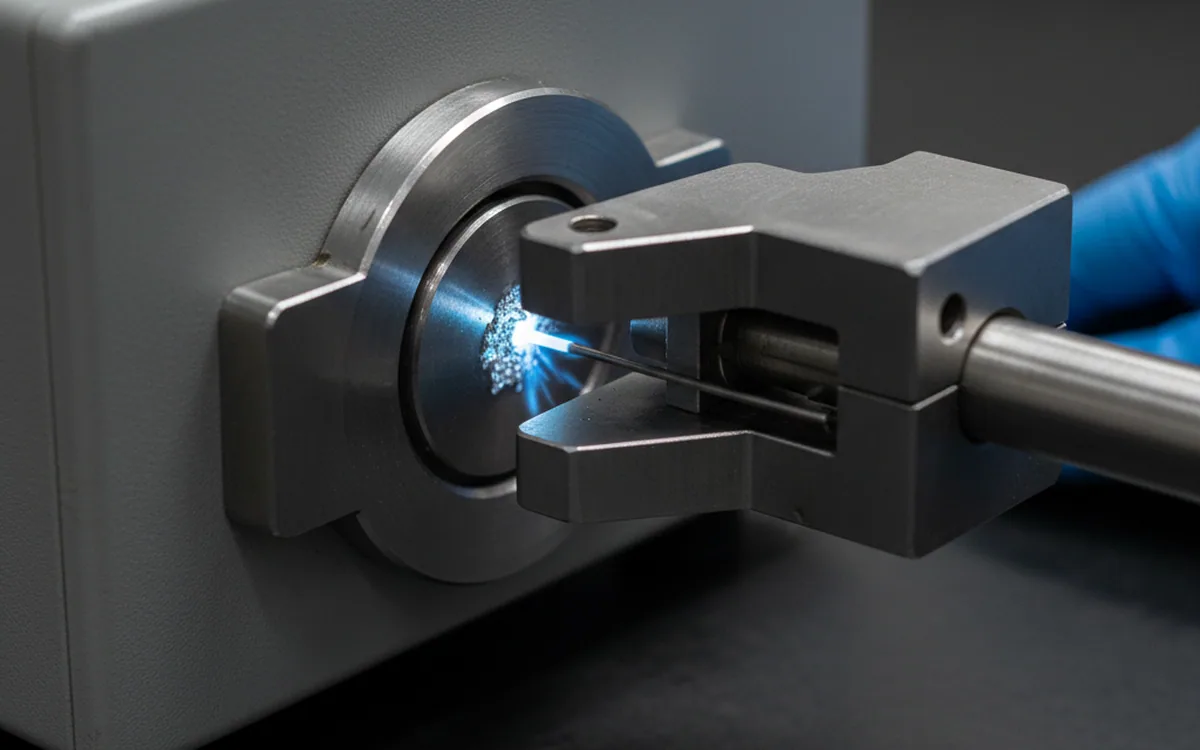 Optical emission spectrometry, every heat
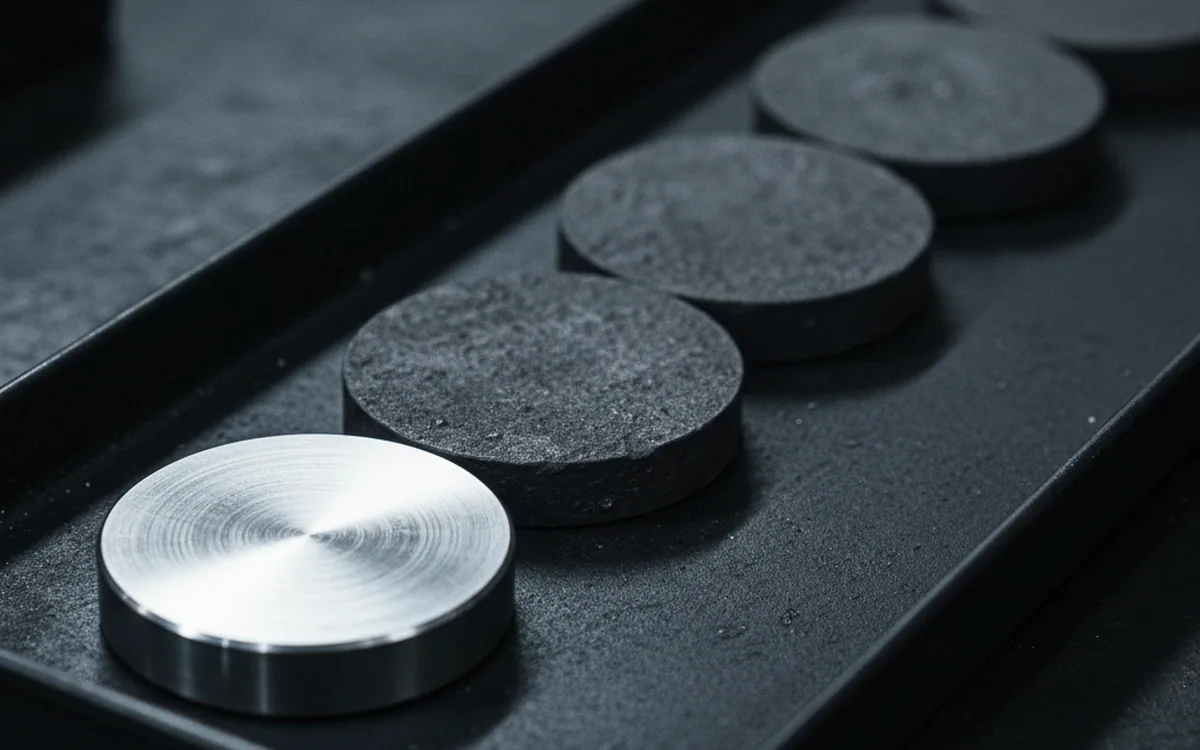 The sample the certificate is written from
Optical emission spectrometry runs on every heat, and it is those readings — not the window above — that go onto the EN 10204 3.1 MTC issued for your set. Austenitised at 940 to 980 °C, quenched in oil and tempered at 180 to 250 °C, D6 takes 58 to 64 HRC. That is a property of the grade, reached in a furnace belonging to your customer: what leaves here is annealed bar, and the hardening is his to run.
A D6 order is rarely one piece of steel.
Shear Blade Sets From One Heat
A slitting line changes over with a full arbor of circular knives and spacers. A guillotine runs upper and lower blades in pairs, often segmented across the width. Both arrive with spares that are expected to behave like the blades they replace.
- 01
- 02
- 03
- 04
- 05
- 06
- 07
- 08
- 09
- Spare
- Spare
- 01
- 02
- 03
- 04
- 05
- 06
- 07
- 08
- 09
- New heat
- New heat
What a mixed set costs
Every knife in that set wears at the rate its own steel gives it. Put two heats on one arbor and the knives grind down at slightly different rates, the clearance between them drifts, and the strip shows it: burr, edge camber, a cut edge that will not fold or weld cleanly further down the line. What gets written off is the coil and the hours the line stood still. The knives are the smallest figure in that account, and they are the only figure the steel supplier is looking at.
How the set is scheduled
So the set is scheduled onto one heat. D6 is not among the grades we hold finished, and here that runs in your favour: because the order is made rather than picked off a rack, the whole list goes onto a single heat and a single ingot, and is forged, annealed, finished and inspected together. Every piece carries its heat number. One EN 10204 3.1 MTC covers the set.
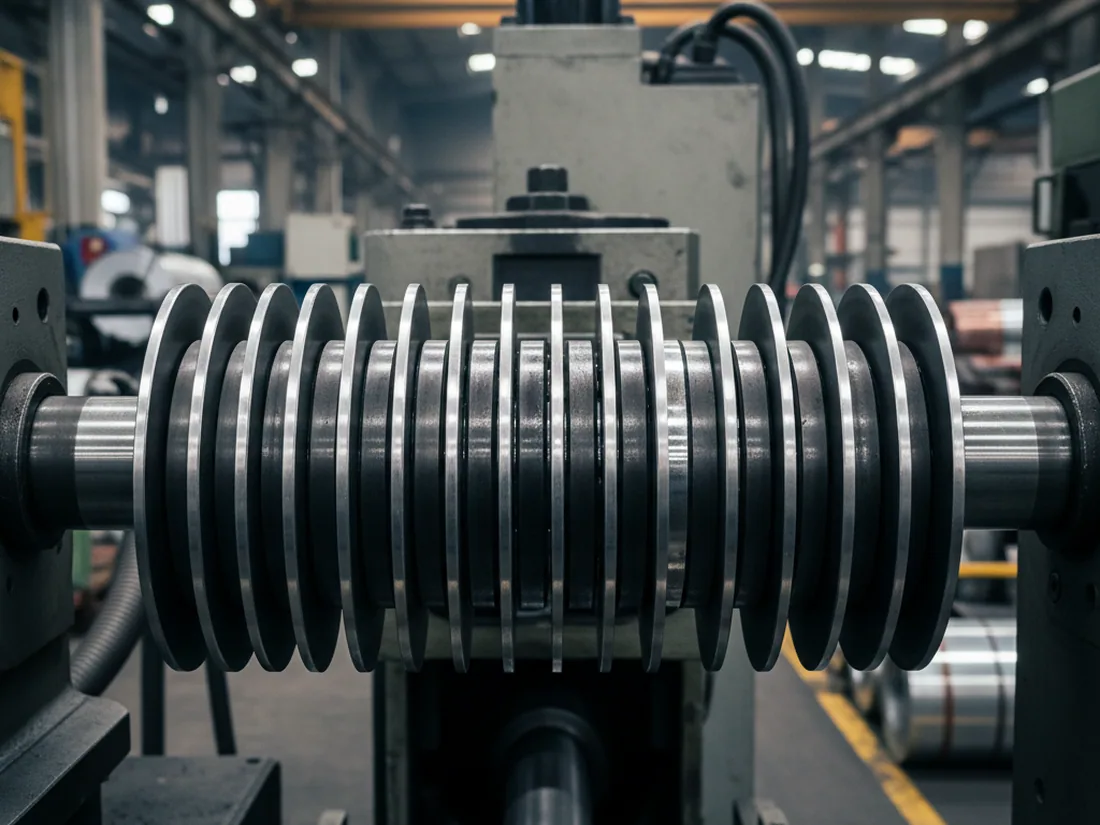 One arbor, one list
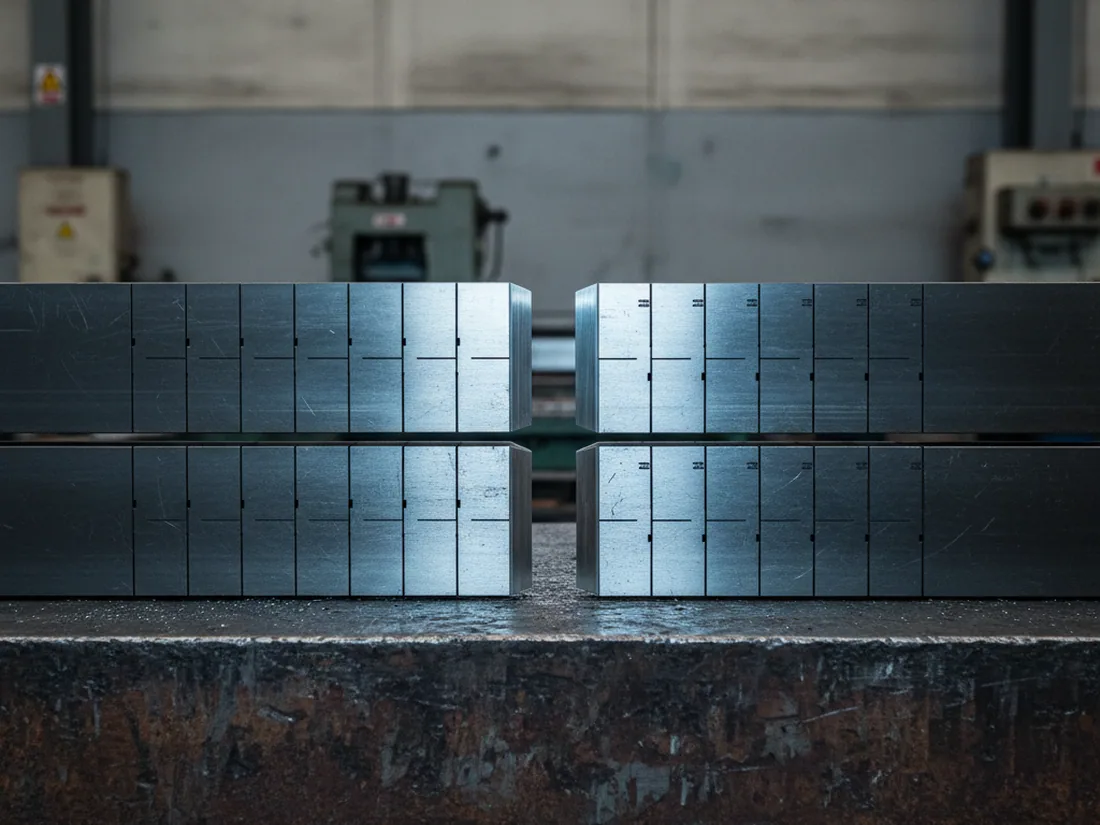 Upper and lower, segmented across the width
The check on the crate
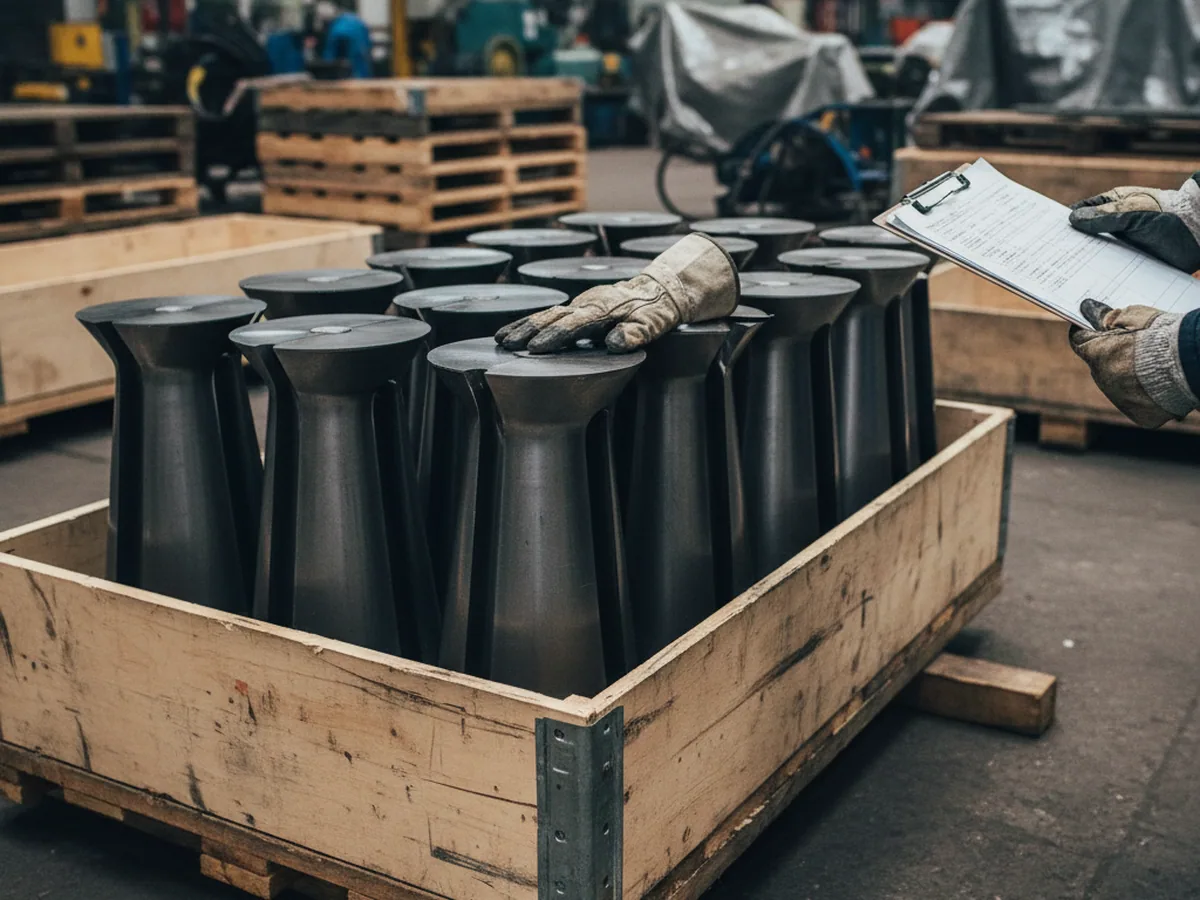 A pen and five minutes
That claim costs you nothing to check, and you check it before anything reaches a line. The certificate states the heat and the pieces it covers. Open the crate, walk the pallet, read the numbers: every piece showing the same heat, and the count in front of you matching the count on the document. A pen and five minutes, no laboratory in it.
The top-up, six months later
The harder test arrives six months later, when three knives are wanted to complete an arbor. Ask for them against the original heat number. The heat is looked up in an archive held for ten years, and where material from it remains, the top-up is cut from that heat. Where it does not, you are told so in writing: a statement that this is a new heat, with the measured composition and annealed hardness of both heats set out side by side, so that whether they run together on one arbor is decided by the person who knows the line rather than by whoever picked the bar.
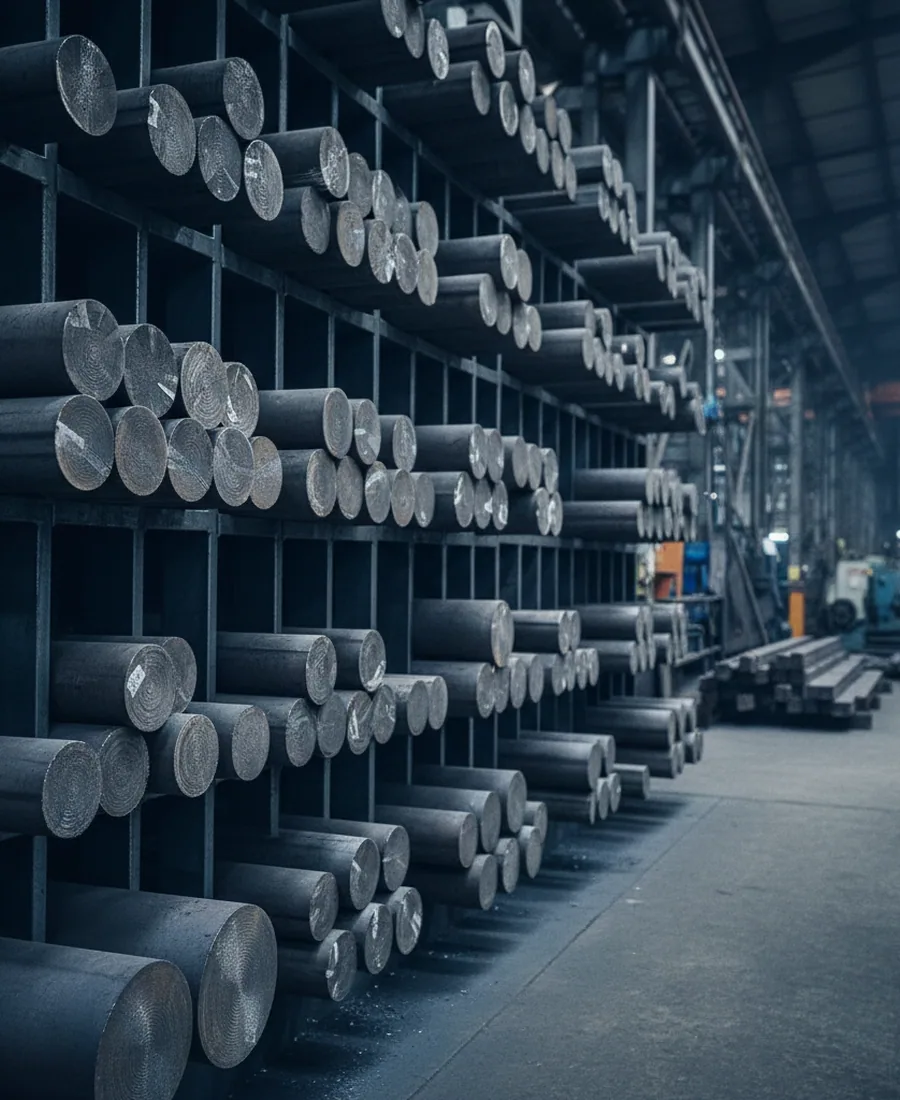 Stock from that heat, still on the floor
The top-up is the moment a mixed set enters a customer’s line, and it enters through the distributor who supplied it.
Send the Knife List
Piece count, sizes, upper and lower blades, spares, and the strip or sheet they will cut. A written answer within 24 hours on a working day, including whether D6 is the grade for that line.
Regrind Depth and Section Consistency
A shear blade is not consumed at its face. It is ground back, reset, ground back again, and each pass takes the working edge deeper into the bar.
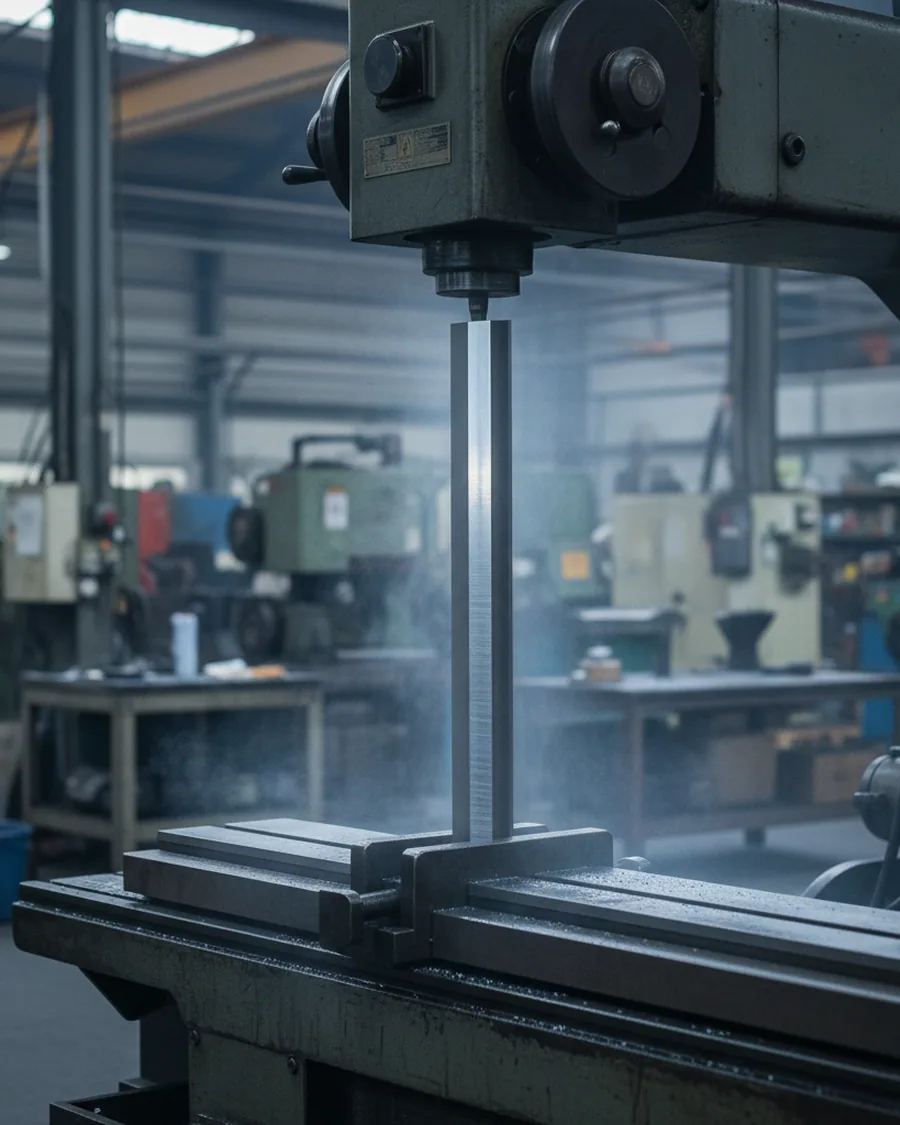 Each pass takes the edge deeper into the bar
Over the service life of a blade, the steel doing the cutting is steel that sat several millimetres below the surface on the day it was delivered. That depth is what you are buying.
Which is why a certificate describing the delivered face settles less here than it does elsewhere. Composition, annealed hardness and dimensions can all read correctly, and the edge can still begin breaking down in month fourteen, at the sixth or the tenth regrind, in material nobody examined because it was in the middle of the section. By then every inbound check has expired, the tool has a year of production behind it, and the argument lands on the distributor.
Four things are set against that, all of them before the steel leaves here.
The structure starts finer
All fourteen of our grades are electroslag remelted before forging, D6 included, which on a cold work grade at this carbon level is not the usual arrangement; the process is set out on electroslag remelting and the grain refinement that follows it on EFS refining. Forging reduction is then issued per order against the finished section at a minimum of 4:1, and where a section is heavy it is the ingot that changes rather than the ratio — the reasoning is on D2.
The whole bar is inspected rather than its surface
Bars are taken one at a time for 100% ultrasonic testing to SEP 1921 Class D/d or E/e, and each finding is filed against that bar under its heat.
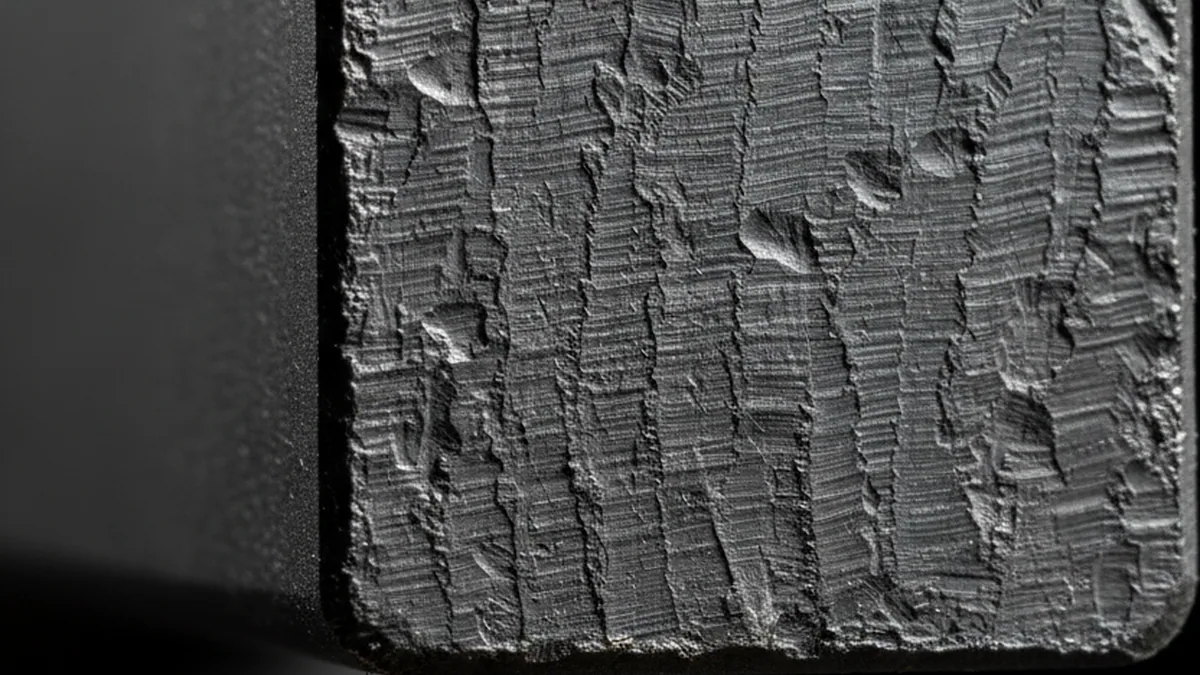
Structure is reported as measured
Grain size and carbide distribution are rated for your heat in the metallography room and written onto the certificate, rather than published once as a fixed figure that no heat ever has to meet.

The heat number goes where regrinding will not reach it
Marking position is taken from your instruction at order entry and kept off the working face and off the faces that will be ground back, so the identity outlives the tool instead of coming off with the first pass. Confirm it twice: on the order acknowledgement before anything is cut, and by eye when the set arrives.
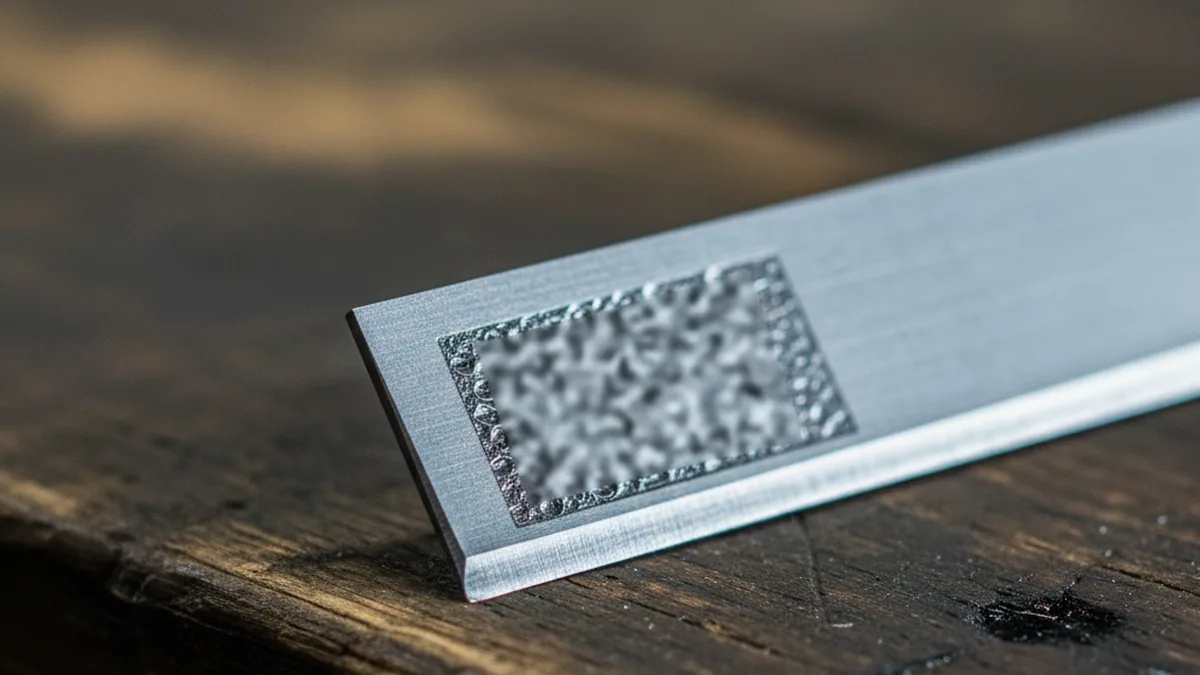
The confirmation that counts comes much later. A blade that starts to chip after several regrinds is still an identifiable piece, and the number on it opens a record held for ten years — measured analysis, the annealed hardness that passed, the individual ultrasonic finding for that bar, and the melt date of the heat. A blade whose marking disappeared with the first regrind ends that conversation before anyone can have it.
Long Blade Blanks and Allowance
A long blade blank is bought for its geometry as much as its analysis.
The blade shop mills and grinds it before it is ever hardened, and stock that runs thick at one end and thin at the other turns into hours of chasing material that is not there.
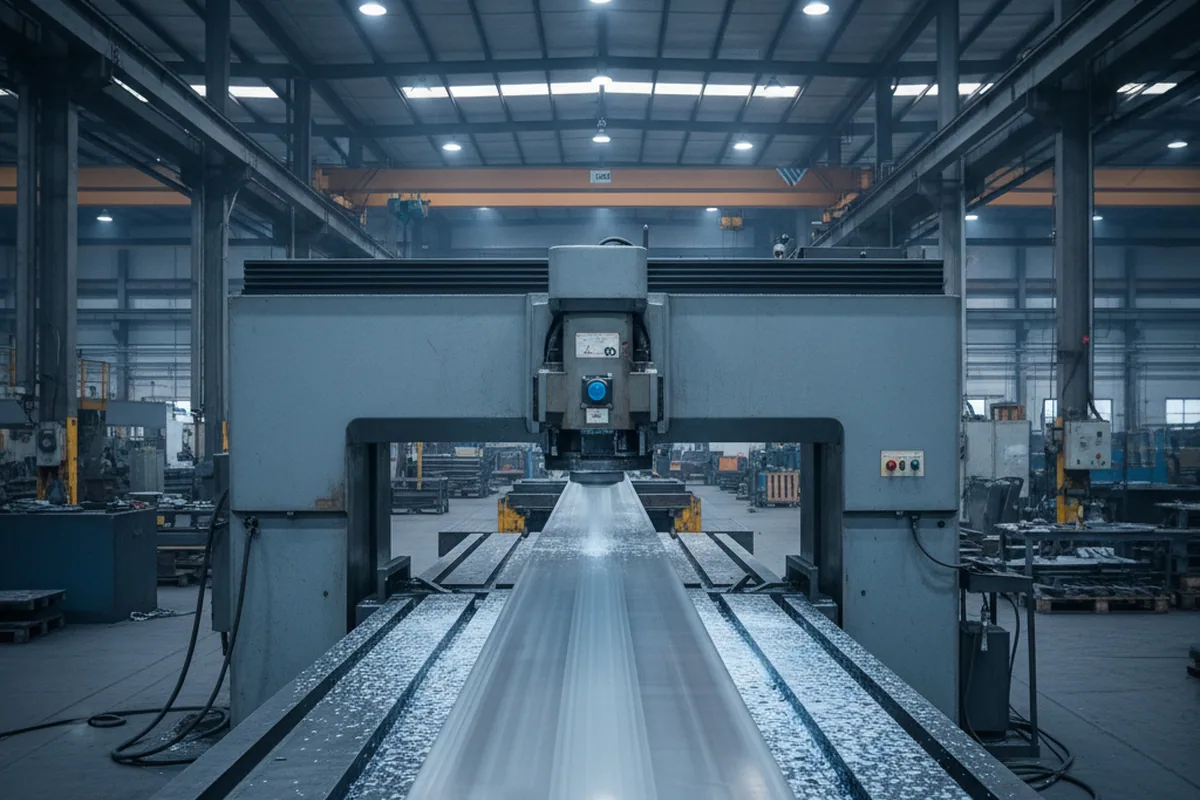 Gantry grinders to 4,000 × 1,300 mm
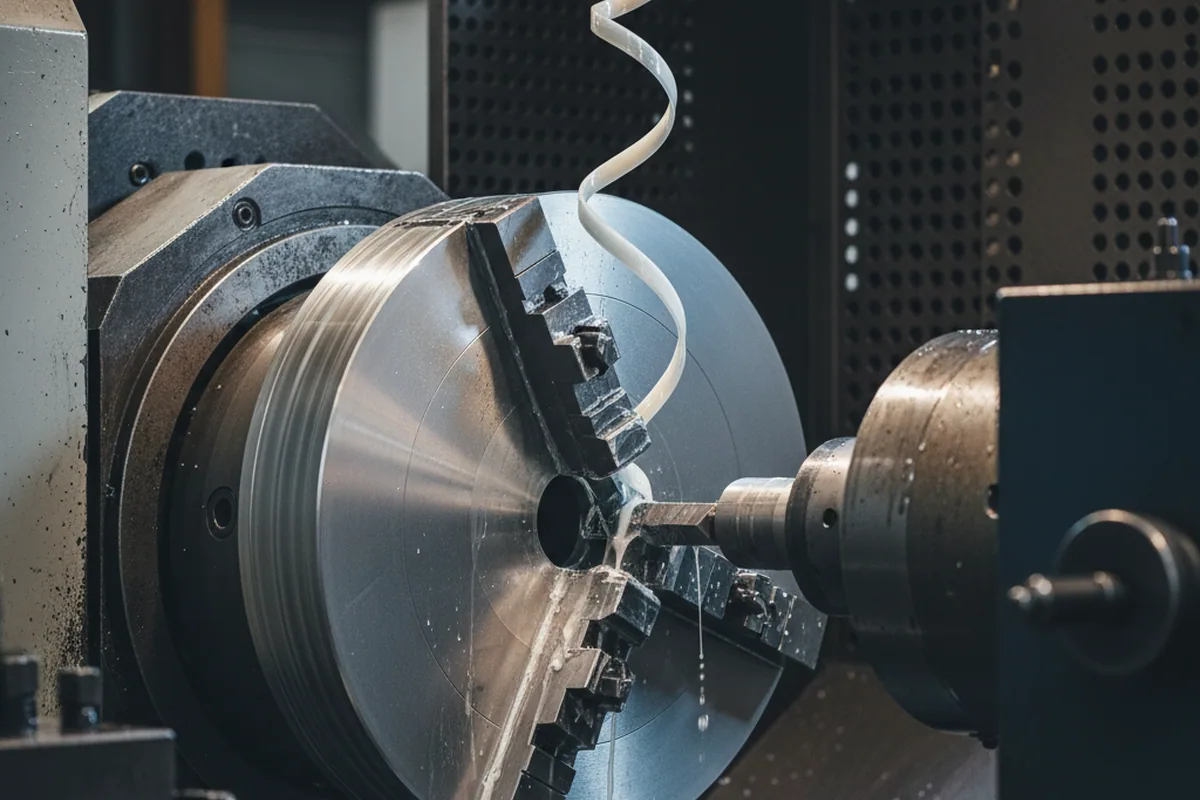 CNC lathes to Ø 600 × 3,000 mm
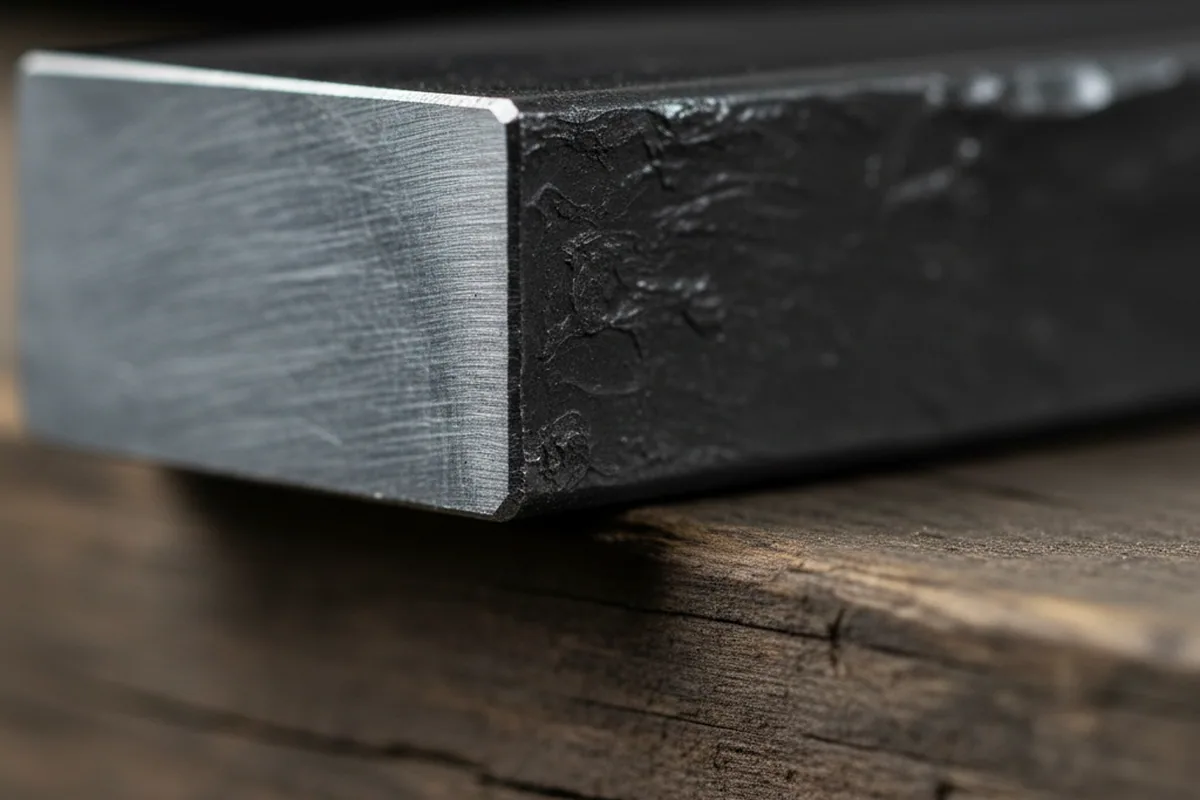 Black forged and descaled — 3 to 6 mm per side
Finishing here, or in the blade shop
Blanks are finished here on gantry equipment: gantry grinders working to 4,000 × 1,300 mm, gantry mills with 4,000 × 1,500 mm of travel, and surface grinders to 2,000 × 800 mm. Circular knife blanks are turned on CNC lathes taking up to Ø 600 mm by 3,000 mm long. Which of those a set needs is a question of where you want the stock taken off — here, on machines set up for this steel, or in a blade shop paying for cutters that D6 consumes quickly.
Black forged and descaled bar carries 3 to 6 mm per side according to section, part of which exists to be taken off after hardening. Turned, ground and six face milled stock has that material removed here already, which on a long blank also means the decarburised layer is gone before the blade shop starts.
| Finishing | Held to | Added |
|---|---|---|
| Sawn to length | ± 2 mm | 2 days |
| Ground faces | ± 0.05 mm on thickness | 5 days |
| Milled flats | 0.1 mm per metre flatness | 5 days |
| Machined to drawing | Quoted per drawing | — |
Heat treatment happens in your customer’s furnace, on a day nobody here is present, to a blank that already has its machining hours in it.
Hardening Coupons at the Blade Section
One measurement removes most of the guesswork from that day.
Order a hardening coupon cut from the heat you are buying, at the section your blade actually is, and have his heat treater run it through his own cycle. It comes back as two numbers that matter: the hardness reached, and how much the coupon moved. Dimensional change on a long blank is the figure that decides whether the grinding allowance you ordered is enough.
- Cut from
- The heat you are buying, at the section your blade actually is.
- Run by
- His heat treater, through his own cycle.
- Comes back as
- The hardness reached, and how much the coupon moved.
- Supplied with
- The order, alongside a non-metallic inclusion rating where you want one on the heat.
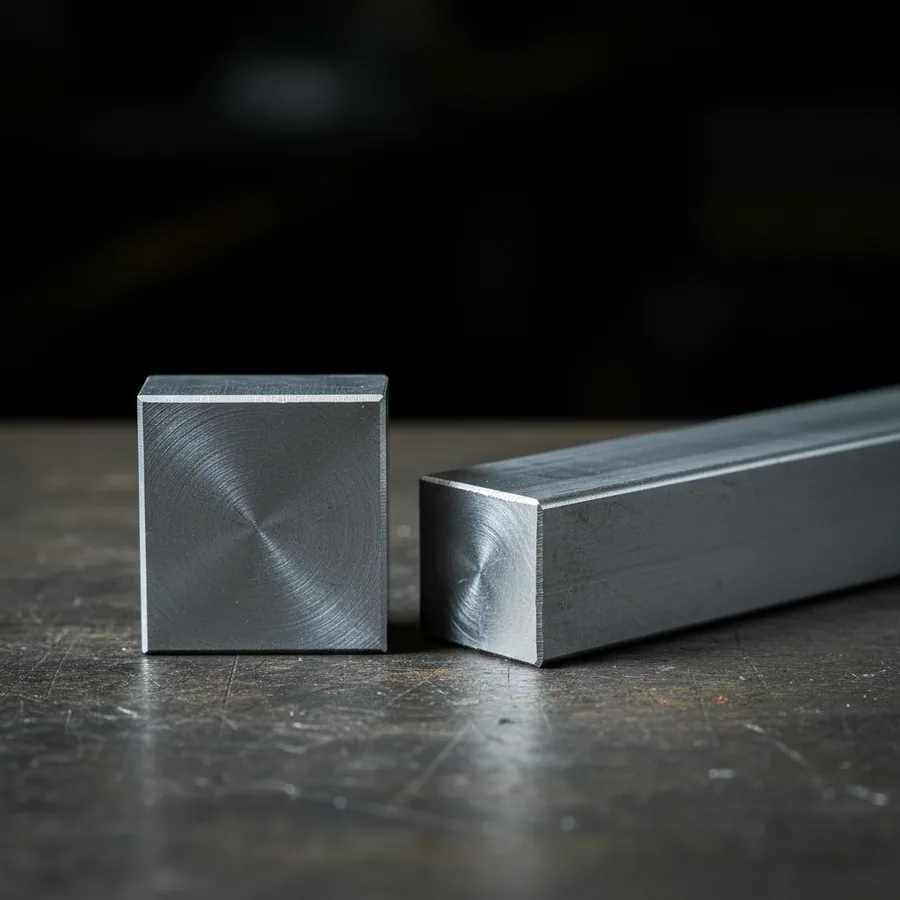 Cut at the blade section
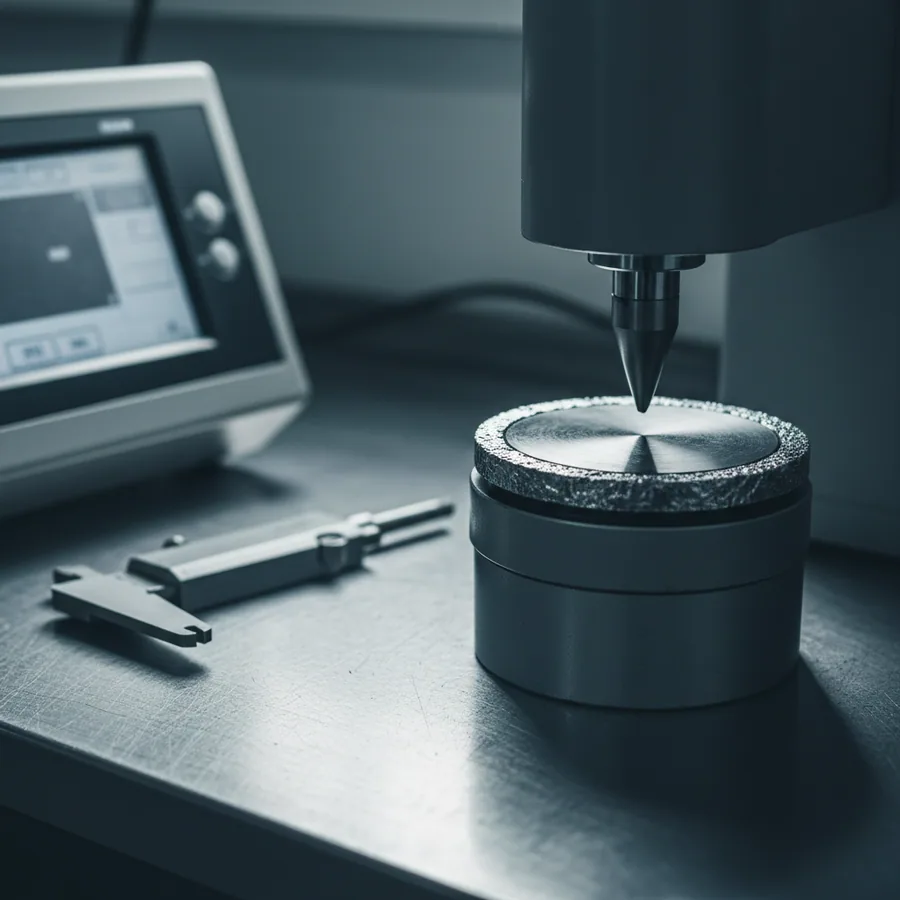 Measured back: hardness, and movement
Heavier sections cool more slowly at the centre in oil, harden less deeply and move more, and the figure that governs a particular blade is produced by the furnace, the oil and the heat that blade will actually see — which is exactly what a coupon from that heat measures. Send the section and the finished blade and the technical desk will say what it expects before a blank is cut.
Ultrasonic Testing on D6 Tool Steel
Nothing in a D6 set is inspected on a sampling basis.
Each bar goes through individually — 100% ultrasonic testing to SEP 1921 Class D/d or E/e — and its own finding is filed under the heat it came from. Training, examination and three-yearly requalification to ISO 9712 Level II sit behind every signature on those findings.
Why length changes the arithmetic
Length is what makes this worth more on a knife order than on a die block. A discontinuity sitting anywhere along a long blade takes the entire blade with it, milling and grinding hours included, rather than the short piece it happens to occupy. It is also the only defect class that can still be removed while the steel is ours.
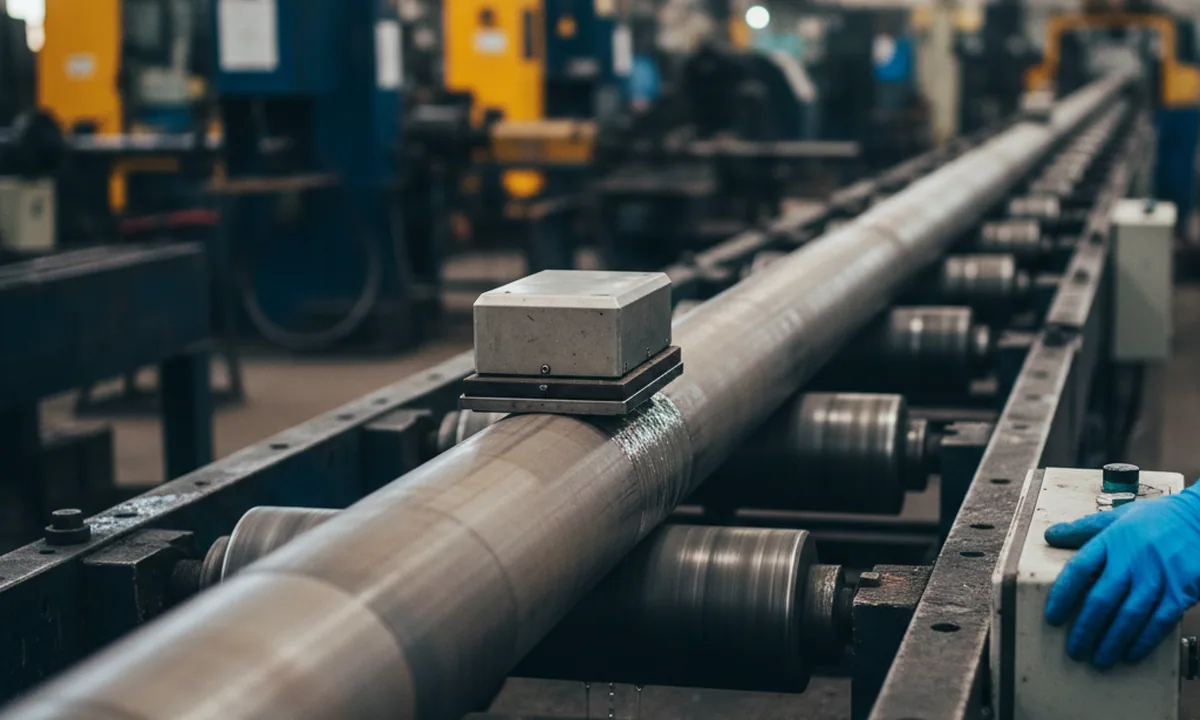 One bar at a time, end to end
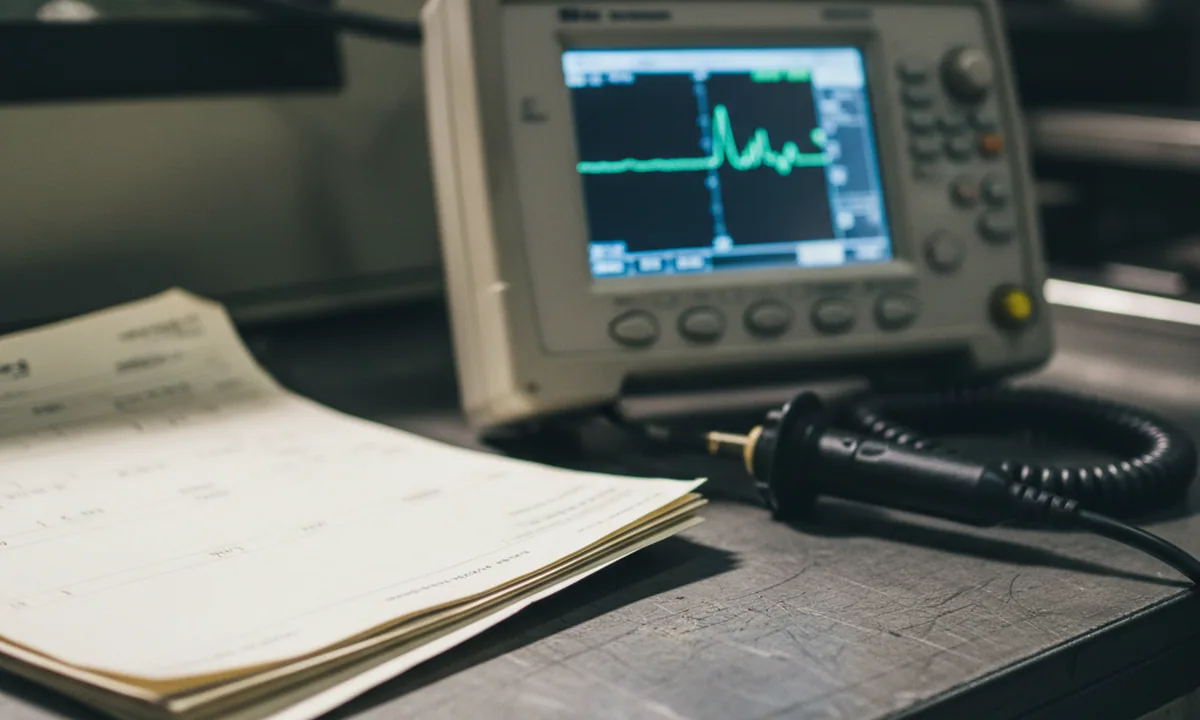 Each finding filed under its heat
This page publishes no default acceptance class. Name the class your customer’s line works to when the order is placed, and the set is tested and reported against that. A disputed reading follows the route set out on the homepage.
Annealed Delivery and Cutter Life
Bar leaves here annealed and in no other condition, at 255 HB or below. There is no pre-hardened D6.
The hardness figure is the easy part. What a blade shop feels is the structure underneath it, because a long blank is many hours of milling and grinding before anything is hardened, and 2.00 to 2.30 percent carbon with tungsten carbides in it is abrasive work for cutters while the steel is still soft. The anneal has to leave those carbides as rounded and as separated as the cycle can get them, and that is the difference between a blank that machines to a schedule and one that eats inserts.
The cycle behind the figure
Cycles are written per grade by the metallurgical and process engineers and run on car bottom furnaces holding ±5 °C across the load, with the charge then cooled no faster than 20 °C an hour until it is below 600 °C. A charge that measures outside its window is not released against a concession: it goes back through the cycle in full and is measured again, any shortfall against the order is covered from our own melt, and the hardness printed on the certificate is the reading that finally passed.
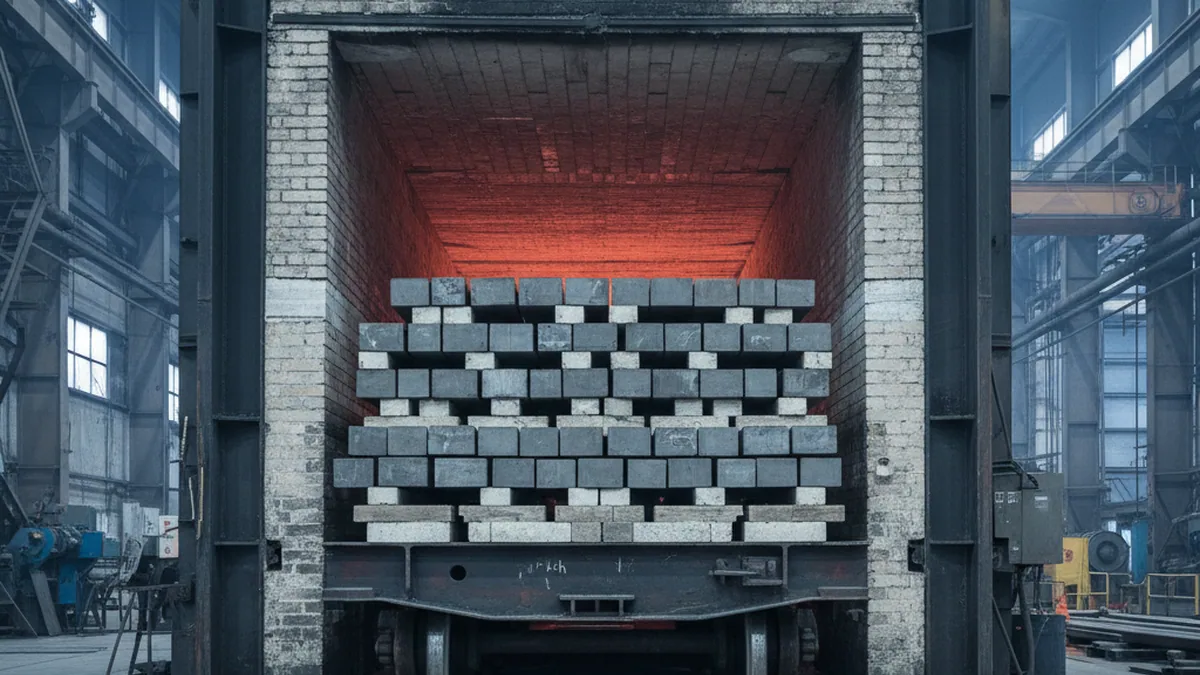 ±5 °C across the load
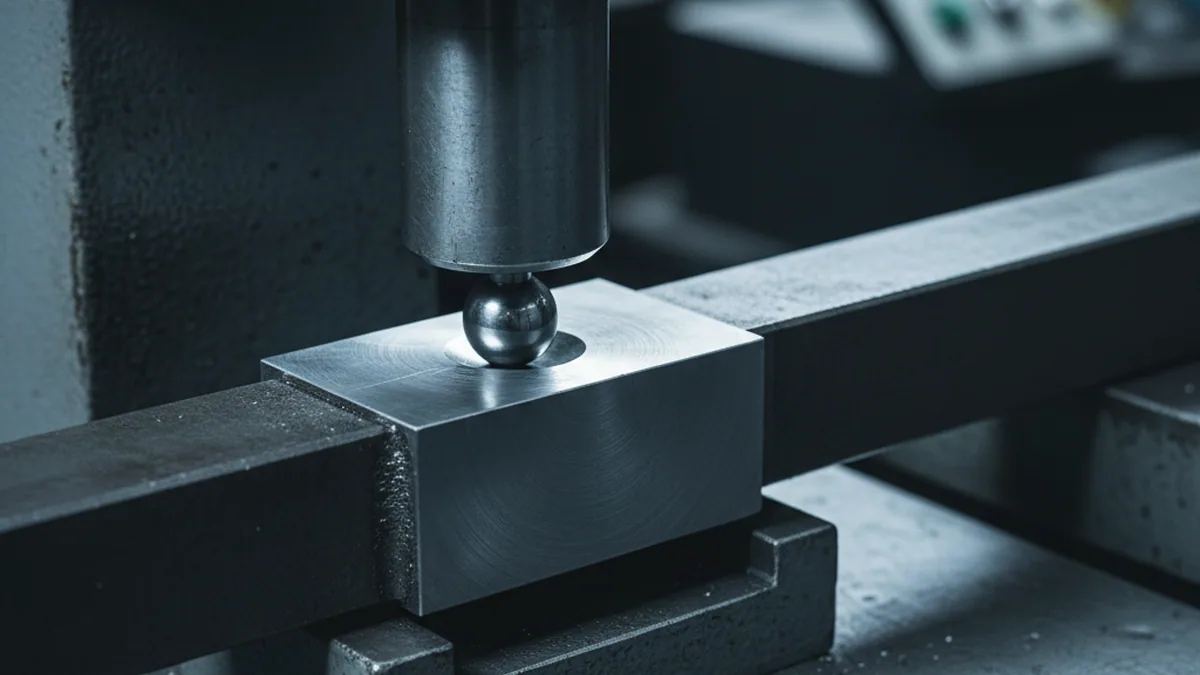 The reading that finally passed
Sections, Surfaces and Cut Lengths
Rounds run Ø 16 to 600 mm; flats and plate run 20 to 500 mm thick by 200 to 1200 mm wide, in black forged and descaled, turned, ground or six face milled condition.
| Form | Range |
|---|---|
| Round bar | Ø 16 – 600 mm |
| Flat and plate | 20 – 500 mm thick × 200 – 1200 mm wide |
| Surface condition | Black forged and descaled · turned · ground · six face milled |
| CNC band saws | 8 saws · to 600 mm round, 500 mm thick |
Cutting is done on eight CNC band saws taking up to 600 mm round and 500 mm thick. Each piece is marked as it leaves the saw with its heat number, the designation as ordered, dimensions and batch identification, in the format your own labelling requires — so a set of thirty short lengths still resolves back to one heat.
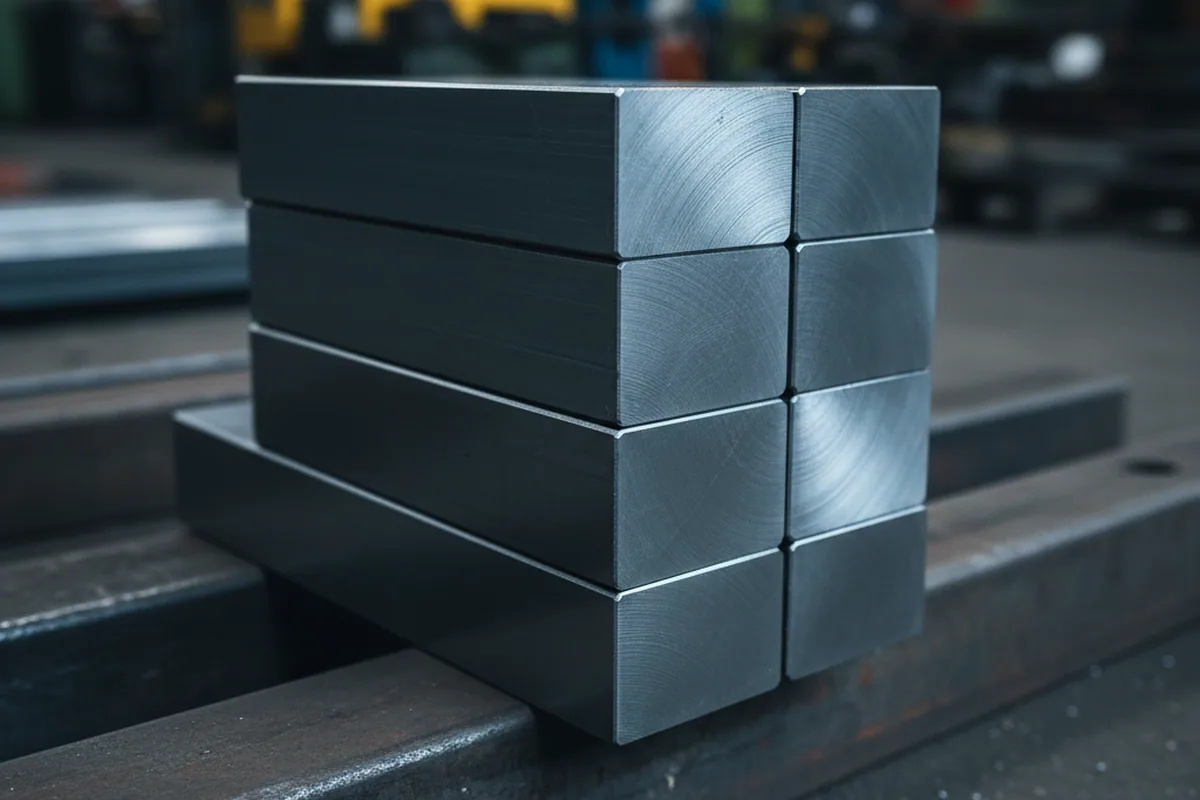 Six face milled
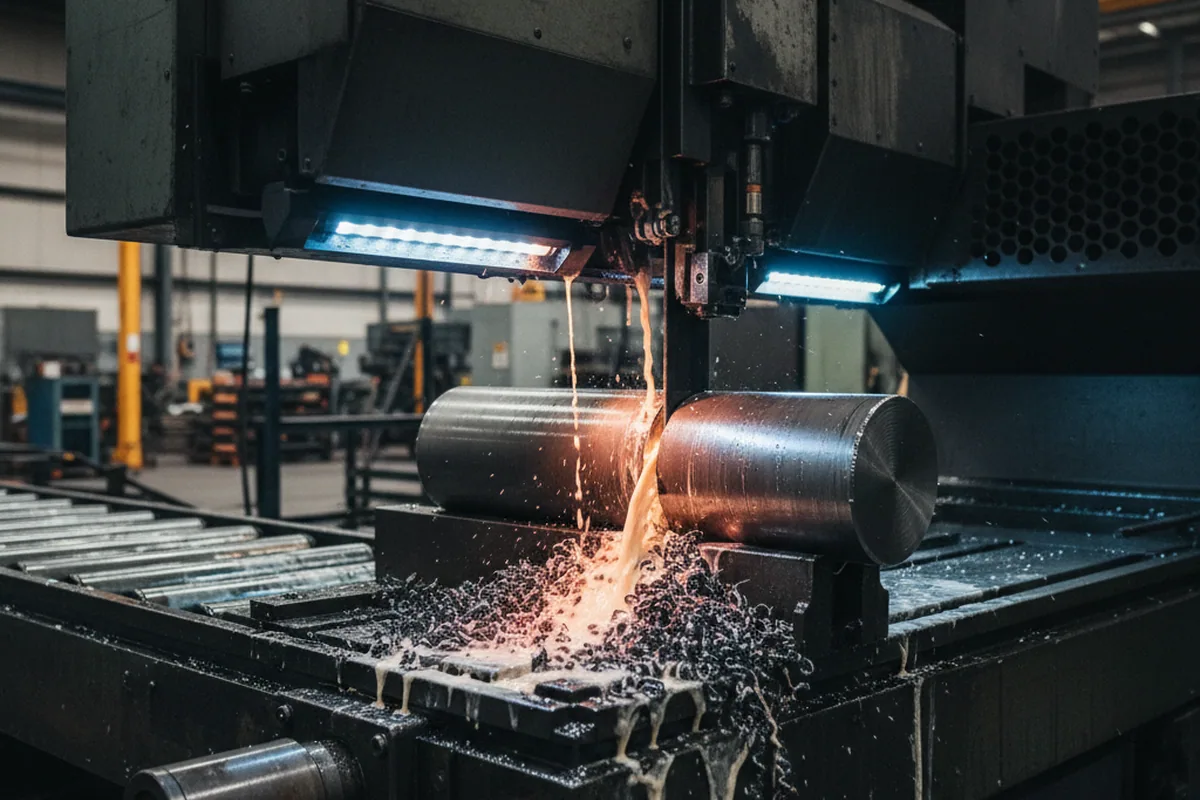 Marked as it leaves the saw
Scheduling a D6 Tool Steel Order
D6 is not one of the five grades held finished, so it is never a same week replenishment.
It is melted, remelted, forged, annealed, finished and inspected for the order, which puts 25 to 35 days between confirmation and the packing list.
For a distributor that turns knife supply into a scheduling job rather than a reorder point, and the scheduling has one rule worth following: order the spares with the set, not after it. Spares bought later are a different heat by definition, and the whole argument for one heat per arbor is lost at exactly the moment it is needed. Consolidate a customer’s knife requirement for the programme onto one production slot and the blades, the spares and the certificate all come off the same steel.
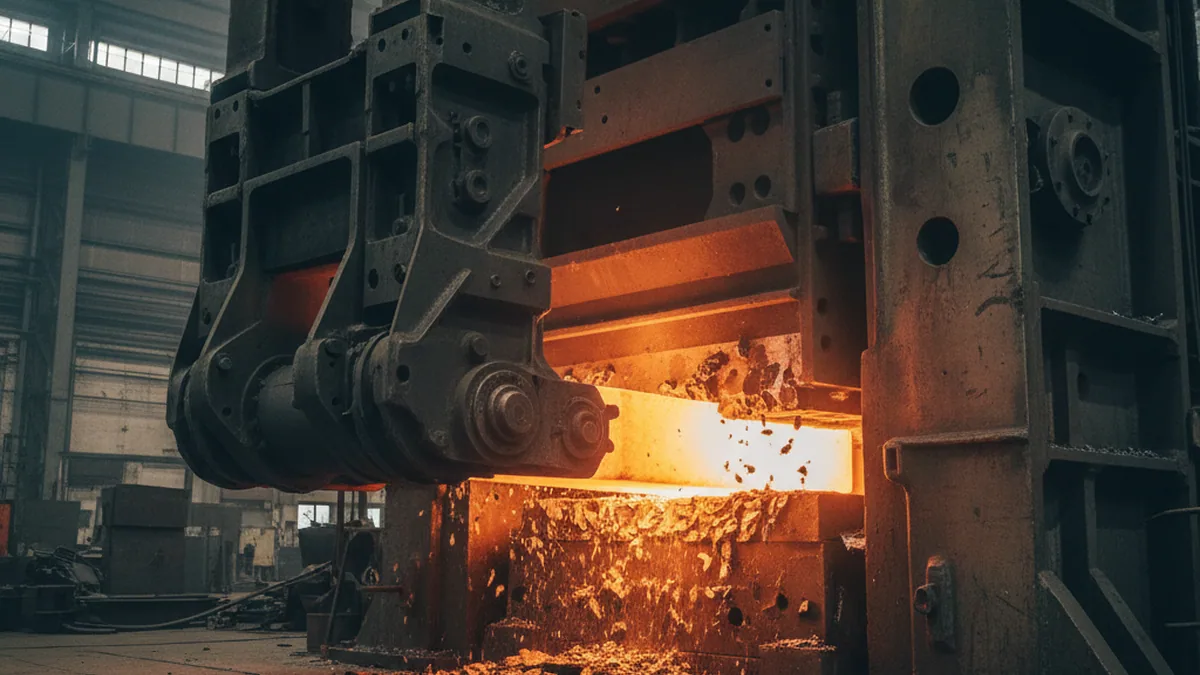
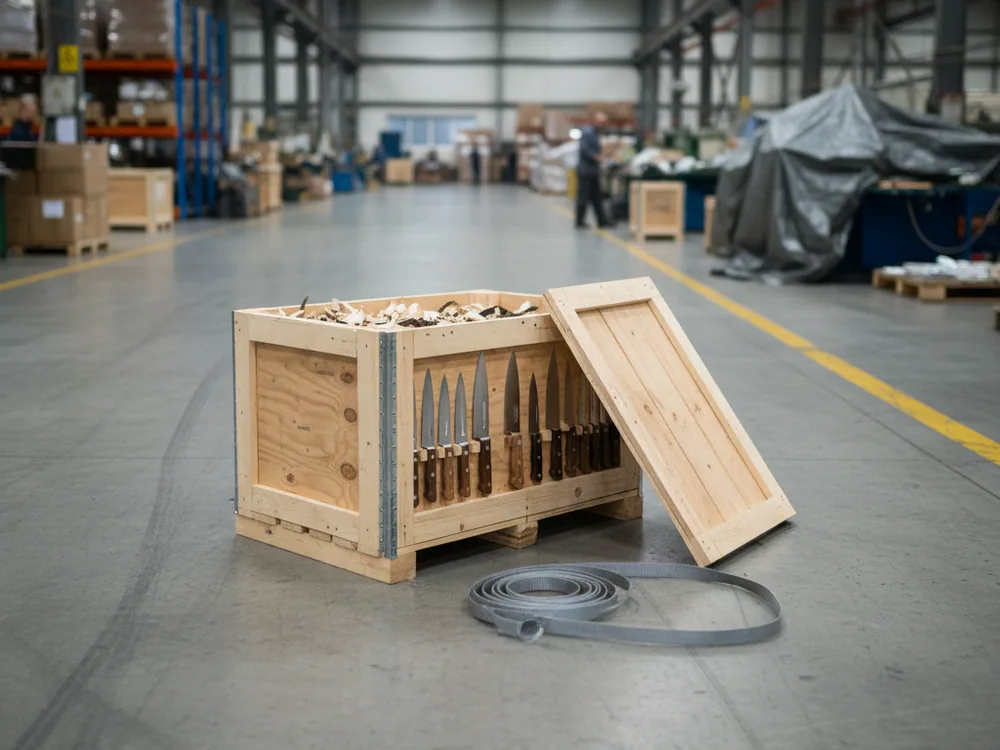
A first set can be run as a trial and moved onto a regular rhythm once your customer has hardened material from that heat and told you how it ground.
The D6 Certificate and Set Records
Your customer asked you a question about steel and has to receive the answer in your name.
The EN 10204 3.1 MTC issued for a D6 set is written to be forwarded, so the document carries what he would otherwise ask you to go back and find.
- The measured composition for the heat by optical emission spectrometry
- The annealed hardness that passed
- Grain size and carbide distribution rated as measured
- The individual ultrasonic finding
- The pieces the certificate covers, with their marking
Anything ordered as additional work appears on the same document — a non-metallic inclusion rating, or the results from a hardening coupon run to your customer’s own cycle.
Behind it sits the archive
Production and inspection records and certificate copies are held for ten years, and a retrieval against a heat number returns the melting and forging records for that heat along with its melt date, which is what lets a certificate be tied back to the order it was issued against.
The quality department signs the certificate and releases the set; it reports to the general manager rather than to production, and no production schedule overrules a hold.
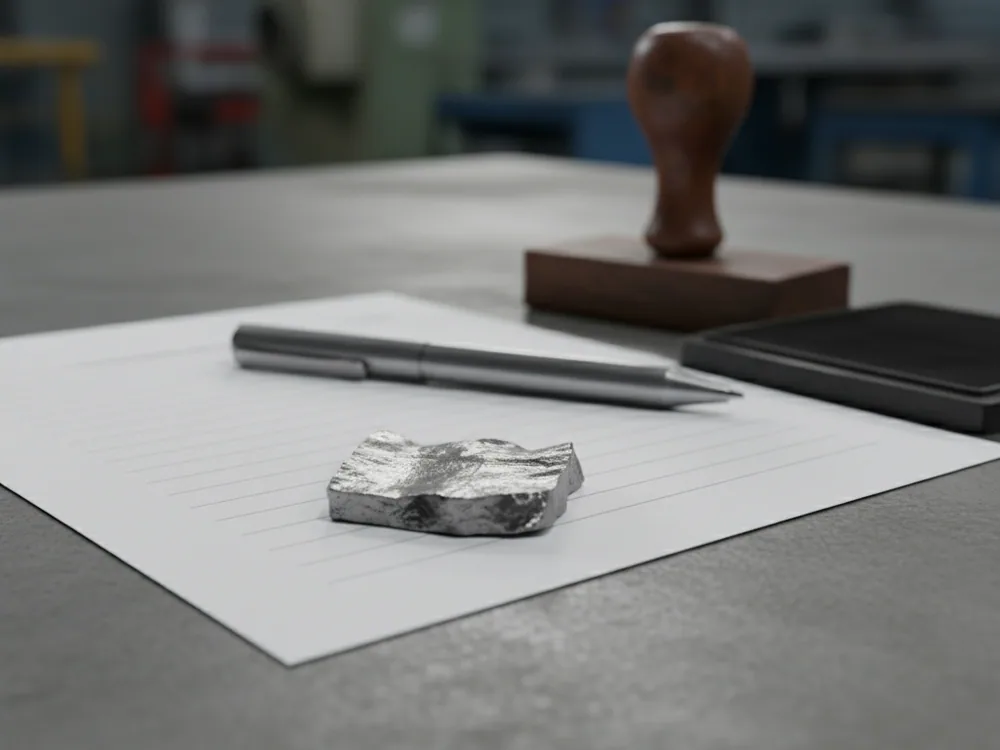 One certificate, the whole set
 Ten years, retrieved by heat number
D6 Tool Steel Enquiry Checklist
Six lines make a D6 tool steel enquiry answerable on the first reply.
- 01The set as a list: piece count, upper and lower blades or circular knives and spacers, and the spares you want made with them.
- 02Dimensions per piece in the form you want delivered — round diameter, or thickness by width — with cut lengths.
- 03What the tool cuts: material, thickness or gauge, and whether anything in that stream carries a weld seam or an impact component.
- 04Who hardens the set and in what, including the tempering range intended.
- 05Surface condition wanted, and where the heat number is to be marked so that regrinding will not remove it.
- 06The ultrasonic class to be tested and reported against, plus any additional work on the heat — inclusion rating, or a hardening coupon at your blade section.
The general enquiry route is on contact, and the document set a quality department can ask for, along with our works visit policy, is on about us.
Start With One Knife Set
Pick the arbor your customer changes over most often and have that whole set made on one heat, spares included. His grinder and his heat treater get to work with the steel before any programme is scheduled around it.
- The piece list
- The sections
- Where the heat number should sit
- The spares made with the set
Send the piece list, the sections, and where the heat number should sit.
D6 Knife Set Quote & Date
Reply in 24 hWorking days, Monday to Friday 09:00–18:00 GMT+8. We supply distributors, stockholders, wholesalers and buyers procuring at scale.
Or write directly: wonderful@fcstoolsteel.com
WhatsApp: +86-18972782802